Bali Safari and Marine Park: Where Ganesha Watches Over the Savanna
The nine-meter statue of Ganesha -- the elephant-headed Hindu god of beginnings and obstacles -- greets visitors before they see a single living animal. It stands at the entrance to Ganesha Park, which doubles as the gateway to the Bali Theatre, where traditional Balinese dance and art performances unfold beneath the same sky as African wildebeest and Indian elephants. This juxtaposition is the defining quality of Bali Safari and Marine Park: it is a place where Balinese Hindu culture and global wildlife conservation occupy the same forty hectares of landscaped terrain in Gianyar Regency, sprawling across the village boundaries of Medahan, Lebih, and Serongga. Opened in 2007 as the third installation of Indonesia's Taman Safari group, the park reflects an approach to zoological exhibition that insists animals, culture, and worship can coexist on shared ground.
Three Continents in a Single Bus Ride
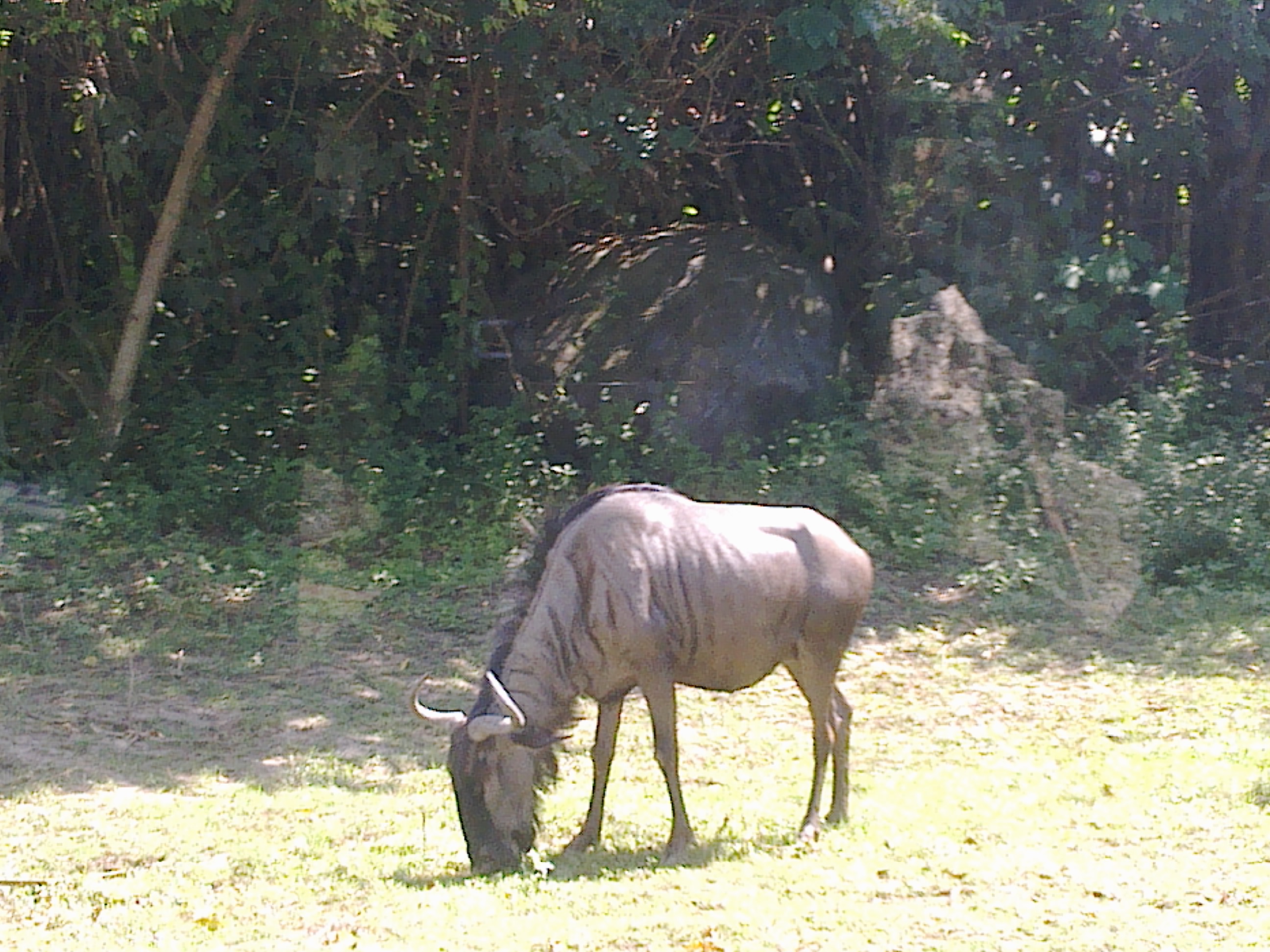
The park's signature experience is its bus safari, which carries visitors through open-air habitats designed to approximate the native environments of some one thousand animals drawn from three regions: Indonesia, India, and Africa. The route passes through zones where Sumatran elephants browse alongside landscaped tropical vegetation, where Indian blackbuck antelope graze on manicured grassland, and where African species -- wildebeest, zebra, hippos -- occupy savannas that feel startlingly far from the rice terraces and temple compounds of the surrounding Balinese countryside. The Taman Safari group, which also operates parks in Cisarua, West Java, and Prigen, East Java, has built its model around drive-through immersion rather than traditional caged exhibits. Animals move freely within their zones while visitors pass through in enclosed vehicles. The effect is less like visiting a zoo and more like crossing continental boundaries in compressed time -- Africa giving way to India giving way to the Indonesian archipelago, all within a few kilometers of coastal Gianyar.
A Temple Among the Animals
Pura Safari is not a marketing gimmick or a decorative folly. It is a functioning Balinese Hindu temple -- a pura -- built within the park grounds where observant Balinese visitors can worship. In a culture where temples punctuate every village, every rice terrace, every crossroad, and every mountain, the presence of a pura inside a safari park is less surprising than it might seem from the outside. Balinese Hinduism weaves the sacred into daily life with an insistence that Western distinctions between secular and religious space do not accommodate. The temple serves the park's staff and visitors alike, offering a place for prayer and ceremony amid a landscape otherwise devoted to animal habitation and recreation. It is a reminder that in Bali, even a commercial enterprise built around international tourism exists within a framework of spiritual obligation. The animals are the attraction; the temple is the anchor.
Elephants at the Threshold
The elephants that bathe in the pools near Ganesha Park draw crowds of visitors, particularly international tourists encountering Asian elephants for the first time outside a traditional zoo setting. The park's elephants are part of broader conservation programs for the endangered Sumatran elephant, a subspecies whose wild population has been devastated by habitat loss on Sumatra. Safari parks like Bali's participate in breeding and education programs that attempt to sustain captive populations while generating public awareness about the species' precarious status. The Ganesha statue presiding over this scene adds a layer of cultural resonance that is specific to Bali. Ganesha is the remover of obstacles, the god invoked at the start of new ventures, and his elephant head connects Hindu mythology directly to the living animals below. For Balinese visitors, the connection is intuitive -- the divine and the natural are not separate categories. For visitors from elsewhere, the park offers a window into how Balinese culture integrates the animal world into its spiritual architecture.
Conservation in the Coral Triangle
The park operates as a member of the Association of Indonesian Zoos, and the Taman Safari group positions all three of its parks as conservation organizations rather than purely recreational venues. Indonesia sits at the heart of the Coral Triangle and spans the Wallace Line, making it one of the most biodiverse nations on earth -- and one of the most pressured. Deforestation, wildlife trafficking, and habitat fragmentation threaten species from the Javan rhinoceros to the orangutan to the Bali starling. Parks like Bali Safari participate in captive breeding programs, public education initiatives, and partnerships with national conservation agencies that aim to keep endangered species viable while their wild habitats shrink. The marine component of the park -- reflected in its name though secondary to the safari experience -- nods to Bali's coastal ecology. The rainforest trail, water play zone, and recreation areas round out a facility that attempts to make conservation engaging rather than solemn, accessible rather than academic. Whether that model succeeds as conservation or merely as entertainment is a question the park shares with zoological institutions worldwide.
From the Air
Bali Safari and Marine Park is located at 8.58S, 115.34E in Gianyar Regency on Bali's southeastern coast. From altitude, the park is visible as a large green compound distinct from the surrounding agricultural and village development, approximately 10 km northeast of Denpasar along the coastal road. The park's open savanna zones and water features may be distinguishable at lower altitudes. Nearest airport is Ngurah Rai International Airport (WADD/DPS) in southern Bali, approximately 25 km to the southwest. The coastline of the Badung Strait is visible to the south, with the Nusa Islands (Nusa Penida, Nusa Lembongan, Nusa Ceningan) visible across the water to the southeast. Tropical climate with clearest conditions during the dry season (April-October).