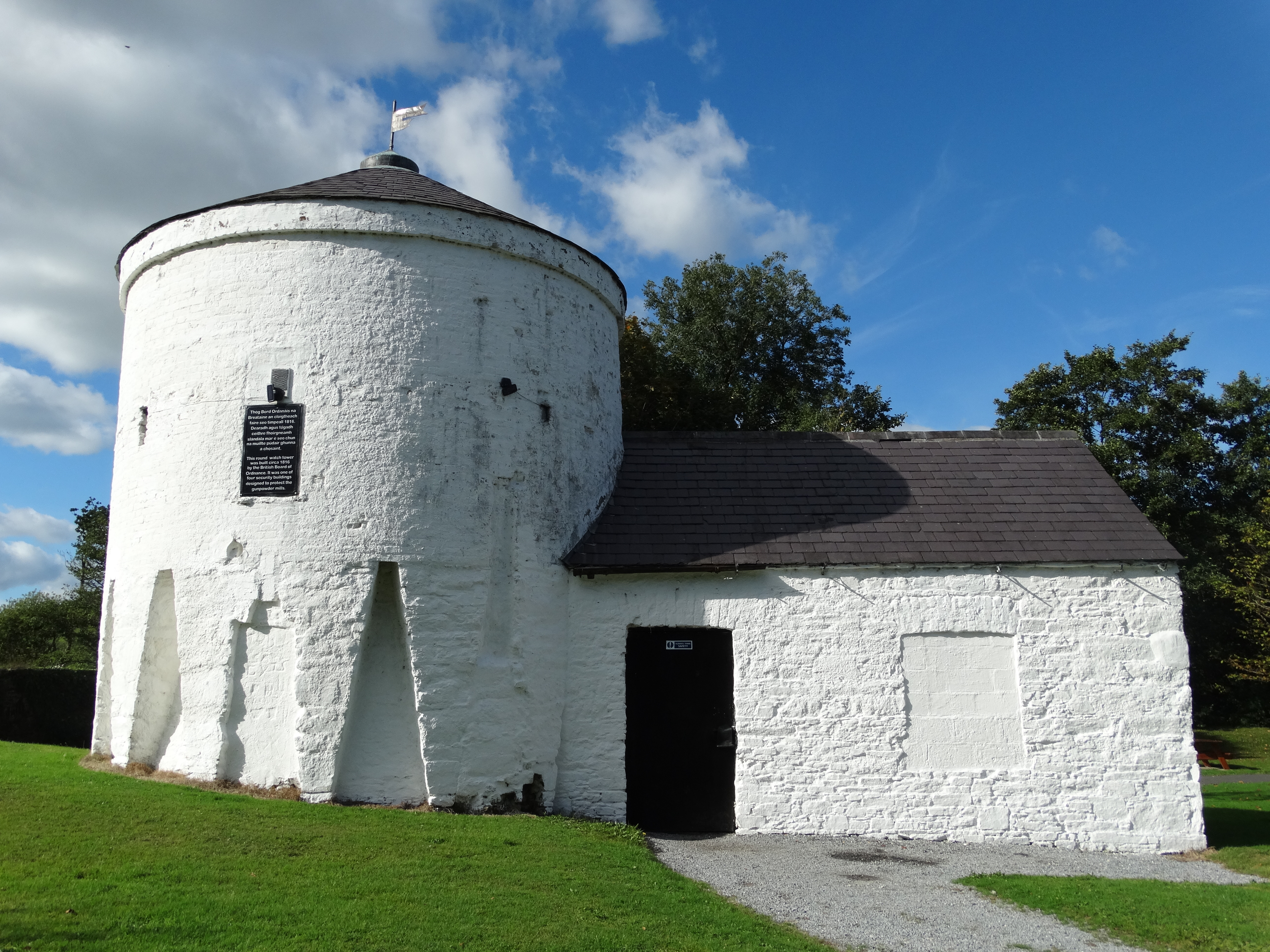
Ballincollig Royal Gunpowder Mills
On the evening of 3 November 1810, a violent explosion ripped through Brandy Lane in Cork city. Three houses were demolished instantly, others caught fire, and crowds who rushed to help found dismembered bodies and household debris scattered across the street. Rescuers worked through the night, pulling 19 bodies from the ruins; three more survivors died in hospital, bringing the death toll to 22. The cause was traced to a worker at the Ballincollig gunpowder mills, six kilometres upstream on the River Lee. He had been pilfering small quantities of powder each evening, selling it to nearby quarries and drying it at home by candlelight. A single careless moment turned a cottage into a bomb.
Built for Napoleon's Wars
The mills were founded in 1794 by Corkman Charles Henry Leslie and his silent partner John Travers. Leslie chose the flat valley of Ballincollig for practical reasons: it was remote enough for safety, close enough to Cork's port for importing raw materials, and the River Lee could power his waterwheels via a purpose-built canal one and a half miles long. For two decades, the Ballincollig mills were the largest in Ireland and second largest in Europe, behind only Waltham Abbey in England. When the 1798 Rebellion and Napoleon's expanding ambitions made gunpowder a strategic priority, the British Board of Ordnance bought the mills on a 999-year lease for 30,000 Irish pounds. The site expanded tenfold -- twelve new mills, processing buildings, workers' homes, and a barracks enclosed within a high limestone wall across 435 acres.
The Cost in Human Lives
Making gunpowder was lethal work, and the Ballincollig mills claimed lives with grim regularity. An 1859 explosion in the dusting house killed five men -- Timothy Burns, John Corcoran, William Looney, Timothy Lyons, and James Merrick. A contemporary account described the scene with haunting precision: relatives gathered in "loud and incessant lamentations" while others arrived carrying "wrapped in grass or cloth, a blackened cinder that was once a hand, a foot, or other portions of one of the dead men." Body parts were found on the hillside half a mile away. Two years later, another explosion in the pressing mill killed five more. Between 1841 and 1877, at least a dozen major explosions rocked the complex, each one adding names to the toll.
Cooper's Craft and Crisis
Gunpowder demanded specialized trades. Coopers fashioned oak barrels bound with copper hoops, fitted tight enough to keep moisture from the powder. By the late 1830s, they were producing 16,000 barrels a year. Apprentices served five years, beginning at age fourteen, governed by the rules of the Cork Coopers Society. Fathers passed the trade to sons. But from the 1870s, metal canisters began replacing wooden barrels, and imported casks from the Royal Arsenal at Woolwich undercut local production. The coopers' wages fell by a third. Families emigrated to England. When the mills finally closed in June 1903, displaced coopers begged the Cork Coopers Society for permission to seek work in the city. The Society refused.
Boom Town to Park
While famine devastated other parts of Ireland in the 1840s, Ballincollig grew. At its peak, some 500 men and boys worked the mills, and the village's population reached 1,130. By mid-century, most of the powder was blasting charge for railway construction, mining, and quarrying rather than military ordnance. But the end of the Boer War in 1903 killed demand for good, and the mills closed permanently. The site passed to Imperial Chemical Industries, then in 1974 to Cork County Council, which developed it into Ballincollig Regional Park. A Heritage Centre opened in 1993 with a reconstructed incorporating mill, but closed on financial grounds in 2002. In 2022, the restored mill was burned down by vandals -- a final, pointless destruction in a place that had known so much of it.
From the Air
The Ballincollig Royal Gunpowder Mills site is located at 51.89N, 8.59W, along the River Lee approximately 6 km west of Cork city centre. From the air, look for the linear park running along the river valley in the Ballincollig suburb. The old canal and mill ruins are visible within the green space. Cork Airport (EICK) is 8 km to the south. Best viewed at 1,500-3,000 feet.