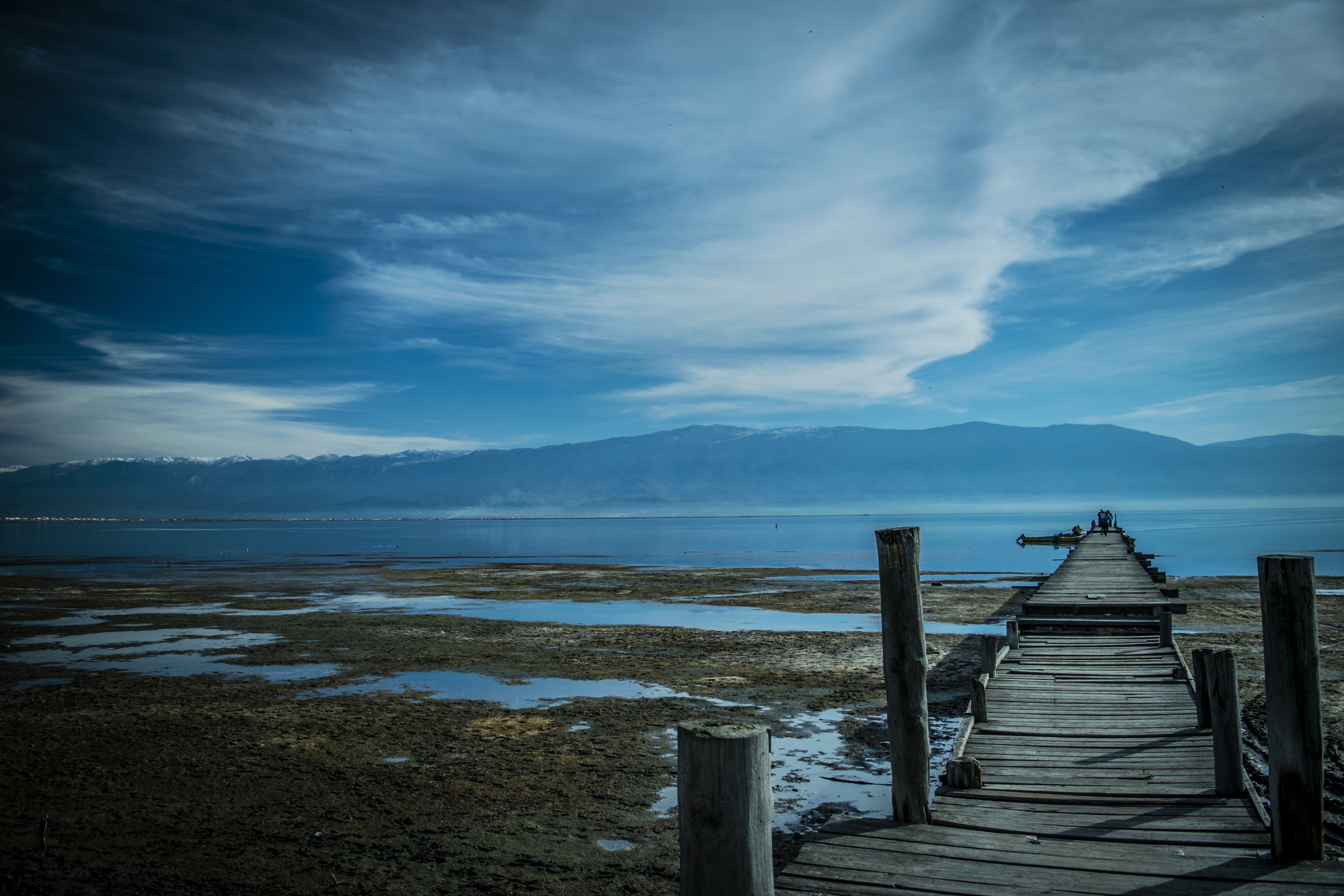
Bandar Torkaman
"Tell me if the mountain beside our village still stands. Are the jungles there still full of fruit? O white birds which are flying, tell me if my clan and friends are safe and sound." For centuries, Turkmen women in Bandar Torkaman have gathered to sing the Laleh -- a melancholy song whose composer is forgotten but whose meaning has not faded. Historically, brides were taken from their native tribes to distant regions by their husbands, sometimes never seeing their parents again. The Laleh gave voice to that loneliness. It still does. This Caspian port city of roughly 54,000 people, about 375 kilometers northeast of Tehran in Golestan province, is a place where traditions persist not as museum pieces but as living practice, woven into the daily rhythm of a community that is proudly, distinctly Turkmen.
Caviar, Cotton, and the Caspian
Bandar Torkaman produces half of Iran's caviar. The statistic sounds improbable for a city of this size, but the southeastern Caspian has long been sturgeon territory, and the fisheries near this port have exploited that resource for generations. The city is also called "Cotton Island" -- not because it sits on an island, but because cotton grows so abundantly in the surrounding harbor lands that the crop has become synonymous with the place. Agriculture, animal husbandry, fishing, handicrafts, and tourism together form the economic base of a community that has never relied on any single industry. Three kilometers to the west lies Ashuradeh Island, the region's primary tourist draw, accessible by a single remaining jetty from a port that once had three.
A Port Shaped by War and Water
During World War II, after the Anglo-Soviet invasion of Iran in 1941, Allied Forces used Bandar Torkaman's three big jetties to transport military equipment through the Persian Corridor. The port was a link in the supply chain that kept the Soviet Union fighting on the Eastern Front. But the decades since have not been kind to the harbor. Two of the three jetties have sunk. The Caspian Sea's water level has gradually declined, and poor maintenance has reduced the port's capacity. Today the surviving jetty serves mainly as a connection to Ashuradeh Island. During Nowruz, the Iranian New Year, and throughout summer, seasonal merchants crowd the pier, selling Turkmen-crafted goods to visitors. The bustle is real but seasonal, a reminder of a port that once carried the weight of a world war.
Threads and Patterns
Carpet-weaving is more than an industry in Bandar Torkaman; it is an identity. Turkmen cushions, carpets, prayer rugs, and felt mats are sold across Iran and exported worldwide. The patterns are ancient, passed down through families and communities, each design encoding regional and tribal identity in geometry and color. Jajim -- rustic textiles similar to mats or blankets -- and Palas, homespun woolen cloth, represent additional textile traditions maintained by local craftspeople. An old proverb captures the weight the community places on these skills: "If the newborn is a son, he will become a farmer. If a girl, she will become a carpet weaver." The saying reveals both the centrality of weaving to Turkmen life and the gendered expectations that have shaped it. These are not decorative arts in Bandar Torkaman. They are economic foundations.
Thundering Hooves and Grappling Belts
Every spring and autumn, the horse racing field outside Bandar Torkaman comes alive. The main track sprawls across roughly 100 hectares, and the races draw spectators from as far away as Tehran and the Persian Gulf States. Turkmen horsemanship is legendary -- the Akhal-Teke breed originated with the Turkmen people -- and the races here are contests of deep cultural significance, not merely sport. Equally compelling is Goorehesh, a traditional form of wrestling with no age or weight divisions. Two competitors grip each other's belt and struggle until one forces the other's back to the ground. The winner receives a Bayraq -- a ram or ewe. Among the Turkmen, the ram symbolizes uprightness and bravery, and to call a young man ram-like is the highest praise. Sword play rounds out the athletic tradition: youth in colorful garments circle a sword bearer who sings mystical odes, tightening their formation until they stand as a single knot, hands clasped in solidarity.
Feasts and Open Gates
Bandar Torkaman's traditions reveal a culture built on generosity and ceremony. During Eid al-Fitr and Qorban holidays, Turkmen families open their house gates to permit any passing stranger to step inside and join the feast -- five full days of celebration where hospitality is not a gesture but an obligation. When a man reaches the age of 63, the age of the Prophet Muhammad, he slaughters a white sheep and hosts a gathering in recognition. Wedding customs carry their own weight: the groom prepares Qatlama, a special sweetmeat, and presents it to the bride's family. Acceptance means consent. Traditionally, the bride was carried to her new home on an ornamented camel led by a tribal elder. Cars have replaced camels in most cities, but in remote mountain villages like Gelidagh and Kalaleh, the old procession continues. Meanwhile, each winter, the Gomishan lagoon west of the city fills with thousands of migratory birds from Siberia -- cranes, storks, ducks, and geese -- transforming the wetlands into one of the Caspian coast's great birdwatching spectacles.
From the Air
Located at 36.901N, 54.072E on the southeastern coast of the Caspian Sea in Golestan province, Iran. The city is visible as a coastal settlement approximately 375 km northeast of Tehran. Ashuradeh Island lies roughly 3 km to the west, connected by a single jetty. The Gomishan lagoon, a major wetland and migratory bird habitat, extends to the west. The horse racing grounds (approximately 100 hectares) may be visible as a large cleared area near the city. The surrounding landscape is flat agricultural land with cotton cultivation. Nearest airport: Gorgan Airport (OING), approximately 80 km to the east. The coastline and the flat terrain of the Gorgan Plain make the area identifiable from altitude. The Turkmenistan border lies relatively close to the northeast.