Cave and Basin: The Hot Springs That Created Canada's Parks
Canada's national park system exists because three railway workers got into a fight. In 1883, CPR workers Franklin McCabe and William McCardell discovered a hole in the ground near Banff. They lowered themselves into a cave filled with hot water and immediately began arguing about who owned it. A third man, Frank McCardell (William's brother), joined the claim. The dispute escalated until the Canadian government intervened - not to settle the ownership, but to cancel it. The springs were too valuable to be private property. In 1885, the government created the Banff Hot Springs Reserve, protecting the springs for public use. Two years later, it became Rocky Mountains Park - Canada's first national park, and the beginning of Parks Canada.
The Discovery
The hot springs were already known to Indigenous peoples for millennia - the Stoney Nakoda called the area Minihapa (many waterfalls) and valued the mineral waters. Franklin McCabe and the McCardell brothers were railway workers who followed rising steam to a hole in the ground in November 1883. They cut through ice and climbed down to find a cave with a pool of hot, sulfurous water. They immediately saw dollar signs: hot springs drew tourists, and they'd just found one. They staked a claim and began planning their resort. They didn't plan for competition from their own government.
The Dispute
The three claimants couldn't agree on shares, and others filed competing claims. The legal situation became complicated; the land belonged to the Crown, mineral rights were unclear, and the presence of a transcontinental railway made the area federally significant. The government resolved the mess by declaring no private claims would be recognized. The springs would belong to Canada. McCabe and the McCardells received $1,675 compensation for their improvements - far less than they'd hoped, far more than nothing. The precedent was set: some natural wonders were too important for private ownership.
The Park
The Banff Hot Springs Reserve protected 26 square kilometers around the springs in 1885. Two years later, Rocky Mountains Park expanded the protected area to 673 square kilometers - Canada's first national park, and the third in the world after Yellowstone and Royal National Park in Australia. The Canadian Pacific Railway, which had triggered the discovery, built the Banff Springs Hotel to bring tourists the springs would attract. The park grew over decades, eventually becoming Banff National Park with an area of 6,641 square kilometers. The hot springs that started it all became a minor attraction within a much larger preserve.
The Site
Cave and Basin National Historic Site preserves the original discovery site. The cave pool is viewable but no longer swimmable - a rare snail species discovered in 1926 required protection that precluded bathing. Exhibits interpret the discovery, the creation of the park system, and the Indigenous peoples' relationship with the springs. Outdoor thermal pools adjacent to the cave offer swimming from May through October. The hot springs feed streams that remain warm year-round, creating microhabitats where tropical fish and plants survive Alberta winters. It's a strange place: the birthplace of Canadian conservation, too sensitive for the activity that made it famous.
Visiting Cave and Basin
Cave and Basin National Historic Site is located in Banff townsite, 2 km from downtown. Hours are seasonal; check Parks Canada website. Exhibits interpret the discovery and park history. The cave pool is viewable but closed to swimming. Adjacent outdoor pools (seasonal) offer thermal bathing. The Marsh Loop trail passes through wetlands fed by thermal water, excellent for birding. The Banff Upper Hot Springs, on Sulphur Mountain, offers the primary bathing experience - a developed pool with views. Banff has full services; the park requires entry fees. The site is meaningful in winter when steam rises from thermal streams against snow.
From the Air
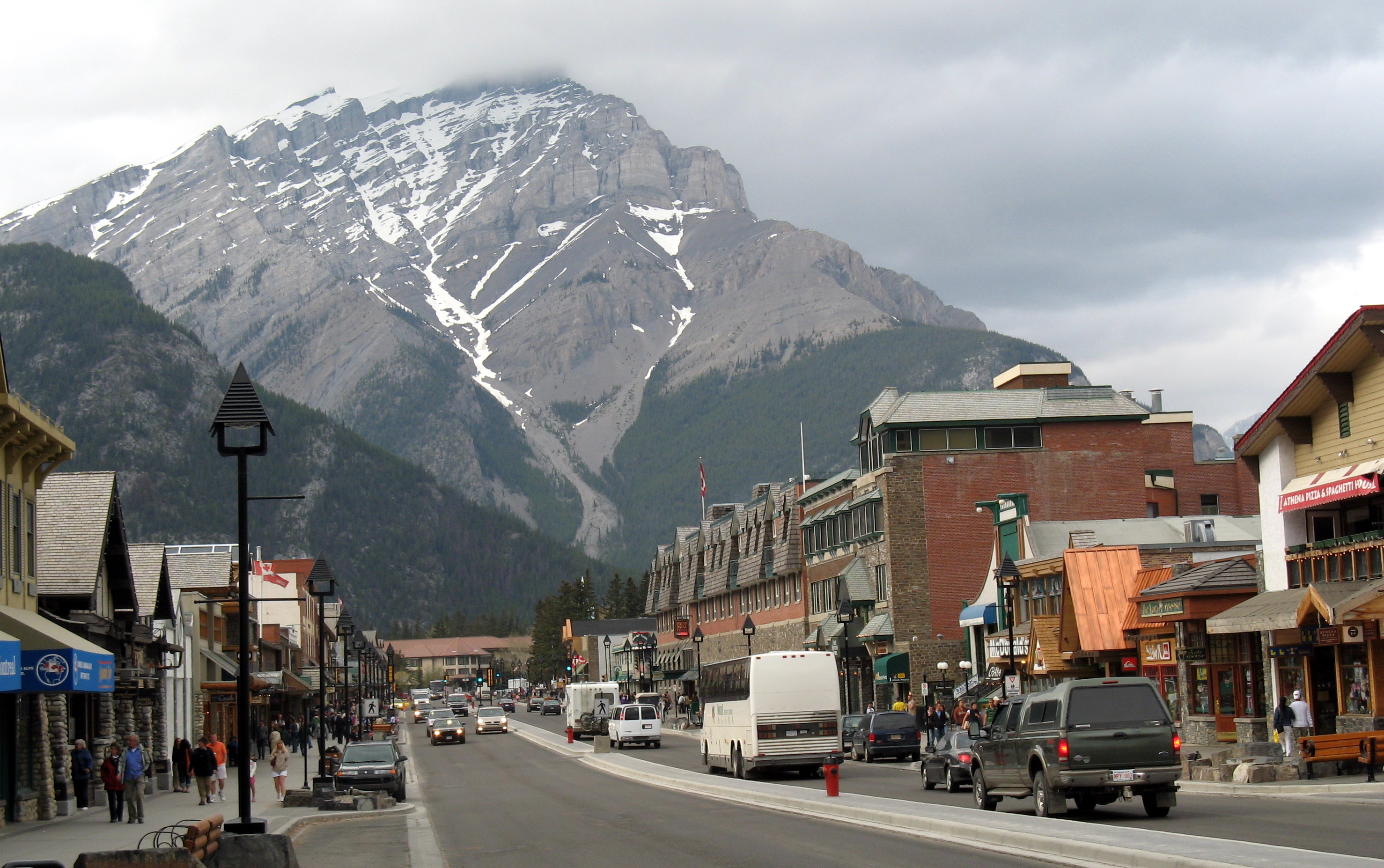
Located at 51.17°N, 115.56°W in Banff National Park, Alberta. From altitude, Cave and Basin is invisible - a small site within the Banff townsite, which itself is dwarfed by the Rocky Mountain landscape surrounding it. The Bow River valley is visible as a wide corridor through the mountains. Banff townsite appears as development on the valley floor. The hot springs' steam may be visible on cold days. The scale shift is dramatic: the tiny site that created Canada's parks system is microscopic compared to the mountain wilderness it helped protect.