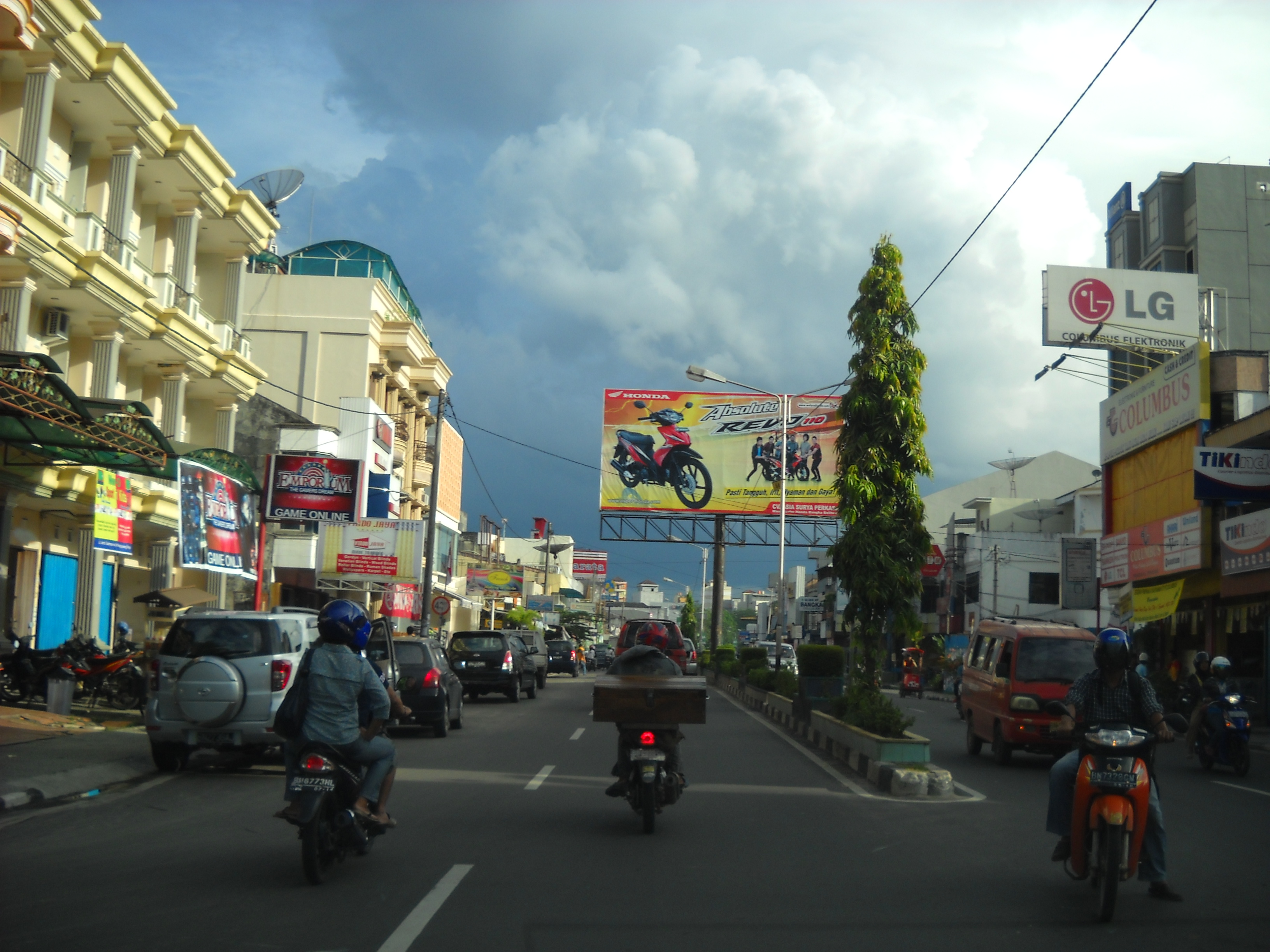
Bangka Belitung Islands
The granite boulders come first. Enormous, smooth, and seemingly dropped at random along white-sand shorelines, they are the visual signature of Belitung Island and the reason photographers and filmmakers keep returning. But the province that bears both Belitung's name and its larger neighbor Bangka's is far more than a beach destination. The Bangka Belitung Islands became Indonesia's thirty-first province in December 2000, carved from South Sumatra after decades of local advocacy. What emerged was a maritime province of roughly 1.5 million people spread across two main islands and dozens of smaller ones, connected by the Gaspar Strait and bounded by four different seas.
Sea People and Spice Traders
The original inhabitants of these islands were the Orang Laut -- sea people -- who navigated between the coasts of the Malay Peninsula, Sulawesi, Kalimantan, and the Riau Islands long before any empire drew borders. The Bugis from South Sulawesi arrived next, followed by Johor Malays, Minangkabau, Javanese, Banjarese, and Hakka Chinese. The result is a cultural mix that defies simple categorization. Malay remains the largest ethnic group, but the Hakka Chinese community, drawn originally by tin mining, has shaped the islands' cuisine, architecture, and commercial life for over two centuries. The province's motto -- Bumi Serumpun Sebalai, or "Land of One Root and One Shelter" -- acknowledges this layered heritage. Walk through any market in Pangkalpinang, the provincial capital, and you will find Malay noodle dishes served alongside Hakka dumplings, evidence of a blending that happened not through policy but through proximity and time.
Kingdoms, Colonies, and a Treaty
Both islands carry the fingerprints of the Srivijaya and Majapahit kingdoms, which valued the archipelago for its strategic position along trade routes linking China, India, and the spice islands. European interest arrived with the British in 1812, but the Anglo-Dutch Treaty of 1824 transferred control to the Netherlands, which consolidated power over the islands' tin resources. Dutch colonization was not uncontested. Depati Barin and his son Depati Amir led an armed resistance from 1849 to 1851, opposing colonial exploitation in what remains a foundational episode of local identity. The ruins of a Dutch fort built in Toboali in 1825 to defend Bangka's tin mines still stand -- a physical reminder that resource extraction required force to sustain. Japanese occupation from 1942 to 1945 replaced one colonial regime with another, and independence came with Indonesia's sovereignty in 1949.
Granite and Turquoise
The beaches draw the crowds, and they deserve to. Belitung's coastline features white sand punctuated by massive granite formations that create natural sculptures against turquoise water. Tanjung Tinggi, Tanjung Kelayang, and Tanjung Pendam are among the most visited, offering diving, snorkeling, and sailing. Bangka's beaches -- Pasir Padi, Matras, Parai Tenggiri -- are sandier and broader, backed by palm groves. Beyond the coast, the province's geography is largely lowland plateau and valley, rising to Mount Maras at 699 meters in Bangka's Belinyu District and Mount Tajam Kaki at approximately 500 meters on Belitung. The equatorial climate sustains tropical rainforests, though deforestation has been steadily reducing that cover. Several rivers -- the Sebuku, Baturusa, and Mendo -- wind through the interior, though mining sediment has compromised their water quality in many stretches.
The Tin Equation
Tin built these islands' modern economy and continues to define their environmental politics. The province sits atop some of the richest alluvial tin deposits in the world, and mining -- both legal and illegal -- has reshaped the landscape dramatically. The economic dependency is real: tin mining, palm oil, rubber plantations, and fishing employ the majority of the working-age population. But the costs are visible from the air. Satellite imagery shows the mining scars as pale gashes against the remaining forest, and offshore dredging has damaged coral ecosystems that the tourism industry depends upon. The tension between extraction and preservation plays out in provincial politics, in village disputes, and in the daily choices of workers who see few alternatives. It is the defining challenge of a province that became independent partly to gain more control over its own resources.
Faith and Festival
The province's religious composition reflects its ethnic diversity. About 89 percent of residents are Muslim, but Buddhist, Christian, and Confucian communities are well established -- the Confucian population, at over 3 percent, is one of the highest proportions in Indonesia, tied to the Hakka Chinese community. The 730 mosques, 87 Protestant churches, 30 Catholic churches, and 48 Buddhist monasteries scattered across the islands give physical form to this pluralism. Annual events like the Sail Wakatobi Belitong regatta have drawn international attention, and the islands' cultural festivals celebrate the Orang Laut maritime heritage alongside Chinese and Malay traditions. At its best, Bangka Belitung embodies the Indonesian ideal of unity in diversity -- not as a slogan, but as the lived reality of people whose ancestors arrived by different seas and stayed.
From the Air
The Bangka Belitung Islands province is centered at approximately 2.1S, 106.1E, east of Sumatra. The two main islands are separated by the Gaspar Strait. Depati Amir Airport (WIPK) at Pangkalpinang on Bangka and H.A.S. Hanandjoeddin Airport (WIOD) on Belitung serve as the main airports. From cruising altitude, the islands appear as green landmasses with distinctive white-sand coastlines and visible granite formations along Belitung's shore. Mining scars appear as light patches. The Bangka Strait to the west and Karimata Strait to the east provide clear navigation references.