Bangka Island Massacre
Vivian Bullwinkel kept the secret for the rest of her life. The Australian Army nurse survived a massacre on Bangka Island on February 16, 1942, shot and left for dead in the surf alongside 21 of her colleagues. She lived to testify at the Tokyo War Crimes Tribunal in 1947 -- but not about everything. The Australian government told her never to speak about what the Japanese soldiers had done to the nurses before the shooting began. For nearly 80 years, the full truth of what happened on that beach remained hidden, not by the perpetrators but by the survivors' own country.
The Fall of Singapore
On February 12, 1942, with Singapore on the verge of surrender to the Imperial Japanese Army, the royal yacht of Sarawak slipped out of the harbor carrying a desperate cargo: wounded soldiers, 65 nurses of the Australian Army Nursing Service from the 2/13th Australian General Hospital, and civilian men, women, and children. Japanese bombers found the ship and sank it. The survivors who made it to Bangka Island -- then part of the Dutch East Indies -- included nurses, wounded servicemen, civilians, and crew. They gathered on a beach and set up a shelter marked with a large Red Cross sign, the universal symbol that was supposed to guarantee their protection under the laws of war. They waited for rescue. What arrived instead were approximately 20 Japanese soldiers.
The Beach at Radji
The soldiers separated the group. Wounded men who could walk were ordered around a headland, out of sight. Royal Navy Stoker Ernest Lloyd saw the machine guns being set up and understood what was about to happen. He ran into the sea. The Japanese opened fire. Lloyd was hit but lost consciousness and washed up on the far side of the beach -- the only man to survive. The nurses heard a quick burst of gunfire from beyond the headland. Then the soldiers returned. They sat down in front of the women and methodically cleaned their bayonets and rifles. What followed was an act of deliberate cruelty: the soldiers sexually assaulted the nurses before a Japanese officer ordered the 22 women and one civilian to walk into the surf. Machine guns opened fire. Bullwinkel was struck by a bullet that passed through her body. She fell into the water and lay still. When the soldiers left, she crawled out of the surf and into the jungle, where she eventually found Lloyd. Together with a wounded British soldier, they survived in hiding before being captured and interned as prisoners of war.
Eighty Years of Silence
Bullwinkel testified about the shootings at the Tokyo War Crimes Tribunal, but the sexual assaults were never mentioned. She later said the Australian government had instructed her to remain silent on that subject. The perpetrators -- soldiers of the 229th Infantry Regiment under Lieutenant Colonel Iwabuchi -- were largely beyond justice. Iwabuchi and many of his subordinates were killed in subsequent heavy fighting against Australian and American forces. Of those detained, an officer named Orita committed suicide two days after imprisonment, before he could be interrogated about the massacre or stand trial. The suppression held for decades. It was not until 2019 that researchers uncovered evidence confirming the sexual assaults, finally placing the full horror of the massacre into the historical record. The question of why the Australian government chose silence -- protecting its public from the truth, or protecting its institutions from accountability -- remains unanswered.
Remembered at Last
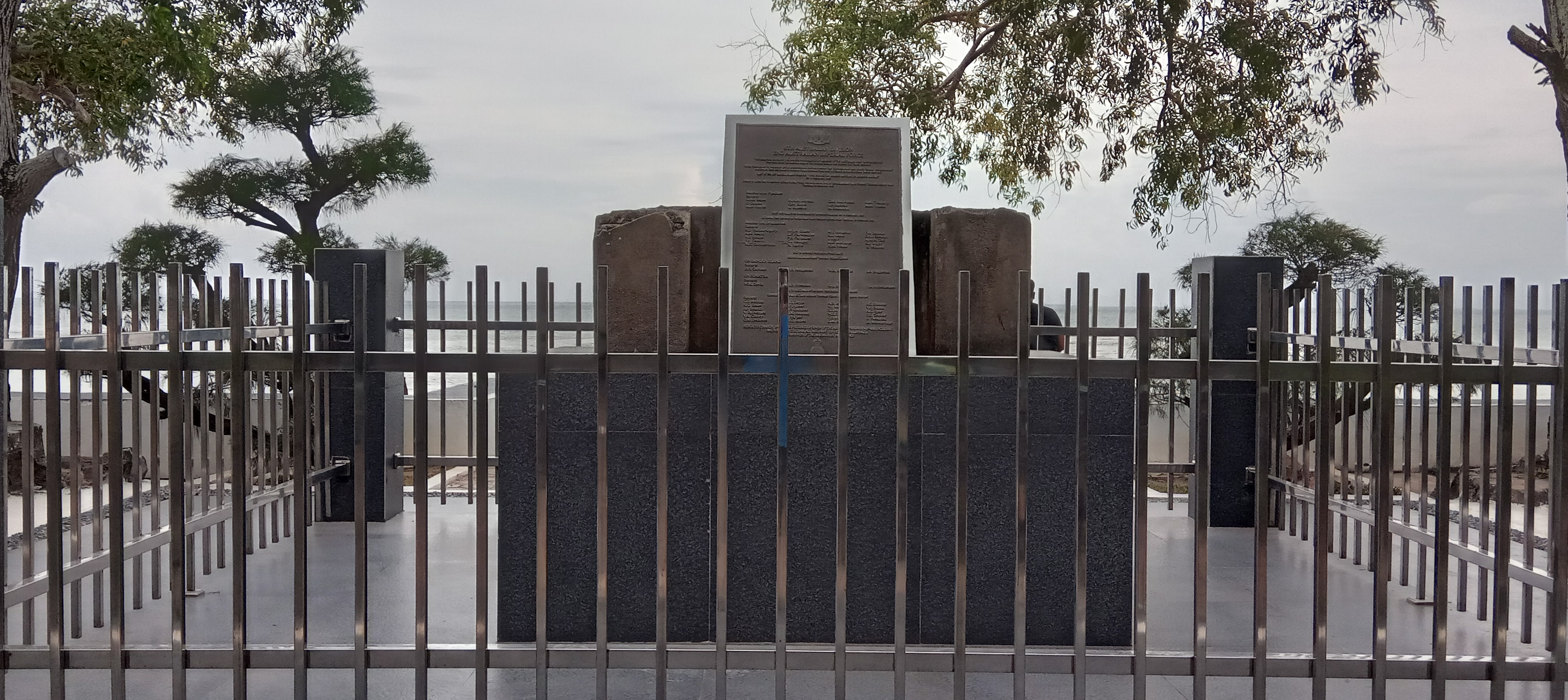
A plaque commemorating the South Australian Army Nursing Sisters who died at Bangka Island, including Irene Drummond and six others, was erected at the massacre site. In 2022, on the 80th anniversary, the Australian College of Nursing Foundation announced it would establish a scholarship in the name of each of the 21 nurses who were killed, a recognition that took eight decades to arrive. The foundation also led fundraising to erect a sculpture of Vivian Bullwinkel at the Australian War Memorial in Canberra. Bullwinkel herself spent her postwar years as a nursing administrator and veterans' advocate, rising to the rank of lieutenant colonel. She was appointed a Member of the Order of Australia in 1993. The women who died on that beach were not soldiers in combat -- they were medical professionals caring for the wounded, protected under international law, murdered for no military purpose. Their story endured not because their government chose to tell it, but because one woman refused to let it die entirely.
From the Air
Located at approximately 2.25S, 106.00E on the eastern coast of Bangka Island, off Sumatra in the Indonesian archipelago. The island is clearly visible from cruising altitude, separated from Sumatra by the Bangka Strait. Nearest airport is Depati Amir Airport (WIPK) in Pangkal Pinang on Bangka Island. The massacre site is along the coastline near the village of Radji. Typical equatorial weather with afternoon convective activity; clearest visibility in early morning.