Bangui
Pronounce it bang-EE, and understand that the emphasis matters -- this is a city that insists on being heard. Bangui, capital of the Central African Republic, sits on the northern bank of the Ubangi River at the point where rapids block commercial shipping from going any farther upstream. Below the city, the navigable Ubangi turns sharply south and feeds into the Congo River near Brazzaville. Across the water, the Congolese town of Zongo stares back. It is a border city in every sense: between two countries, between navigable and impassable water, between 26 ancient Iron Age archaeological sites and a modern capital where the UK government advises against all travel.
Iron Age to Triumphal Arch
Modern Bangui was founded in 1889, but the ground beneath it tells a much older story. Archaeological studies in and around the city have identified at least 26 ancient Iron Age sites containing metallurgical tools and artifacts that illuminate a pre-European urban history spanning centuries. Whatever stood here before the French colonial post was no empty wilderness. The city that grew from that post now centers on the riverfront, where a large triumphal arch dedicated to Jean-Bedel Bokassa -- the military officer who declared himself emperor in 1976 -- still stands near the Presidential Palace and the central market. Five kilometers north, the heart of the residential district holds the largest market and most of the nightlife. Beyond that, rolling hills open up, and the city's density fades into the equatorial landscape.
Equatorial Heat and the Rainy Season
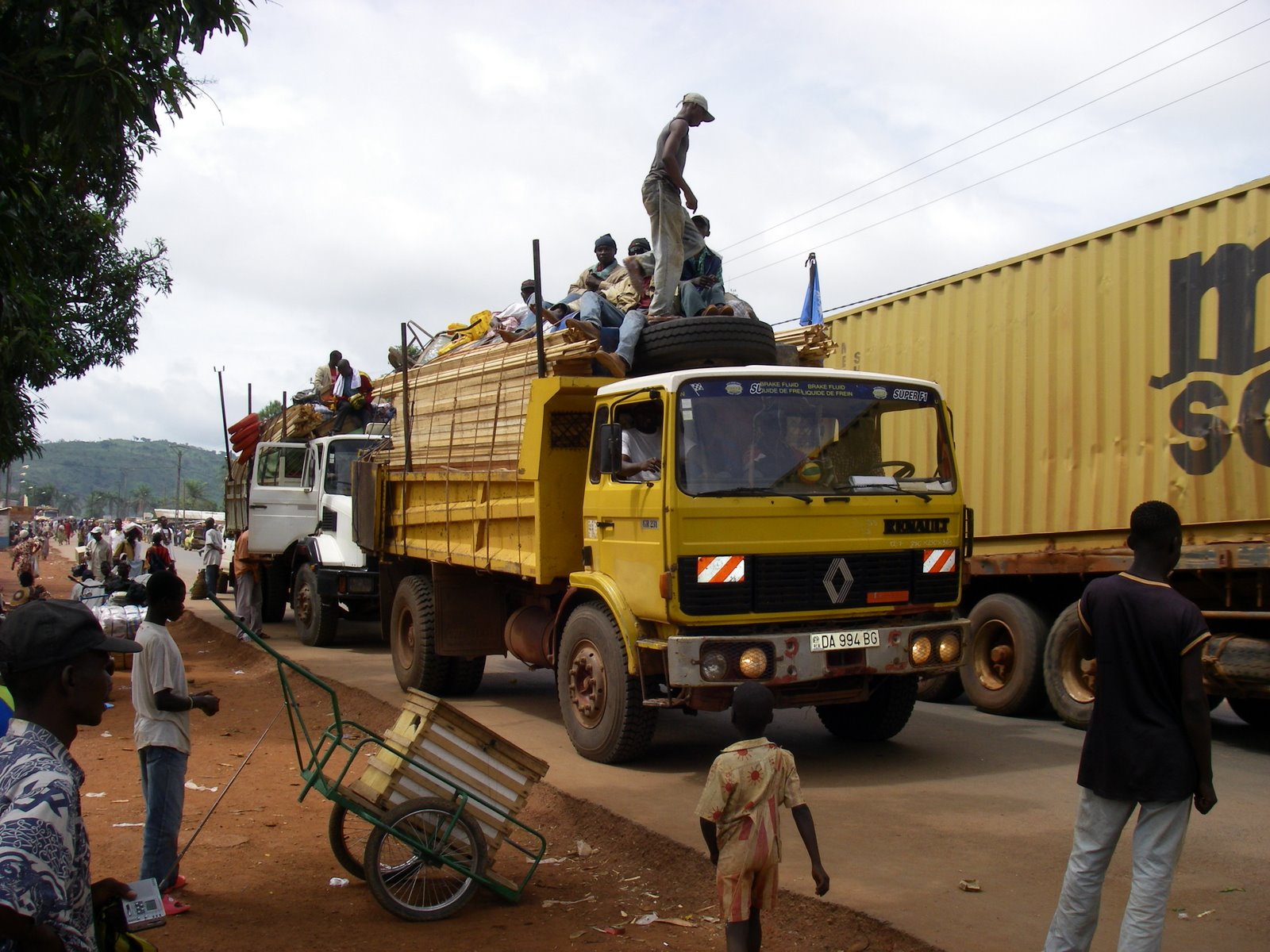
The Central African Republic sits just north of the equator, and Bangui, being the southernmost major city, gets the worst of it -- slightly hotter and wetter than the rest of the country. Daily highs rarely drop below scorching, and the rainy season runs from May through October, bringing the kind of downpours that turn unpaved roads to mud in minutes. Getting into the city requires patience. Flights arrive at the airport, where visa stamps require multiple queues, customs officers randomly select bags for inspection, and pickpockets work the terminal exit. The alternative is a ferry across the Ubangi from Zongo in the DRC, where wooden pirogues and vehicle barges run all day. Either way, arrival in Bangui is an exercise in negotiation.
French Delicacies and Congolese Beer
Bangui's small community of French expatriates has left a disproportionate mark on the city's culinary scene. The result includes what locals claim is one of the best ice cream parlors in Africa, a supermarket stocking French delicacies like foie gras, and a genuinely good Italian restaurant. The local beer, Mocaf, comes in big 650-milliliter bottles and is cheap and well-regarded. For connectivity, four GSM mobile companies operate out of the city, and internet cafes offer reasonable speeds, though signals fade past the PK12 marker on the city's outskirts. Le Grande Cafe in the city center provides free Wi-Fi along with coffee and food -- a pocket of digital connectivity in a capital where the infrastructure thins quickly beyond the central district.
A City of Caution
Multiple governments advise against all travel to the Central African Republic, including Bangui. The KM-5 district has a particularly high crime rate. Visitors are counseled to carry a certified color photocopy of their passport rather than the original -- the Hotel de Ville will certify one for a few dollars. The wood carvings in the markets are beautiful and worth buying; the rare African Grey parrots being sold illegally are not, and purchasing one will lead to arrest. These warnings coexist with the daily reality of a city that functions despite everything: markets open, ferries cross, people get on with the business of living at the edge of navigable water. Bangui's location -- at the break point between river commerce and the rapids above -- has defined it since 1889. The city exists because the river stops being useful here. Everything that moves upstream has to be unloaded, carried, and reloaded. That choke point made Bangui necessary, and necessity has kept it alive.
From the Air
Located at 4.37N, 18.56E on the northern bank of the Ubangi River. Bangui M'Poko International Airport (FEFF) is the city's main airport, located about 7 km northwest of the center. The city is clearly visible from altitude as the largest urban area in the region, sitting on a pronounced bend in the Ubangi River. The rapids just upstream of the city are visible as white water during lower river stages. The Congolese town of Zongo is directly across the river to the south. Terrain north of the city rises into rolling hills. Expect hot, humid conditions with frequent convective weather during the May-October rainy season.