Bank Indonesia Museum
Before it held currencies under glass, this building held a colony's wealth. The Neo-Renaissance facade on the edge of Jakarta Old Town belongs to what was once De Javasche Bank, the central bank of the Dutch East Indies, established in 1828 to issue the Netherlands Indies gulden. Today it is the Bank Indonesia Museum, and walking through its restored halls is like leafing through the financial biography of a nation - from pre-colonial spice barter to the 1997 economic crisis that shook Southeast Asia. The building itself has survived demolition, occupation, nationalization, decades of neglect, and a painstaking restoration, making the structure as much an exhibit as anything inside it.
From Hospital to Counting House
The plot where the museum stands has reinvented itself across centuries. In the early 1700s, it housed Batavia's Inner Hospital - called "Binnenhospital" because it sat inside the old city walls. When the central hospital relocated to Weltevreden in 1780, the building was abandoned. It passed through private hands, sold to the trade firm Mac Quoid Davidson & Co. in 1801, before De Javasche Bank purchased it in 1831, three years after the bank's founding. The old hospital was demolished in the early twentieth century to make way for something grander: a purpose-built banking headquarters designed by Eduard Cuypers, the Dutch architect who made a career of blending European forms with Indonesian elements. Cuypers completed the original front facade in 1913, marrying Neo-Renaissance architecture with Javanese ornamental details. The inner courtyard took its present shape after extensions between 1924 and 1928, and in 1936 the Fermont-Cuypers office - successors to the architect, who had died in 1927 - gave the building an entirely new front facade.
The Bank That Changed Flags
De Javasche Bank outlasted its colonial masters. When the Japanese occupied the Dutch East Indies in 1942, the bank continued operating as Indonesia's de facto central bank. The Japanese occupation brought its own currency to the archipelago, issuing roepiah-denominated notes in 1944 that replaced the colonial gulden. After Indonesia declared independence on 17 August 1945 and the Netherlands formally recognized Indonesian sovereignty in 1950, the new government initially agreed to keep De Javasche Bank in its role. But tensions between Indonesia and the Netherlands were growing, and in 1953 the bank was nationalized and renamed Bank Indonesia. The colonial institution had become a sovereign one, though the building remained the same. By 1962, a new headquarters was completed elsewhere, and the grand old Cuypers building was simply abandoned - left to deteriorate for decades in the tropical heat of Jakarta.
Resurrection in Jakarta Old Town
For more than forty years, the building sat empty and decaying. Jakarta's Old Town - known locally as Kota Tua - had fallen into neglect, its Dutch colonial architecture crumbling alongside the canals that once made the district resemble Amsterdam. Restoration of the former bank began in 2006 as part of broader efforts to revitalize the historic quarter. The work was extensive: decades of tropical weathering, water damage, and disuse had taken their toll on Cuypers's ornamental details. When President Susilo Bambang Yudhoyono formally opened the Bank Indonesia Museum on 21 July 2009, it stood as one of the most successful heritage restorations in the city. Next door, the Mandiri Museum occupies another repurposed colonial banking building, creating a small cluster of financial history along the old town's streets.
Centuries Under Glass
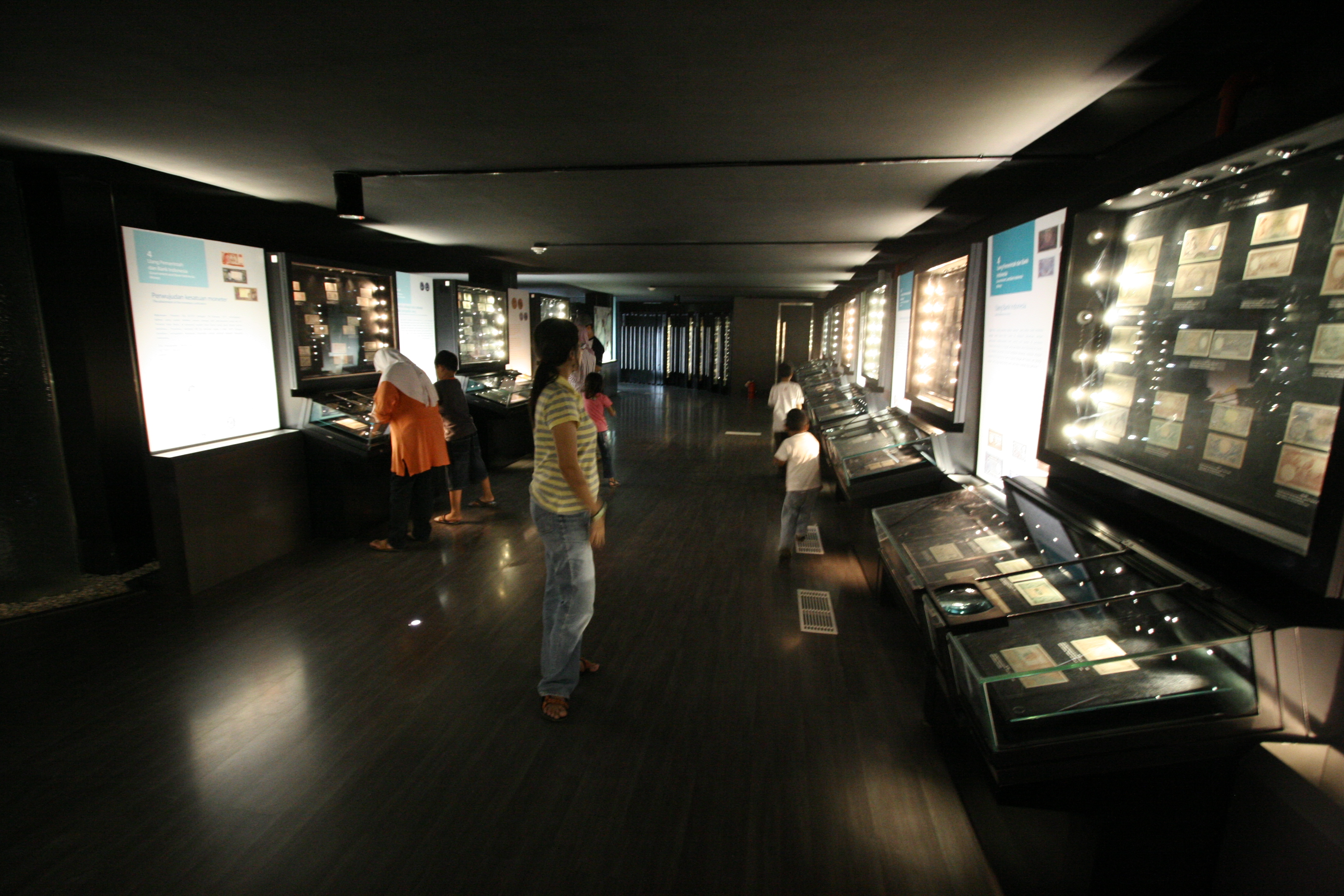
Inside, the museum walks visitors through Indonesia's monetary history using audiovisual displays and physical artifacts. The collection includes currencies from around the world dating as far back as the 14th century pre-colonial era. Exhibits trace the full arc: the early spice trade that first drew foreign merchants to the archipelago, the Dutch East India Company's monopoly over nutmeg and cloves, the colonial banking system that channeled profits back to Amsterdam, currencies issued under Japanese occupation, and the economic upheavals of independent Indonesia culminating in the devastating 1997 Asian financial crisis. Mock-ups of old bank vaults and trading rooms bring the dry subject of monetary policy to life. A visitor can stand in a recreation of a Dutch East Indies bank office and see exactly how colonial wealth was counted, stored, and shipped - the mundane mechanics behind centuries of extraction.
From the Air
Located at 6.14S, 106.81E in Jakarta Old Town (Kota Tua), on the north side of central Jakarta. The museum sits near the historic Fatahillah Square. Nearest major airport is Soekarno-Hatta International (WIII), approximately 25 km northwest. Halim Perdanakusuma Airport (WIHH) is about 15 km southeast. The Old Town district is identifiable from the air by its colonial-era street grid and proximity to the old harbor of Sunda Kelapa.