Bank of Canada Museum
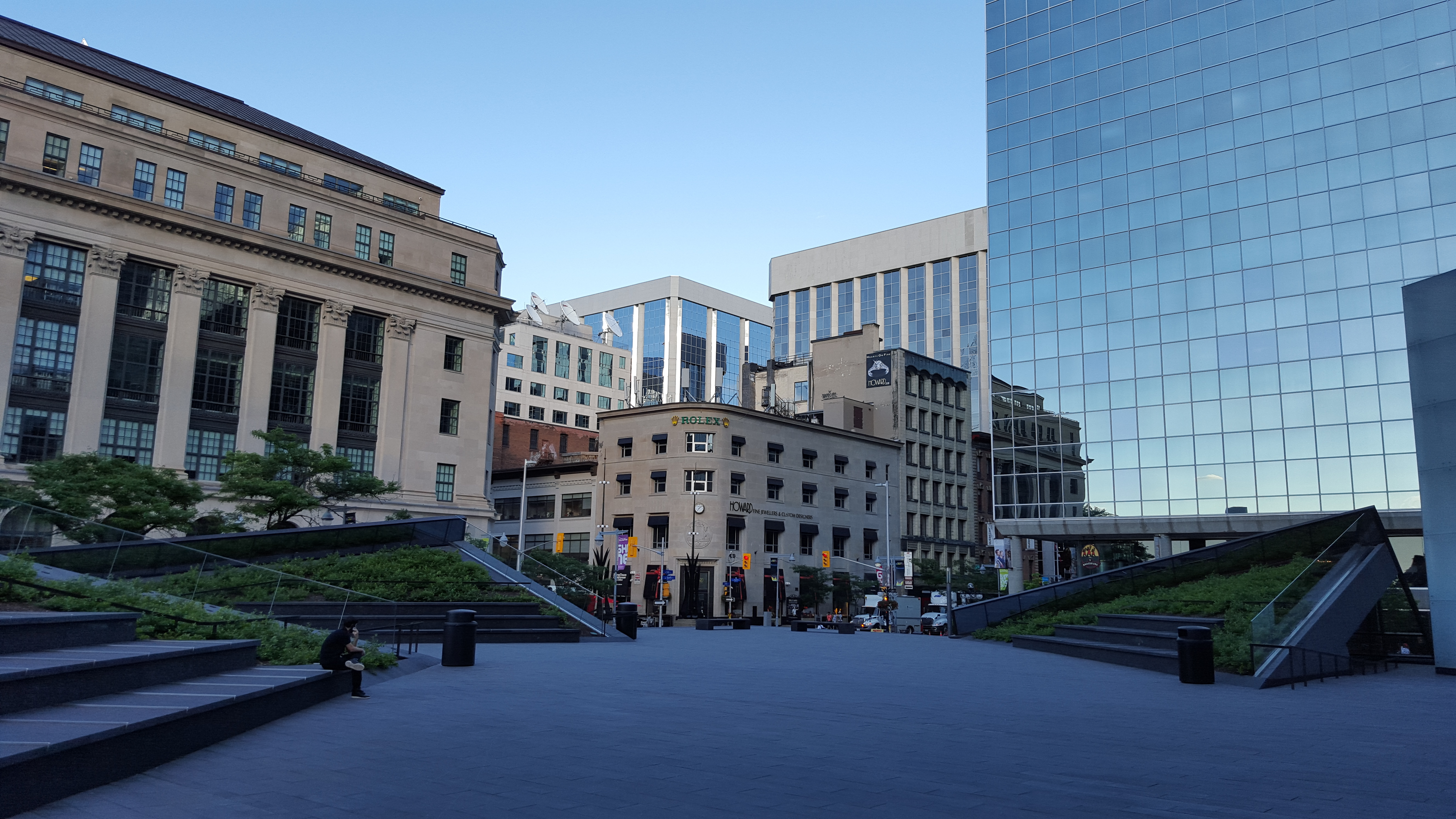
It costs nothing to get in, which is fitting for a museum devoted to the idea that money is, at its core, a matter of collective trust. The Bank of Canada Museum sits beneath the plaza of the nation's central bank, at the corner of Bank and Wellington Streets, steps from the Canadian Parliament Buildings. Since reopening in July 2017 after a four-year renovation, this interactive space has pursued a deceptively ambitious mandate: to convince every visitor that they, personally, are the economy. Its gamified exhibits and hands-on displays have drawn over 68,000 visitors in 2024 alone, making a persuasive case that understanding currency is not just for economists.
Building a Nation's Memory in Coins and Paper
The collection that fills these underground galleries began with a single proposal in the late 1950s. Bank Governor James Coyne envisioned a national currency collection, and in 1959 numismatic consultant G.R.L. Potter was hired to make it real. By 1962, Sheldon S. Carroll had become the Bank's first Curator, tasked by Governor Louis Rasminsky with assembling the most complete collection of Canadian coins, tokens, and paper money in existence. Carroll went further, building parallel collections of ancient, medieval, and modern foreign currency. The landmark acquisition came in 1963 when the Bank purchased the collection of J. Douglas Ferguson, Canada's most celebrated numismatist of his era. Ferguson's holdings included paper money from the French colonial regime and coins stretching back to antiquity. A separate landmark acquisition came in 1965, when the Hart Collection -- originally purchased by the Canadian government in 1883 -- was transferred from the Public Archives of Canada to the Bank.
From Chateau to Central Bank
The collection continued to grow through strategic purchases. In 1974, the Bank acquired a major trove from the Chateau de Ramezay in Montreal, home of Canada's first numismatic society, the Numismatic and Antiquarian Society of Montreal. That acquisition brought with it the collection of R.W. McLachlan, the country's leading numismatist of the late nineteenth and early twentieth centuries. In 1977, the Canadian Secretary of State formally designated the assemblage as the National Currency Collection. Today it holds not just coins and banknotes but dies, engraving plates, bank ledgers, weights and scales, cash registers, wallets, numismatic medals, and examples of counterfeit money. Each artifact tells a story about how Canadians have earned, saved, spent, and occasionally forged their way through history.
Two Museums in One Lifetime
The original Currency Museum opened its doors on December 5, 1980, inside the newly expanded Bank of Canada head office complex designed by architect Arthur Erickson. Located in the former Banker's Hall on the main floor of the original 1938 Bank of Canada Building, it displayed some 9,000 currency items from around the world. Visitors accessed the exhibits through a Garden Court atrium that was then open to the public. For over three decades, the museum remained largely unchanged. Then, on July 2, 2013, the doors closed for a complete reimagining. When the renamed Bank of Canada Museum reopened on July 1, 2017, it had traded the static displays of a traditional museum for an interactive experience built around the philosophy that economics is personal. Temporary exhibitions have since explored subjects from Viola Desmond, the human rights icon featured on the Vertical Series ten-dollar bill, to the myths and superstitions people have woven around money for millennia.
Teaching a Country About Its Own Money
The museum's educational ambitions extend well beyond its physical walls. Staff have created more than 40 lesson plans, activity guides, and school programs, both onsite and virtual, designed to help elementary and high school teachers meet their economic curriculum requirements. A growing archive of over 200 blog posts serves educators, special interest groups, and curious members of the public. In 2022, the museum launched its Award for Excellence in Teaching Economics, recognizing outstanding work in financial literacy by Canadian teachers. In 2024, educational programming reached over 8,400 students directly. The underlying message is consistent: money is not abstract. It is the collective agreement that makes daily life possible, and understanding how it works is a civic responsibility as fundamental as understanding how elections work. The fact that the museum charges no admission reinforces the point. Some knowledge, like the currency it explains, belongs to everyone.
From the Air
Located at 45.421N, 75.703W in downtown Ottawa, at the intersection of Bank Street and Wellington Street, immediately south of the Parliament Buildings. From the air, the Bank of Canada complex is identifiable by its modernist Arthur Erickson design adjacent to the Gothic Revival parliament. The nearest airport is Ottawa Macdonald-Cartier International (CYOW), about 10 km south. Best viewed at 2,000-3,000 feet AGL. The Rideau Canal and Chateau Laurier hotel are nearby visual landmarks.