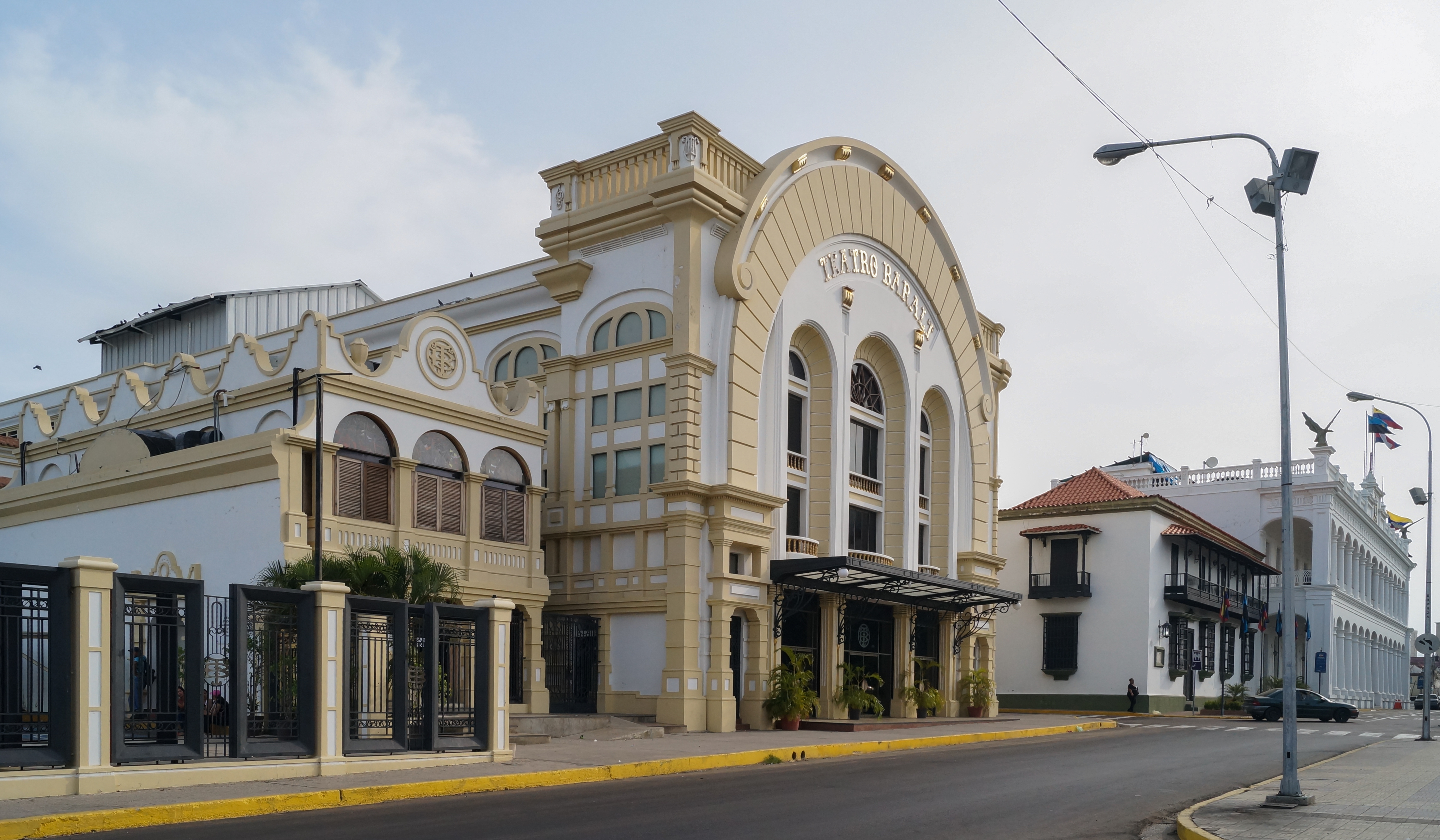
Baralt Theatre
The judges hated every prose entry. It was 1883, the grand inauguration of the newly rebuilt Teatro Baralt in Maracaibo, and a literary competition had been organized to mark the occasion. Seven playwrights submitted works in two categories. The three prose submissions were so poor that the judges refused to pick a winner and simply drew a name at random. The winning play, Sufrir por culpas ajenas by Eduardo Gallegos Celis, debuted that night largely by luck. The verse entries fared better, with Que mujer by Octavio Hernandez taking first prize. It was a fitting start for a theatre that has always been as much about the drama surrounding it as the drama on its stage.
A Family's Gift Becomes a City's Stage
The story of the Baralt Theatre begins not with architecture but with generosity. Don Miguel Antonio Baralt, patriarch of one of Maracaibo's most influential families and father of the writer Rafael Maria Baralt, owned land at the intersection of Urdaneta and Venezuela streets, which he regularly leased for public performances. A temporary stage stood on the property, and by the early 1800s, locals had taken to calling the spot "el Teatro de Baralt." In 1839, construction of a proper performance hall began on the donated land. The state contributed 3,000 pesos in 1845 to build something more permanent. This first building served Maracaibo from the 1840s until 1877, when it was demolished to make way for a full theatre. The first attempt to build a theatre at the site actually dates to 1811, when Jose Domingo Rus petitioned the Court of Spain, but the request was denied.
Three Buildings, One Corner
The second theatre rose in neoclassical style, designed by Manuel de Obando. Rafael Parra, President of the State of Zulia, laid the first stone on October 7, 1877, and the building was inaugurated on July 24, 1883, timed to coincide with celebrations for Simon Bolivar's birthday. This was the theatre of the random play drawing. It stood for 45 years until 1928, when Governor Vicente Perez Soto, flush with the prosperity brought by Zulia's booming oil industry, ordered another demolition and rebuild. The third and current theatre opened on December 19, 1932, designed with Art Nouveau exterior features including iron-detailed arches and balustrades, and an interior decorated in art deco style by the Zulian artist Antonio Angulo. The stage curtain, donated by the Spanish government for the opening, was designed by Cesar Bulbena.
Where Cinema Came to Venezuela
On July 11, 1896, barely six months after the Lumiere brothers' first public screenings in Paris, Luis Manuel Mendez and Manuel Trujillo Duran projected moving images inside the Baralt Theatre. It was the first film screening in Venezuelan history. Seven months later, on January 28, 1897, the theatre hosted the premiere of the first Venezuelan-made films: two short pieces, Un celebre especialista sacando muelas en el gran Hotel Europa and Muchachos banandose en la laguna de Maracaibo. In 1912, Alciro Ferrebus Rincon and Jose Garcia Rebot filmed Maracaibo en el teatro Baralt inside the building itself. The theatre's connection to cinema endured; it later housed the University of Zulia's cinema club, and today the Venezuelan National Short Film Festival, named after Trujillo Duran, is held there annually during the last week of January.
Restoration and Rediscovery
The theatre was designated a National Monument in November 1981, recognizing both its cultural significance and its place in the historic center of Maracaibo. A long restoration beginning in 1986, led by architect Paolo D'onghia, did not conclude until 1998. During the work, D'onghia uncovered the foundations of the original 1839 building buried beneath the current structure. Rather than demolish them, he preserved the old foundations and created a basement entrance to incorporate them into the visitor experience. Francisco Hung designed the floors for this lower entrance hall, echoing a mosaic pattern from the main hall above. The theatre today seats 3,000 across stalls and a raised circle, and stays cool through an ingenious system of concrete latticework grilles and large windows that ventilate the building naturally, replacing an earlier system that pumped air over a basement ice box.
From the Air
Coordinates: 10.64N, 71.61W, in downtown Maracaibo at the northwestern corner of Plaza Bolivar. The theatre is part of the historic center of Maracaibo, Venezuela's second-largest city, on the western shore of Lake Maracaibo. Nearest airport is La Chinita International (SVMC/MAR), approximately 15 km southwest of the city center. From the air, the historic center is identifiable as the dense urban grid near the lakefront. Best viewed at lower altitudes in clear conditions.