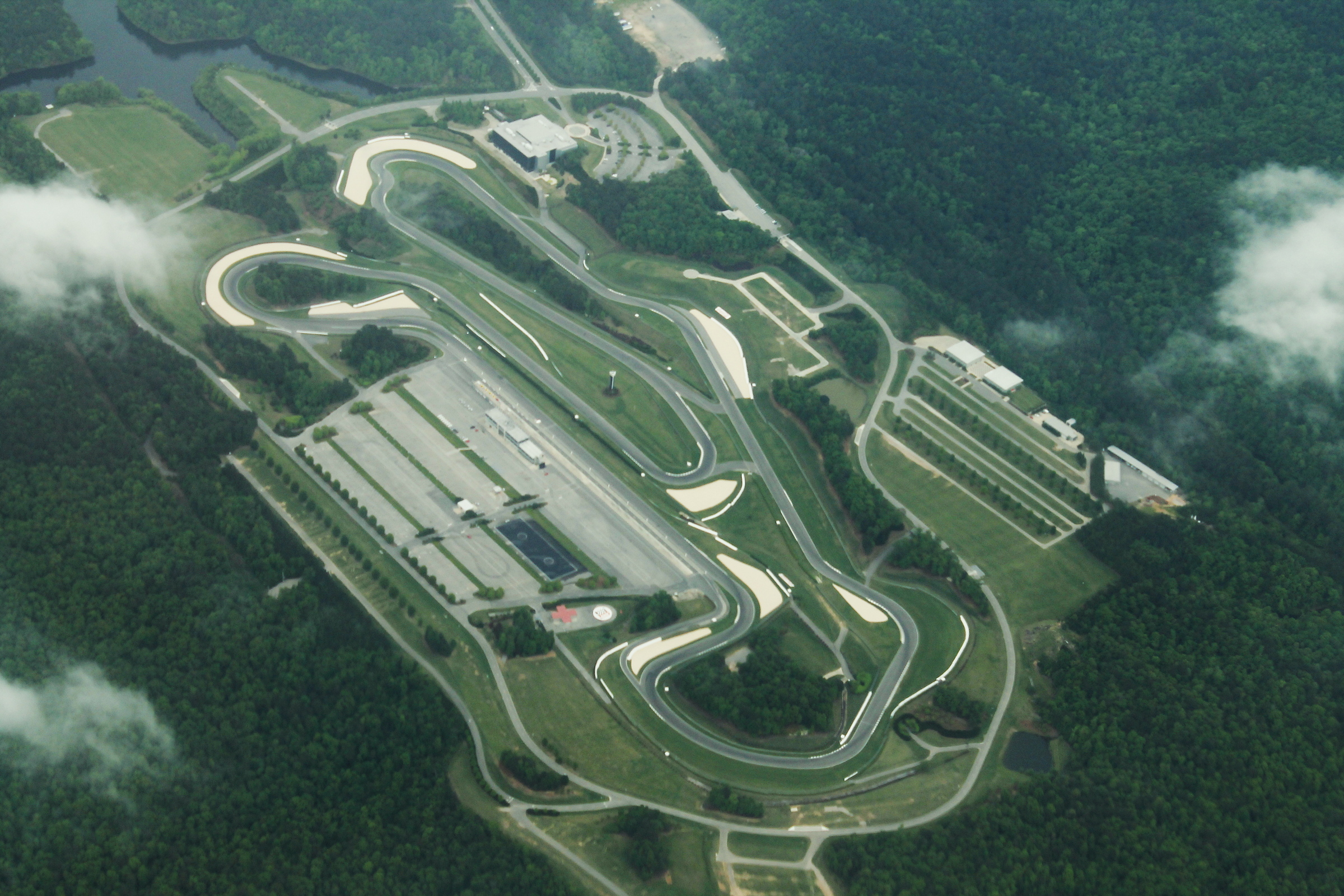
Barber Motorsports Park
The Turns 5 and 6 complex is called Charlotte's Web. Not because of any literary reference to friendship and loss, but because a giant steel spider sculpture sits in the infield, legs splayed across the grass, watching cars scream past at triple-digit speeds. That blend of the unexpected - fine art planted inside a racetrack, garden tours winding through a motorsport facility, 1,600 motorcycles displayed like sculptures in a museum that started as one man's private collection - defines Barber Motorsports Park. Located in Birmingham, Alabama, built by businessman George W. Barber, this is a racing complex that refuses to be only a racing complex.
The Augusta National of Motorsports
The nickname is earned, not given lightly. Barber Motorsports Park is noted for landscaping and greenery that would look at home at a botanical garden, not a venue where IndyCars hit 180 miles per hour. The track has hosted the IndyCar Series Grand Prix of Alabama since 2010, along with MotoAmerica, Grand-Am, vintage racing events, and dozens of other series. The FIA once nominated it as the official test track for the US F1 Team. Porsche runs its Track Experience program here. The facility includes a proving ground that opened in 2014 with a 150-by-350-foot wet/dry skid pad, plus seven miles of off-road trails and a dedicated obstacle course with nine features including water crossings and rock crawls. This is not a single-purpose venue - it is a motorsport campus.
From Private Obsession to World Record
George Barber started collecting vintage motorcycles in 1988 with a simple observation: no museum anywhere reflected the full international history of motorcycles. He wanted people to see machines they had only encountered in books and magazines. By 1994 his private collection had grown large enough to become a 501(c)(3) nonprofit. In 1997, the Barber Museum sent 21 motorcycles to New York's Guggenheim Museum for the landmark exhibition The Art of the Motorcycle, which traveled to Chicago and the Guggenheim Bilbao. That success convinced Barber to think bigger. He consulted with world champion racers John Surtees and Dan Gurney on designing a facility that would combine a museum with a working racetrack. In 2003, the museum moved to its permanent home at Barber Motorsports Park.
1,600 Machines and Counting
The Barber Vintage Motorsports Museum holds more than 1,600 vintage and modern motorcycles and racing cars - certified by Guinness as the largest motorcycle museum in the world. It also contains the largest collection of Lotus race cars anywhere. The motorcycle collection spans from 1904 to present production, with over 900 bikes on display representing more than 140 different marques from 16 countries, including manufacturers from as far away as Australia, New Zealand, and Sweden. The bikes are displayed not in dusty rows but as curated installations, stacked on multilevel racks that turn the museum into something closer to an art gallery. Each October, the Annual Barber Vintage Festival brings historic racing to the track, pairing museum-quality machines with the sound and fury of competition.
Art Among the Apexes
Giant steel spiders and dragonflies, created by artist Bill Secunda, populate the track's infield. A pair of lions guards one section. A Sisyphean figure pushes an eternal boulder. Five large steel gates by Branko Medenica bear motorsport and wildlife themes. Near a pond along the perimeter road, a wind-powered kinetic sculpture by Edward Lee Hendricks turns with the Alabama breeze. In front of the museum stand three stainless steel monuments by Theodore Gall called The Chase, a year-long commission weighing nearly five tons. And winding through it all, garden club tours aboard open-air trams pass collections like the 17 cloned Hightower Willow Oaks - a cultivar that exists in only two other places on Earth. Barber Motorsports Park is a place where speed, art, horticulture, and history share the same address.
From the Air
Located at 33.533°N, 86.619°W on the eastern side of the Birmingham metropolitan area. The racetrack circuit is clearly visible from altitude as a looping ribbon of pavement carved through heavily landscaped green terrain. The large museum building sits near the track. Birmingham-Shuttlesworth International Airport (KBHM) is approximately 12 miles west-northwest. Best viewed at 3,000-5,000 feet AGL. The track layout, proving ground, and off-road courses are all distinguishable from the air in clear conditions.