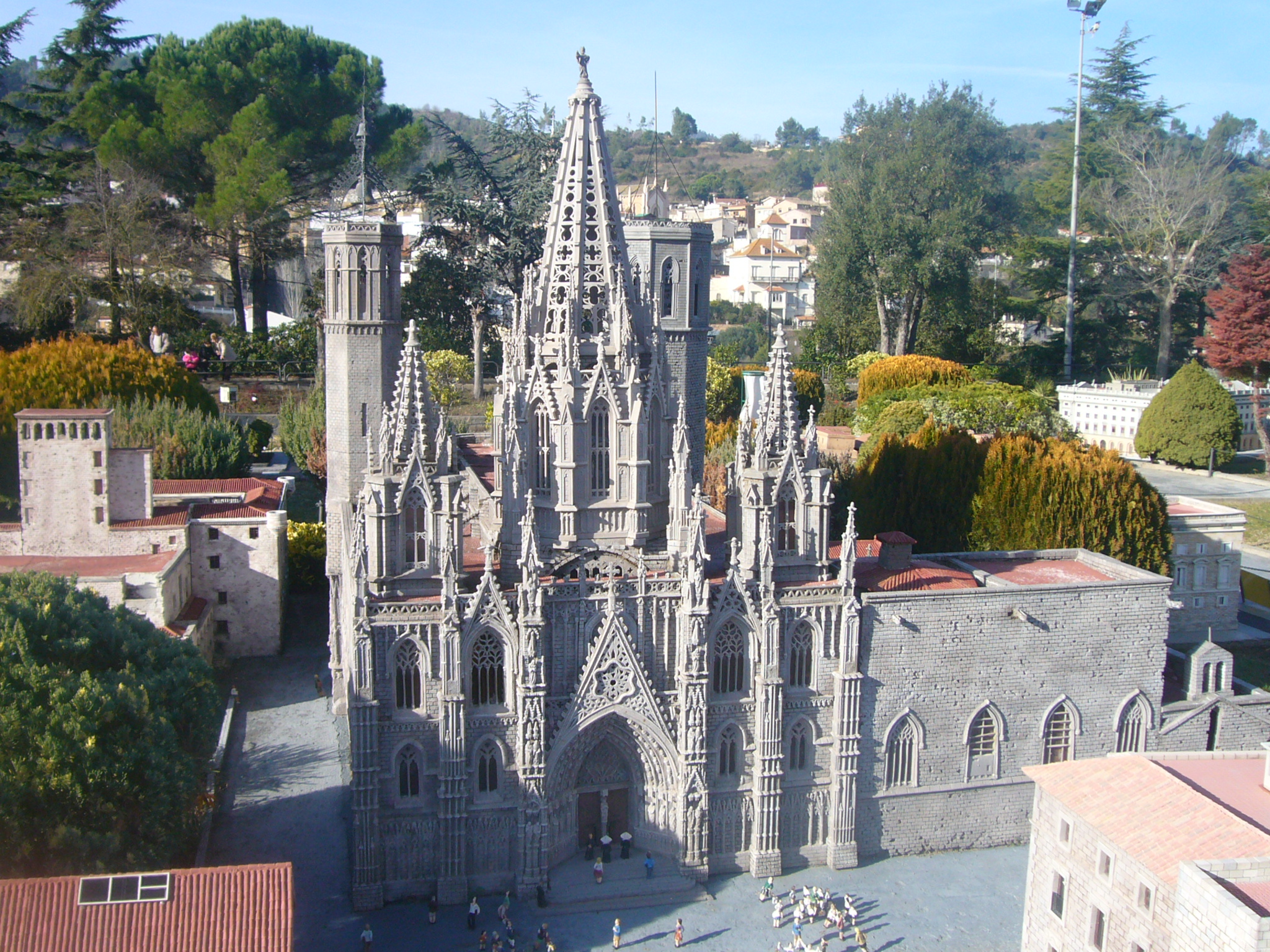
Barcelona Cathedral
Thirteen white geese patrol the cloister of Barcelona Cathedral, honking and preening in the shade of palm trees and magnolias. Why thirteen? Because Eulalia, the young woman to whom the cathedral is dedicated, was thirteen when the Romans killed her. The number is a memorial and the geese are sentinels, keeping alive a story that is at least seventeen centuries old. This is not the Sagrada Familia -- Gaudi's basilica draws the crowds and the cameras -- but Barcelona Cathedral is the city's actual seat of religious authority, the place where archbishops are installed and where the bones of a patron saint rest in a Gothic crypt beneath the high altar.
The Martyrdom That Built a Cathedral
Eulalia of Barcelona was a young Christian who, according to Catholic tradition, was martyred during the Roman persecution of the early 4th century. The stories of her death are vivid and terrible. In one account, she was exposed naked in the public square and a miraculous snowfall covered her body. In another, she was placed in a barrel studded with knives and rolled down the street now called Baixada de Santa Eulalia -- the Descent of Saint Eulalia. Her relics were eventually entombed in the cathedral's crypt, where they remain today in an alabaster sarcophagus. The cathedral is formally named the Cathedral of the Holy Cross and Saint Eulalia, and Eulalia shares the honor of co-patron saint of Barcelona with the Virgin of La Merce.
Catalan Gothic, Not French Gothic
Construction of the present cathedral began in the 13th century and continued through the 15th, with the principal work completed during the 14th century. The architectural style is Catalan Gothic, which differs markedly from the soaring French Gothic of Chartres or Notre-Dame. Where French Gothic reaches for height -- pointed arches stretching skyward, flying buttresses bracing impossibly thin walls -- Catalan Gothic seeks balance. Barcelona Cathedral is 93 meters long, 40 meters wide, and 28 meters high at the central nave. Its proportions emphasize breadth over height, creating interior spaces that feel expansive rather than vertiginous. The bell towers rise 54 meters, and the cimborio -- the central lantern -- reaches 70 meters. The neo-Gothic facade, added in the late 19th century, gives the exterior a more ornate character than the plain fronts typical of medieval Catalan churches.
A Cross From Lepanto and the Knights of the Golden Fleece
The cathedral's chapels accumulate centuries of history in small, candlelit spaces. The Chapel of the Holy Sacrament contains a crucifix said to have been aboard a ship at the Battle of Lepanto in 1571, the naval engagement that halted Ottoman expansion in the western Mediterranean. According to legend, the figure on the cross moved to cover a hole in the ship's hull that would have sunk it. In the choir stalls, the coats of arms of the knights of the Order of the Golden Fleece mark the occasion in 1519 when Charles V, Holy Roman Emperor, held a chapter of his order here during his first visit to Spain. Barcelona's Mediterranean port offered the best communication with the far-flung Habsburg dominions, and the cathedral's generous proportions could accommodate the pomp the occasion required.
The Gothic Quarter That Almost Wasn't
The neighborhood surrounding the cathedral -- the Gothic Quarter -- is medieval in atmosphere but partly modern in construction. Between 1927 and 1970, over forty structures in the area were remodeled or reconstructed in Gothic style, creating a unified historical aesthetic that serves as the backdrop for the cathedral. The project was simultaneously a genuine act of preservation and a calculated piece of Catalan nation-building, linking the region's identity to its medieval past. Today, the cathedral anchors this constructed heritage. On the feast of Corpus Christi, the tradition of l'ou com balla -- the dancing egg, balanced on a fountain jet in the cloister -- continues as it has for centuries. Electronic candles have replaced wax ones at the saints' shrines, and a gift shop occupies part of the cloister, but the geese remain, and the bones of a thirteen-year-old martyr still rest in the crypt below.
From the Air
Located at 41.38N, 2.18E in Barcelona's Gothic Quarter. The cathedral's bell towers and neo-Gothic spire are visible landmarks in the Ciutat Vella, the oldest section of the city between La Rambla and Via Laietana. Barcelona-El Prat Airport (LEBL) is 12 km southwest. From 2,000-3,000 feet, the cathedral is identifiable by its cruciform footprint and the open rectangle of the cloister within the dense medieval street grid.