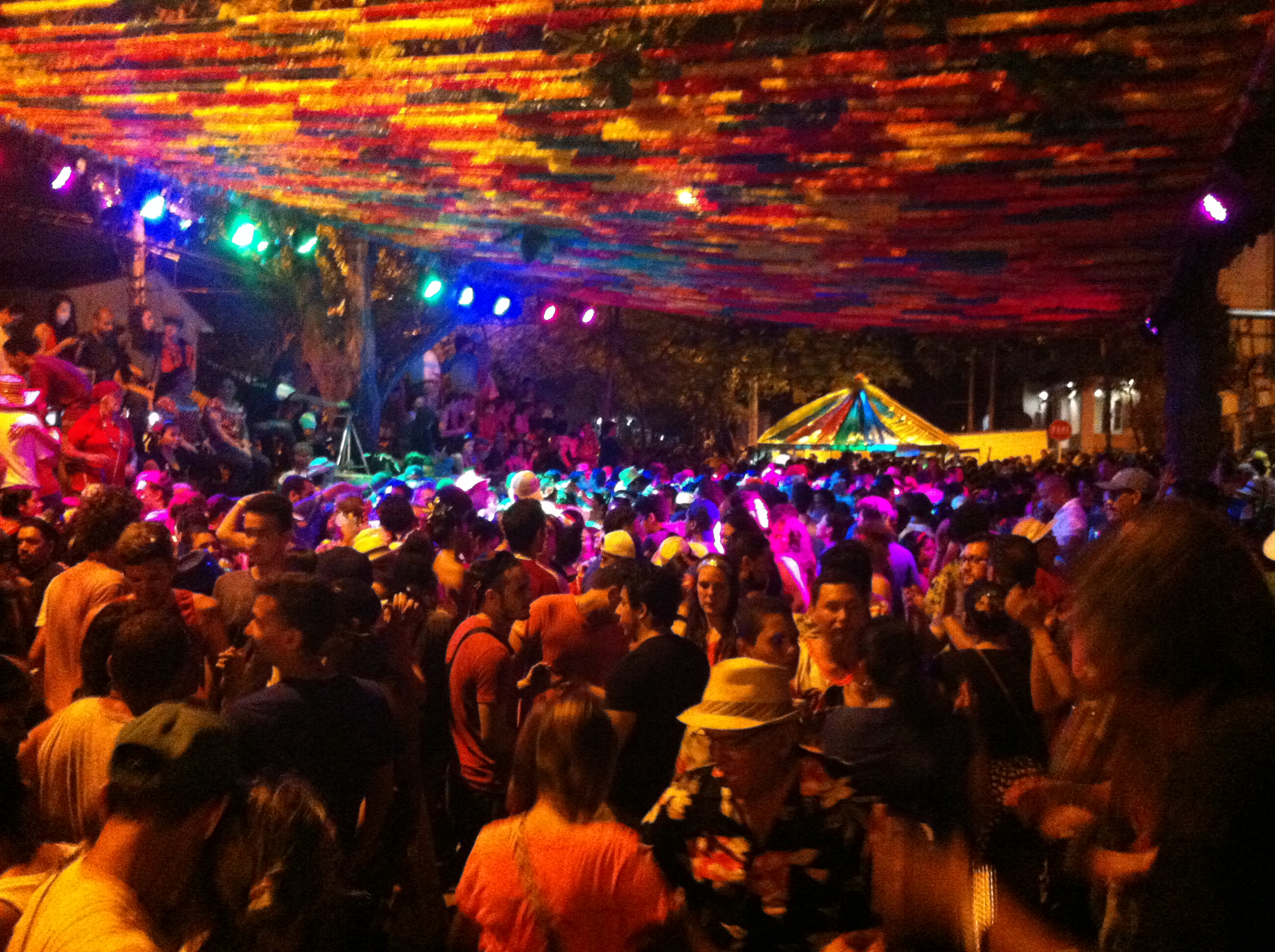
Barranquilla Carnival
On the last day, they bury Joselito. His widows - some of them men in dresses, all of them wailing with theatrical grief - carry him through the streets in a flower-draped coffin while thousands of mourners weep, laugh, and dance behind them. Joselito Carnaval is not a real person, or sometimes he is: a dummy, a volunteer, a symbol of the four days of cumbia, rum, and abandon that have just consumed the city of Barranquilla. His death means the carnival is over. His resurrection, guaranteed the following year, means it never truly ends. This is the Barranquilla Carnival - the second-largest in the world, a UNESCO-recognized masterpiece, and the most concentrated expression of Colombia's layered cultural identity.
Where Three Worlds Collide
Barranquilla sits where the Magdalena River meets the Caribbean Sea, and its carnival reflects the cultural collision that geography produced. Spanish colonists brought Catholic pre-Lenten traditions and dances like the paloteo. Enslaved Africans carried rhythms, movement, and spiritual practices across the Atlantic. Indigenous peoples contributed their own ceremonial forms. The result is a celebration that cannot be reduced to any single tradition. Cumbia, the carnival's signature music, is itself a fusion - a courtship dance characterized by the woman's subtle hip movements, performed to the rhythm of drums, accordions, maracas, and gaita flutes. The music also spans porro, mapale, chandé, fandango, and the infectious merecumbe. When the carnival was declared a National Cultural Heritage by Colombia's Congress in 2002, and a Masterpiece of the Oral and Intangible Heritage of Humanity by UNESCO in November 2003, the recognition acknowledged not just a party but a living archive of how three continents shaped one city.
The Battle That Replaced a War
The carnival's modern form dates to 1903, when General Heriberto Vengoechea organized the first Battle of Flowers to celebrate the end of the Thousand Days' War, a devastating civil conflict that had suspended the festivities since 1900. What began as a reconciliation gesture - two groups of people in flower-decorated carriages throwing blossoms, streamers, and confetti at each other along the old Camellon Abello boulevard - became the carnival's most iconic event. Today the Battle of Flowers is a parade of more than twenty floats, led by the Carnival Queen, followed by folkloric dance groups, individual costumes, cumbia ensembles, and comparsas. It rolls down the Via 40, an industrial avenue that transforms into the carnival's main stage every Saturday before Ash Wednesday. The spectacle has grown far beyond flower-throwing, but the original purpose persists: a city choosing joy over the memory of bloodshed.
Masks, Monkey-Elephants, and the Momo King
The Marimondas are everywhere. These hooded figures, with their absurdly long noses, floppy elephant ears, and pants worn deliberately backward, are the carnival's most popular costume. They originated among Barranquilla's working-class neighborhoods as satire - a mockery of the expensive, elaborate disguises that wealthier revelers could afford. The bright sack-cloth hoods, cheap vests, and ties assembled from whatever was available became the people's costume, a visual joke that anyone could participate in regardless of income. Beyond the Marimondas, the carnival's cast includes El Garabato dancers who enact a mystical battle between life and death, the Congo groups whose movements preserve the memory of African enslavement, and the Monocucos in their flowing white robes. King Momo, a figure who first appeared in the carnival's documented history in 1888, presides over the festivities alongside the Carnival Queen, whose selection every August demands demonstrated mastery of cumbia, salsa, merengue, champeta, and mapale.
La Guacherna and the Night Parade
The carnival's most atmospheric event happens before the official four days begin. La Guacherna, a nocturnal parade on the Friday before the Battle of Flowers, fills the streets with candlelight, colored lanterns, cumbiamba groups, and the hypnotic pulse of tamboras and millo flutes. The tradition was recovered in 1974 by Esthercita Forero, a beloved composer who had witnessed a similar nighttime procession in Santiago de Cuba in 1958 and realized Barranquilla lacked one. She spent years persuading the carnival board to add it to the official program. The name itself came from Forero's childhood memory of cumbia groups rehearsing in the streets, when neighbors would say a guacherna was passing by. Her merengue composition of the same name, most famously recorded by Dominican singer Milly Quezada, became the parade's anthem. What Forero created was more than an event - it was a reclamation of the carnival's grassroots energy, its origins in neighborhoods where people danced not for spectators but for each other.
The Slogan Says It All
Quien lo vive, es quien lo goza - those who live it are those who enjoy it. The carnival's official slogan doubles as an admission: Barranquilla's celebration resists secondhand experience. The four days between Saturday and Shrove Tuesday compress a remarkable density of events - the Battle of Flowers, the Great Tradition and Folklore Parade on Sunday with its 300-plus dance groups and no floats, the Fantasy Parade on Monday with its innovative choreography blending samba and electronic music with local forms, and the Monday-night Orchestra Festival where ensembles compete for the coveted Congo de Oro award across categories from tropical to urban. Then comes Tuesday and Joselito's funeral, the comic-tragic conclusion where thousands take to the streets in mock mourning. The character dies of exhaustion and excess, they say, only to rise again next year. In a city where European, African, and indigenous traditions have been blending for centuries, this annual death-and-resurrection ritual feels less like a performance and more like a promise.
From the Air
Located at 10.96N, 74.80W on Colombia's Caribbean coast at the mouth of the Magdalena River. The city center and parade routes along Via 40 are identifiable from altitude. Nearest airport is Ernesto Cortissoz International (SKBQ/BAQ), approximately 5 nm south of the city center. Barranquilla's position between the river and the coast is clearly visible from the air, with the Magdalena's wide delta spreading to the west. During carnival (four days before Ash Wednesday), crowds and parades may be visible along the main avenues. Best viewed at 3,000-5,000 ft.