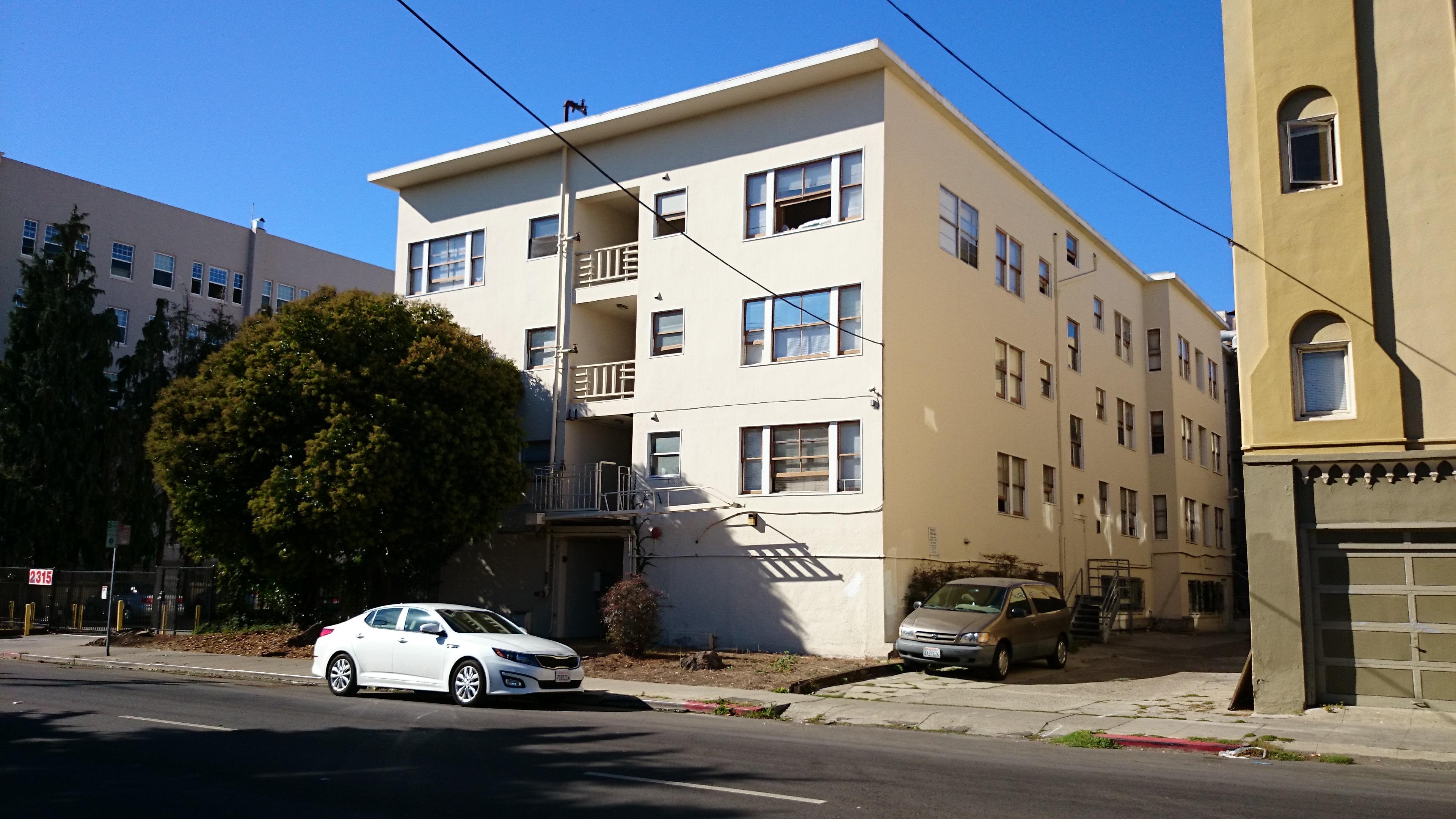
Barrington Hall
"Welcome to Barrington, kids! Please keep your hands and arms inside the ride at all times." The mural greeting visitors inside the front door of 2315 Dwight Way was painted in a neo-psychedelic style with anime flourishes, a Disneyland parody for a place that was anything but wholesome. For more than half a century, Barrington Hall operated as a student housing cooperative two blocks from People's Park in Berkeley, California. The Ninth Circuit Court of Appeals described it in formal legal prose that reads like a fever dream: "If Berkeley was the last bastion of sixties counterculture, Barrington Hall was surely the last rampart." The East Bay Express preferred a painterly metaphor, calling it "the great Breughel painting of Berkeley campus counterculture." Both were trying to capture something that ultimately defied neat description: a four-story apartment building where every wall was covered in decades of murals and graffiti, where punk bands played at LSD-laced Wine Dinners, and where the devotion to cooperation in a nation committed to competition bore radical fruit for thirty-five years.
From Fraternity House to Safe House
Barrington Hall started conventionally enough. The original building was a Sigma Nu fraternity house on Ridge Road, leased in 1933 by the University Students' Cooperative Association. When the lease expired in 1935, USCA purchased the largest apartment building in Berkeley and transferred the name. Two hundred men moved in. The building served the U.S. Navy from 1943 to 1948, which returned it significantly upgraded. From the beginning, USCA residences were open to all students regardless of race, religion, or nationality. In 1967, Barrington's house council voted to go co-ed, and the university promptly revoked their accreditation for violating its role of acting "in loco parentis." That revocation only accelerated the drift. By the 1969 People's Park riots, Barrington was already an infamous place. It became, in the words of its own history, a safe house for deviance, good or ill - safe for unmarried men and women to live together, safe to paint the walls, safe to crash if you had nowhere else to stay.
The Walls That Remembered Everything
Every surface inside Barrington was layered with art. The tradition of murals began in the 1960s with psychedelic works like a large Beatles Yellow Submarine scene. As decades passed, the style shifted. The 1970s brought a mural of Sacco and Vanzetti. The 1980s brought punk rock imagery. But house by-laws declared old murals sacred, so the artistic expressions of several eras coexisted on Barrington's walls, creating a living history of late twentieth-century counterculture. The graffiti was more than tags. Residents scrawled long debates about revolution, religion, and art that continued for years, one contribution layered atop another. "Only seven more shopping days till Armageddon," read one scrawled line that Herb Caen quoted in his San Francisco Chronicle column. Walking the hallways meant reading the arguments and obsessions of three decades of Berkeley radicals.
Wine Dinners and the Punk Underground
The Wine Dinners were Barrington's signature ritual - themed dinners with names like Satan's Village Wine Dinner and the Cannibal Wine Dinner, the latter complete with body-part-shaped food. Before a 1984 legal arbitration restricted the hall to three amplified-music events per semester, Barrington was a launching pad for Bay Area punk. Black Flag, Dead Kennedys, Flipper, X, NOFX, and Operation Ivy all played there. Camper Van Beethoven performed at a Wine Dinner in 1988 under the anagram Vampire Can Mating Oven. Primus drew direct inspiration: their song "Frizzle Fry" and the theme of their album Tales From the Punchbowl were born from the LSD-laced punch served at these gatherings. Les Claypool later memorialized the place in a 2002 song: "Does anyone here remember Barrington Hall? They care not for wrong or right, they electrocute the night." The house band Acid Rain, later renamed Idiot Flesh, spawned members who went on to perform with Sleepytime Gorilla Museum and Faun Fables.
A Spiral Beyond Control
Complaints against Barrington had piled up since the early 1960s. A 1983 report to Berkeley Health and Human Services catalogued a resident's grievances: a live boa constrictor, fires, dried blood on her door, food and burning matches thrown at dinner, a person brandishing a whip in the hallways. By 1985, heroin had arrived. The house manager admitted to addiction in 1986, and nearly a dozen residents were using. The USCA threatened closure after two overdoses. Neighbors filed federal and state lawsuits under the RICO Act, alleging that Barrington residents had collectively voted at a house meeting to allow drug dealing and that at least nineteen individuals sold drugs on the premises over more than twenty years. Three previous attempts to close the hall were defeated by campaigns organized by current and former residents. But in 1989, a USCA referendum finally voted to shut it down.
The Last Rampart Falls
Barrington's residents did not go quietly. They fought the closure in court, in the referendum campaign, and ultimately by squatting in the building. In March 1990, what began as a poetry reading escalated into a night-long riot involving Berkeley police, off-duty officers hired by the USCA, and the residents. Fires burned twenty feet high. Seventeen people were arrested. Squatters were readmitted the next day - but a week later, one was killed in a fall from the roof. The final eviction came in September 1990. The San Francisco Chronicle marked the occasion with an epitaph: "Berkeley's last student bastion for radical behavior is expected to close today, burying a civilization Margaret Mead might have chosen for her final expedition into cultural anthropology." The building was renamed Evans Manor and became privately operated student housing. Among Barrington's notable former residents were Steve Wozniak, co-founder of Apple, and Michael Lehmann, who directed the film Heathers.
From the Air
Located at 37.8647N, 122.262W in the Southside neighborhood of Berkeley, two blocks south of the UC Berkeley campus along Dwight Way. The four-story building sits in a dense residential area and is not individually distinguishable from altitude, but the UC Berkeley campus and People's Park (two blocks north) provide clear reference points. Best viewed at 1,500-3,000 feet AGL. Oakland International (KOAK) lies 9nm south. Buchanan Field (KCCR) is 12nm northeast.