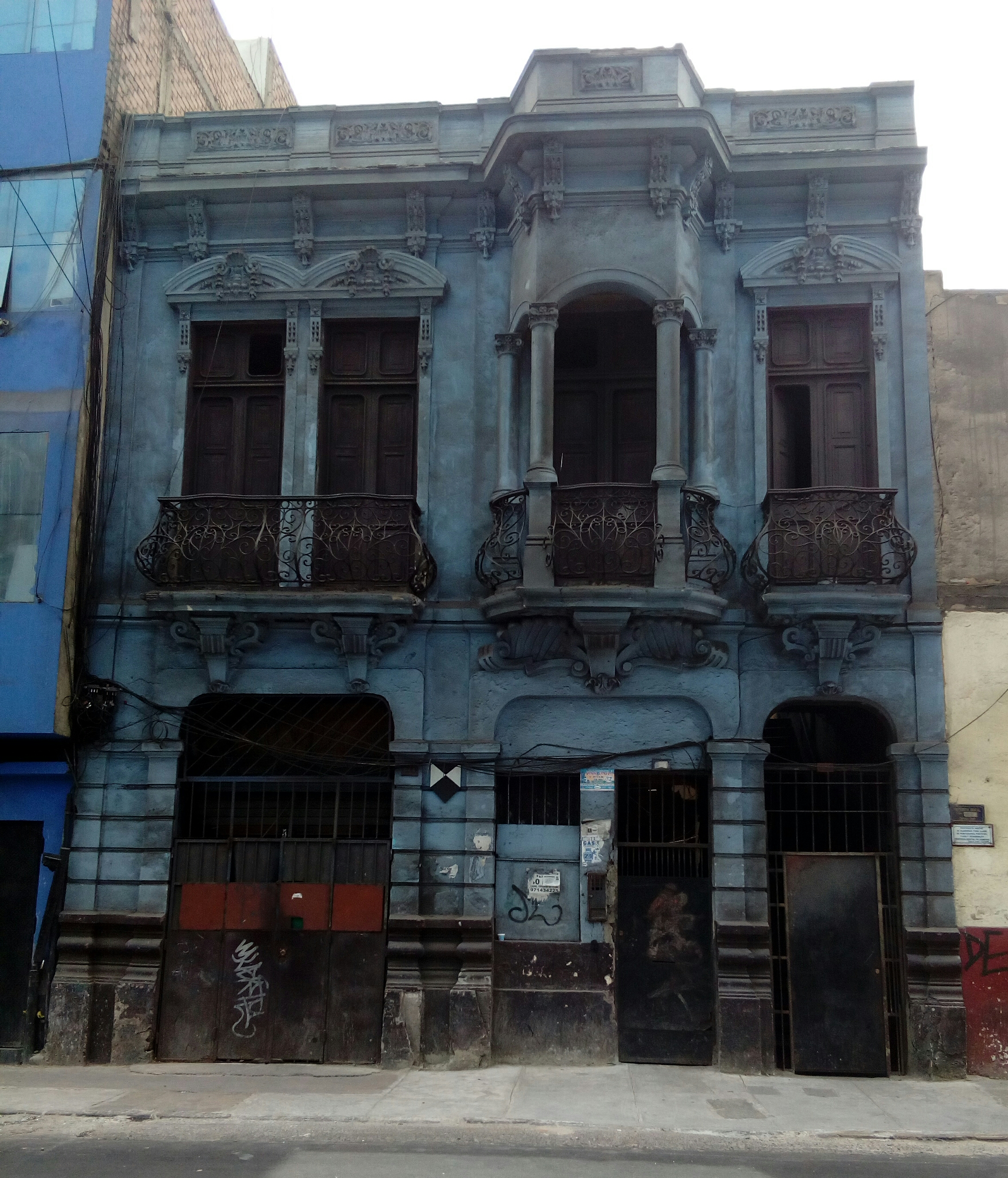
Barrios Altos Massacre
They were raising money to fix the building. On the evening of November 3, 1991, residents of 840 Jiron Huanta in Lima's Barrios Altos neighborhood had gathered on the first floor for a barbecue -- a pollada, the kind of communal fundraiser that holds working-class Lima together. Upstairs, a separate meeting was underway. At 11:30 pm, six masked men burst through the entrance. They had arrived in two stolen vehicles fitted with police lights and sirens, which they switched off before reaching the door. What happened in the next two minutes would take more than a decade to reach a courtroom.
Two Minutes on Jiron Huanta
The gunmen, their faces hidden behind balaclavas, ordered everyone to the floor. Then they opened fire. For approximately two minutes, they swept the room with sub-machine guns equipped with silencers. Fifteen people died, including an eight-year-old boy. Four others were seriously wounded; one was left permanently disabled. Police investigators later recovered 111 cartridges and 33 bullets of the same caliber at the scene. The attackers were members of Grupo Colina, a clandestine unit embedded within Peru's military intelligence apparatus. Their stated target was a meeting of Shining Path rebels on the building's second floor. But the people they killed were on the first floor -- neighbors at a community gathering. Judicial authorities later determined that the victims were not terrorists.
Buried by Power
Congress convened an investigation committee within weeks. In December, the committee inspected the building, interviewed witnesses, and began assembling findings. They never finished. On April 5, 1992, President Alberto Fujimori dissolved Congress in what became known as his "palace coup," and the newly constituted legislature that replaced it never resumed the inquiry. When judicial authorities finally managed to open an investigation in April 1995, the military courts immediately filed for jurisdiction. Before the Supreme Court could rule, Congress passed Law No. 26479 -- a sweeping amnesty that shielded all security force members from prosecution for human rights violations committed after May 1980. The amnesty buried the case, but not the evidence. Army officers had already testified publicly, in 1993 and again in 1995, that Grupo Colina members carried out the massacre, and that the heads of both the Joint Command of the Armed Forces and the National Intelligence Service had full knowledge of it.
Justice Across Borders
Survivors and victims' relatives brought their case to the Inter-American Court of Human Rights, established in 1979 by the Organization of American States. On March 14, 2001, the court ruled that Peru had violated the victims' rights and ordered compensation. The Peruvian government, now under new leadership after Fujimori's fall in 2000, agreed to pay $3.3 million to the four survivors and the families of the fifteen people killed. Congress repealed the amnesty law. The case was reopened. On March 21, 2001, Attorney General Nelly Calderon presented charges accusing Fujimori of being a "co-author" of the massacre, arguing that he exercised control over Grupo Colina through intelligence chief Vladimiro Montesinos. According to the prosecution's evidence, Fujimori went to intelligence headquarters to celebrate with officers after the massacre took place.
The Long Road to Accountability
Fujimori had fled to Japan in 2000, and his dual nationality complicated extradition. Japan considered him a national and its laws prohibited extraditing its own citizens; the two countries had no extradition agreement. An international arrest warrant was issued through Interpol in September 2001. Peru formally requested extradition in August 2003, citing the Barrios Altos massacre among the charges. The standoff ended when Fujimori made a miscalculation: in 2005, he traveled to Chile, where he was detained. After a lengthy extradition process, he was sent to Peru and ultimately convicted for his role in the massacre and other human rights crimes. The case became a landmark in Latin American jurisprudence, establishing that amnesty laws cannot shield state actors from accountability for crimes against humanity.
What Remains
Barrios Altos is one of Lima's oldest neighborhoods, a dense grid of colonial-era streets where working-class families have lived for generations. The building at 840 Jiron Huanta still stands in this neighborhood, a physical reminder of the night fifteen lives were taken by the very state apparatus meant to protect them. The massacre became one of the defining cases examined by Peru's Truth and Reconciliation Commission, and it remains central to the country's reckoning with the internal conflict that claimed tens of thousands of lives between 1980 and 2000. For the families who lost parents, children, and neighbors that November night, the legal victories were real but incomplete -- justice delivered, but lives unrestored.
From the Air
Located at 12.05S, 77.02W in the Barrios Altos neighborhood of central Lima, Peru. The historic neighborhood sits northeast of the Plaza Mayor, in the dense colonial grid of Lima's centro historico. Nearest major airport: Jorge Chavez International (SPJC), approximately 10 km northwest. The area is visible from low altitude as part of Lima's densely built historic core along the south bank of the Rimac River.