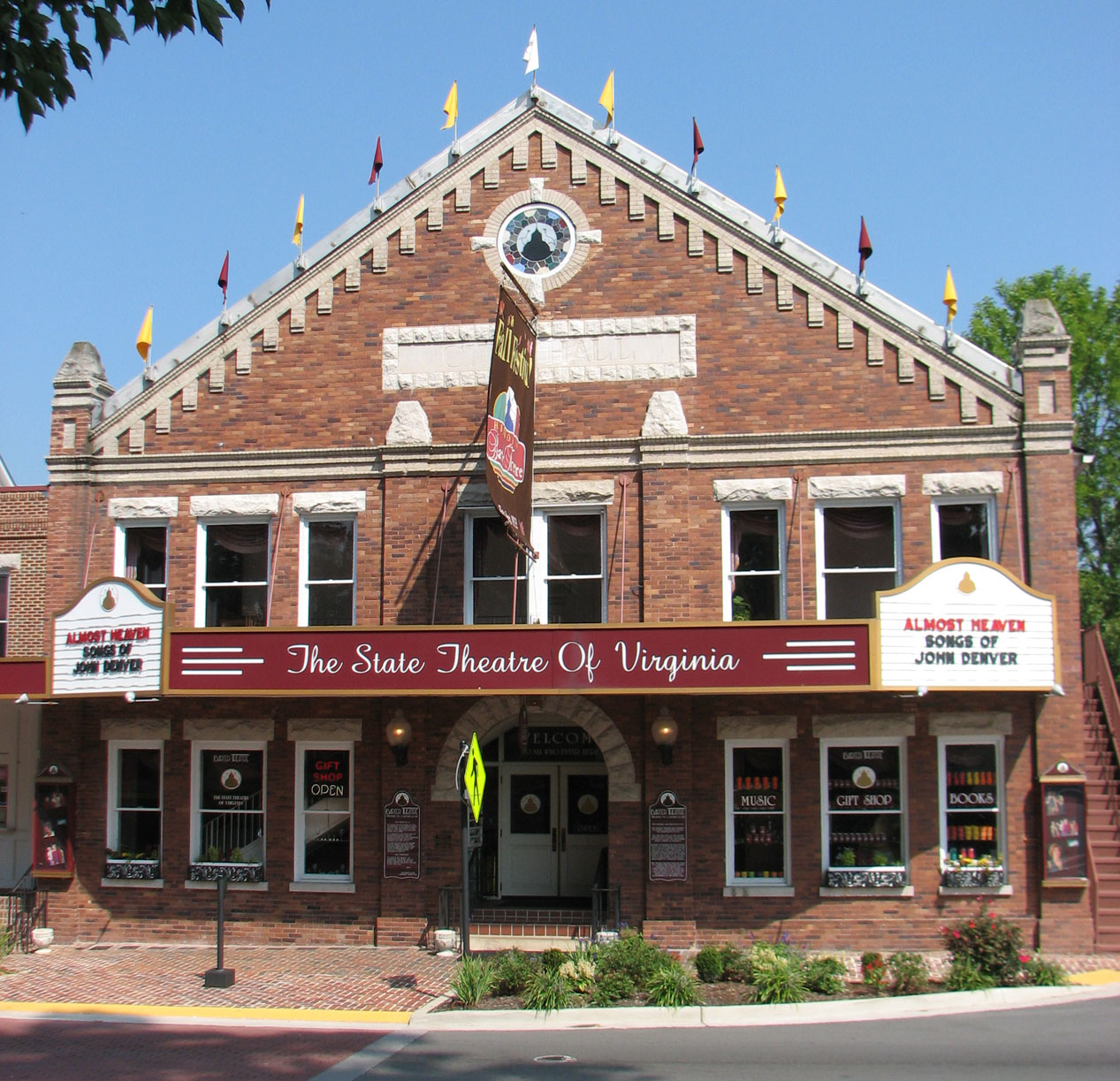
Barter Theatre
"With vegetables that you cannot sell, you can buy a good laugh." Robert Porterfield's pitch to Depression-era Appalachian farmers was either brilliant or foolhardy. In 1933, with Broadway theaters going dark and actors sleeping in parks, this Virginia native rounded up twenty-two fellow performers and brought them to tiny Abingdon. Admission cost forty cents -- or the equivalent in ham, eggs, milk, beans, whatever you could pull from the garden or the smokehouse. Life magazine would later call it 'the craziest idea in the history of the U.S. theater.' Nine decades on, Barter Theatre holds the distinction of being the longest-running professional Equity theatre in the United States, and its building -- originally a Presbyterian church erected in 1833 -- is the second-oldest theatrical venue in the country.
Ham for Hamlet
The genius of Porterfield's scheme was its symmetry. Actors could not find work. Farmers could not sell their crops. Both had something the other needed. Beginning with his troupe of twenty, Porterfield staged shows in the Abingdon Opera House while his actors boarded at the Martha Washington Inn. By 1935, the company had moved to the campus of the defunct Stonewall Jackson College for Women, where performers lived in the dormitories and staged plays in the auditorium. They received no salary but ate well. After three nights on campus, productions hit the road aboard an ancient bus nicknamed 'Bessie,' touring mountain towns and resorts for ten days at a stretch. The actors built scenery, collected props, directed shows, and worked the cafeteria at the Barter Inn. Everyone did everything. That scrappy resourcefulness became the theatre's identity.
A Church Becomes a Stage
The building that houses Barter Theatre today began its life in 1833 as Sinking Springs Presbyterian Church. It is now the second-oldest theatrical building in the United States. In 1953, its interior was transformed with fittings salvaged from New York's Empire Theatre on 40th Street, giving a small-town Virginia stage the bones of a Broadway house. Those seats were eventually replaced with ones from the Jefferson Theatre in Falls Church, Virginia, after it closed. A major $1.7 million renovation in 1996 more than doubled the stage depth, from 28 feet to 60 feet, and added modern lighting, sound, and climate control. The balcony was extended to improve sightlines. The building has absorbed the histories of every space that contributed to it -- a church, a New York playhouse, a suburban movie palace -- all layered into a single Appalachian stage.
Porterfield's Legacy
Robert Porterfield directed Barter Theatre from its founding in 1933 until his death in 1971 -- nearly four decades of continuous leadership. When the theatre won the Tony Regional Theatre Award in 1948, it validated what Porterfield had always believed: that professional theatre could thrive outside New York. In 1949, the company sent a troupe to perform Hamlet in Elsinore, Denmark -- Shakespeare performed in the actual castle that inspired the play. That same year, a touring company did one-night stands across Virginia, Kentucky, Tennessee, and North Carolina. When Porterfield died, Barter became the first regional theater in America to survive the passing of its founder, a transition managed by Rex Partington, who served as artistic director from 1972 to 1992, followed by Richard Rose through 2019, and then Katy Brown, the theatre's fourth and first female artistic director.
An Acre of Land and a Virginia Ham
In 1939, Barter Theatre created its own award for outstanding performance by an American player. The prize was characteristically unconventional: an acre of mountain land near Abingdon and a Virginia ham. The first recipient was Laurette Taylor, one of the most celebrated stage actresses of her generation. Dorothy Stickney received the honor in 1940. Each winner also selected two actors to join the Barter company for a season. The award captured the theatre's philosophy perfectly -- excellence deserved recognition, but recognition did not have to look the way New York said it should. Novelist James Hilton, author of Lost Horizon, was so taken with the place that in 1950 he purchased several acres adjoining the theatre to protect the view from the Barter Inn after learning the land might be developed.
Still Bartering
Today, Barter Theatre remains one of the last year-round professional resident repertory companies in the country. Each year it celebrates its roots with Barter Days, when patrons trade canned food for admission, with all donations going to local charities. During the COVID-19 pandemic, the theatre adapted again with the same improvisational spirit that defined its founding -- staging shows at the nearby Moonlite Theatre drive-in, where audiences watched from their cars with audio delivered through FM radio. Plays ran at the drive-in from July 2020 through December 2021 before indoor performances resumed. From vegetables during the Depression to car radios during a pandemic, Barter Theatre has spent more than nine decades proving that live performance will find a way.
From the Air
Located at 36.71N, 81.97W in Abingdon, Virginia, in the heart of the town's historic district along Main Street. The theatre building is a modest structure that is difficult to spot from high altitude; look for the compact downtown grid of Abingdon nestled in the valley between the Blue Ridge and Clinch Mountain ranges. Nearest airport: Virginia Highlands Airport (KVJI), approximately 8 nm to the northeast in Abingdon. Tri-Cities Regional Airport (KTRI) is about 25 nm to the southwest. The terrain is mountainous with narrow valleys. Best viewed at 2,000-3,000 ft AGL for the town context.