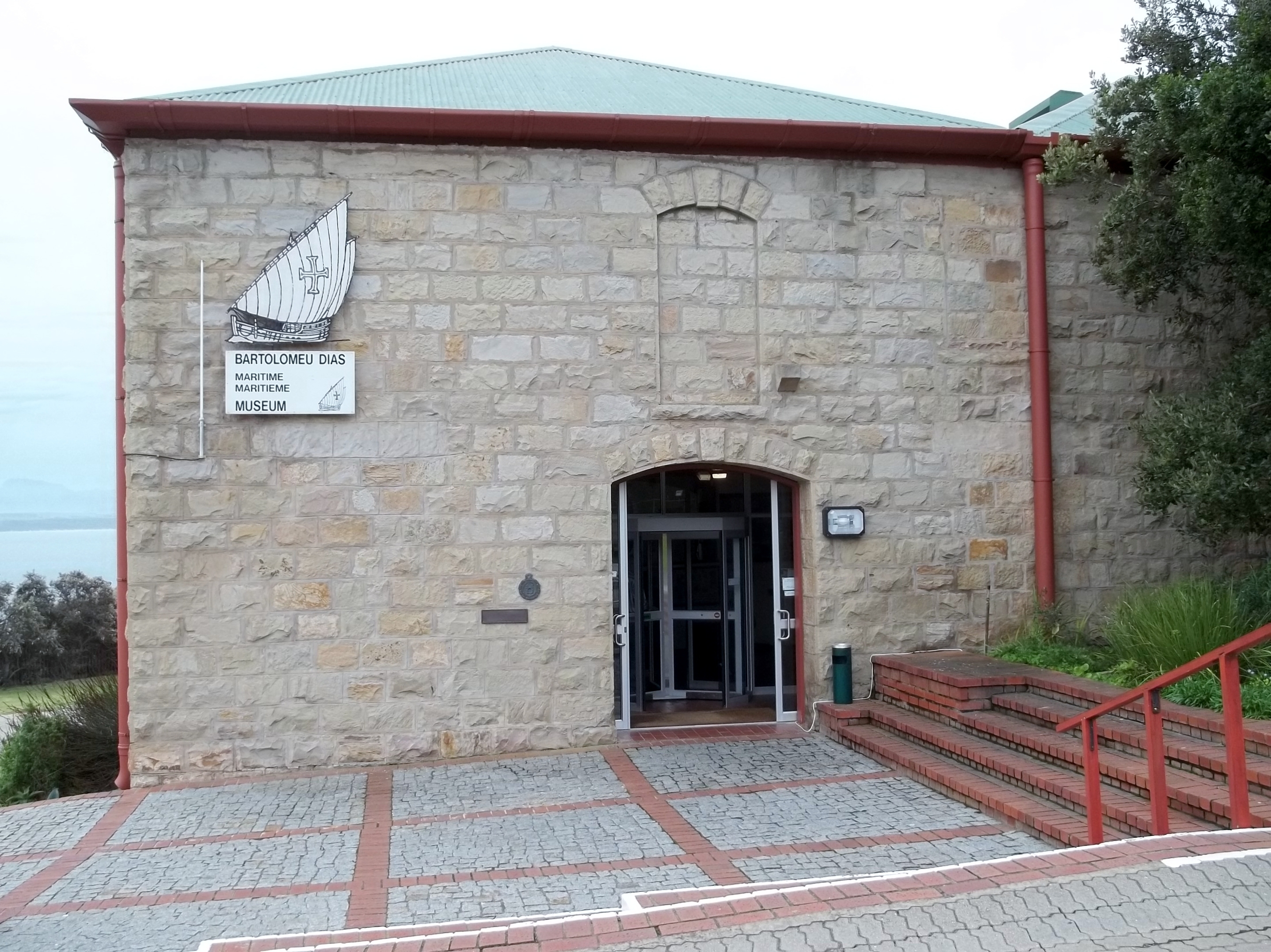
Bartolomeu Dias Museum Complex
The ship is too big for the building, or the building was built around the ship, depending on how you look at it. Inside the Maritime Museum in Mossel Bay, a full-size replica of Bartolomeu Dias's caravel fills the hall, its wooden hull close enough to touch, its masts nearly brushing the ceiling. The original vessel carried Dias and his crew around the Cape of Good Hope in 1488, the first European expedition to reach this coast. The replica was built in Portugal and sailed to Mossel Bay in 1988, five hundred years later, to anchor a museum complex that now tells the tangled story of this place where indigenous knowledge, colonial ambition, and maritime history converge.
Three Buildings, Many Centuries
The Bartolomeu Dias Museum Complex earns the word "complex" honestly. It consists of three buildings, each with its own focus. The Maritime Museum centers on Portuguese exploration from 1488 onward, tracing the connections between Portuguese, English, and Dutch seafarers who used Mossel Bay as a waypoint. The Shell Museum holds the largest collection of shells in Africa, alongside an aquarium of small marine animals and exhibits on mollusc ecology. The Granary serves as the main reception hall and houses exhibitions about the regional mountain passes and the landscape that shaped travel and settlement along the Garden Route. Two nineteenth-century Munro cottages on the grounds now serve as offices for international archaeological researchers, connecting the museum's colonial-era collections to the far deeper human history being excavated at nearby sites like Pinnacle Point.
The Garden and the Grave
Beyond the exhibition halls, the museum grounds tell their own stories. An indigenous botanical garden fills the site with plants and trees once used as medicinal herbs by the area's earliest inhabitants, long before Dias sailed into the bay. A Braille trail winds through the garden, making the landscape accessible through touch and scent. Within the grounds lies the grave of an enslaved person of Malay origin, a quiet marker of the forced labor that underpinned colonial settlement along this coast. The grave is not a forgotten relic. The local Muslim community uses it as a place of worship, transforming a site of historical cruelty into one of ongoing spiritual significance. The museum does not shy from these layered histories. The ethno-botanical garden, the Braille trail, the grave, and the caravel all share the same grounds, and visitors move between them without the narrative smoothing out the contradictions.
From Local Collection to Provincial Landmark
The museum's origins are modest. In 1960, the Mossel Bay Museum was established when local residents were simply asked to donate objects of historical interest. It opened to the public in 1963 with no clear thematic focus. The Post Office Tree Provincial Museum followed in 1984, and on 3 February 1989, the institution was renamed the Bartolomeu Dias Museum to mark the 1988 Dias Festival celebrating the five-hundredth anniversary of the explorer's landing. Today it is the second-largest provincial museum affiliated with the Western Cape Department of Cultural Affairs and Sport. The complex hosts eight commemorative celebrations per year and runs curriculum-based education programs for local schools. Traveling exhibitions rotate through the galleries, and a monthly program displays items from the stored collection that are not normally visible. The whole museum site is a provincial heritage site, its significance measured not just in the artifacts it holds but in the layers of meaning it continues to accumulate.
From the Air
The Bartolomeu Dias Museum Complex is located at 34.18°S, 22.14°E in central Mossel Bay, on the Garden Route coast. The museum sits near the harbor, identifiable from the air by its proximity to the waterfront and the Post Office Tree. Mossel Bay Airfield handles private and non-scheduled flights, with air traffic controlled by George Airport (FAGG), 40 km to the east. George Airport offers scheduled domestic flights to Cape Town (FACT), Durban (FAKN), and Johannesburg (FAOR). The harbor and surrounding town center are clearly visible from lower altitudes.