Basilica of Saint Anthony of Padua
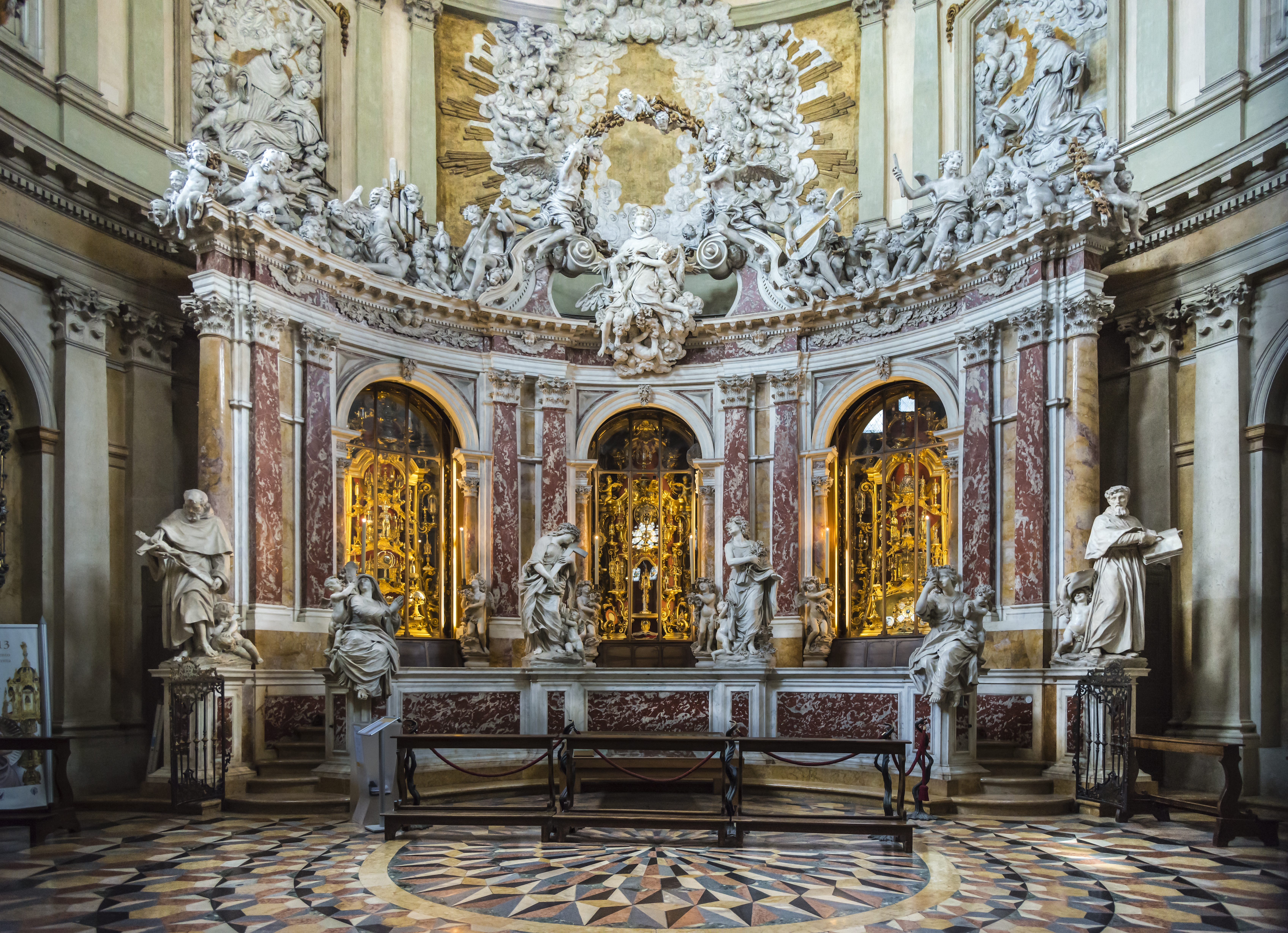
The chin and tongue of Saint Anthony are displayed in a gold reliquary inside the basilica that bears his name. They have been there, in one form of housing or another, since the saint's body was first exhumed -- and found, according to tradition, with its tongue miraculously intact. It is a startling detail, the kind that snaps you out of the drowsy reverence that large churches can induce. This is not a museum. This is a place where people still come to touch, to pray, to press their hands against the marble of Anthony's tomb and whisper requests for help finding lost things, lost people, lost faith. The Paduans call it simply il Santo -- the Saint -- as if no other church in the city needs a name.
Built on Burial
Construction began just one year after Anthony's death in 1231, and the basilica was completed in 1310 -- though completed is a generous word for a building that has never stopped changing. Anthony had asked to be buried in the small church of Santa Maria Mater Domini, which dated from the late 12th century and stood near the convent he had founded in 1229. Rather than abandon his chosen resting place, the builders incorporated the older church into the new basilica as the Cappella della Madonna Mora, the Chapel of the Dark Madonna. Anthony's body was moved in 1350 to a separate transept chapel, the Chapel of St. Anthony, whose interior decoration is attributed to Tullio Lombardo. Structural modifications continued through the 14th and 15th centuries, including the collapse and rebuilding of the ambulatory and the construction of a new choir screen. The result is a building without a single architectural style -- a giant that grew by accretion, absorbing influences the way a city absorbs immigrants.
Donatello's Altar, Altichiero's Walls
The art inside il Santo would justify a visit even without the relics. The high altar is by Donatello, featuring a bronze Madonna with Child and six statues of saints, along with four reliefs depicting episodes from St. Anthony's life. Donatello's work here has the tensile quality that made him the greatest sculptor of the early Renaissance -- the figures seem caught mid-gesture, as if the bronze might still be cooling. In the Chapel of St. James, commissioned by Bonifacio Lupi in the 1370s, Altichiero da Zevio covered the walls with frescoes of the Stories of St. James and a Crucifixion that ranks among the finest surviving examples of late Gothic painting in Italy. The Easter candelabrum in the apse, finished in 1515 by Andrea Briosco, is considered his masterwork. And then there is the Madonna Mora herself -- a statue of the Madonna with the Christ Child carved by the French sculptor Rainaldino di Puy-l'Eveque in 1396, named for her dark hair and olive complexion.
Echoes of Venice, Sounds of Tartini
The exterior of the basilica reveals its layered history at a glance. Byzantine domes cluster above the roofline in a clear echo of St. Mark's Basilica in Venice, while Gothic pointed arches frame the entrances and Romanesque brickwork anchors the walls. The Veneranda Arca di S. Antonio, the organization tasked with maintaining the basilica and its connected buildings, has been doing this work since 1396 -- over six centuries of continuous stewardship. Inside, the basilica has its own musical lineage. Giuseppe Tartini, the Baroque composer and violinist famous for his Devil's Trill Sonata, served as maestro di cappella in the 18th century. Francesco Antonio Calegari held the same position in the 1720s. The building has been not just a place of worship and pilgrimage but a working institution of sacred music, its acoustics shaped by the same domes and vaulted spaces that give the interior its sense of vertical aspiration.
Seven Centuries of il Santo
Among the more unexpected burials in the basilica is that of Edward Courtenay, 1st Earl of Devon, an English nobleman who died in Padua in 1556 -- though his remains were later removed to an unknown location. The Chapel of the Blessed Sacrament holds the tomb of the condottiero Gattamelata, the mercenary general whom Donatello also immortalized in the famous equestrian statue that stands outside the basilica. Pilgrims and tourists coexist in the nave with varying degrees of comfort. The pilgrims touch the tomb of the Saint and leave notes; the tourists crane their necks at the Lombardo reliefs and the Pogliaghi mosaic of the Holy Spirit, finished between 1927 and 1936, with its rays of golden light descending against an intensely blue sky. Both groups are responding to the same thing: a building so saturated with centuries of devotion, craft, and accumulated beauty that it resists being experienced casually. Il Santo earns its definite article.
From the Air
Located at 45.40N, 11.88E in southern Padua, Veneto, Italy. The basilica's cluster of Byzantine-style domes makes it one of the most distinctive buildings in the city when viewed from the air -- the dome pattern echoes St. Mark's in Venice but sits amid the red-tile roofscape of a much smaller city. Nearby airports include Padua (LIPU) and Venice Marco Polo (LIPZ). Donatello's equestrian statue of Gattamelata is visible in the piazza in front of the basilica.