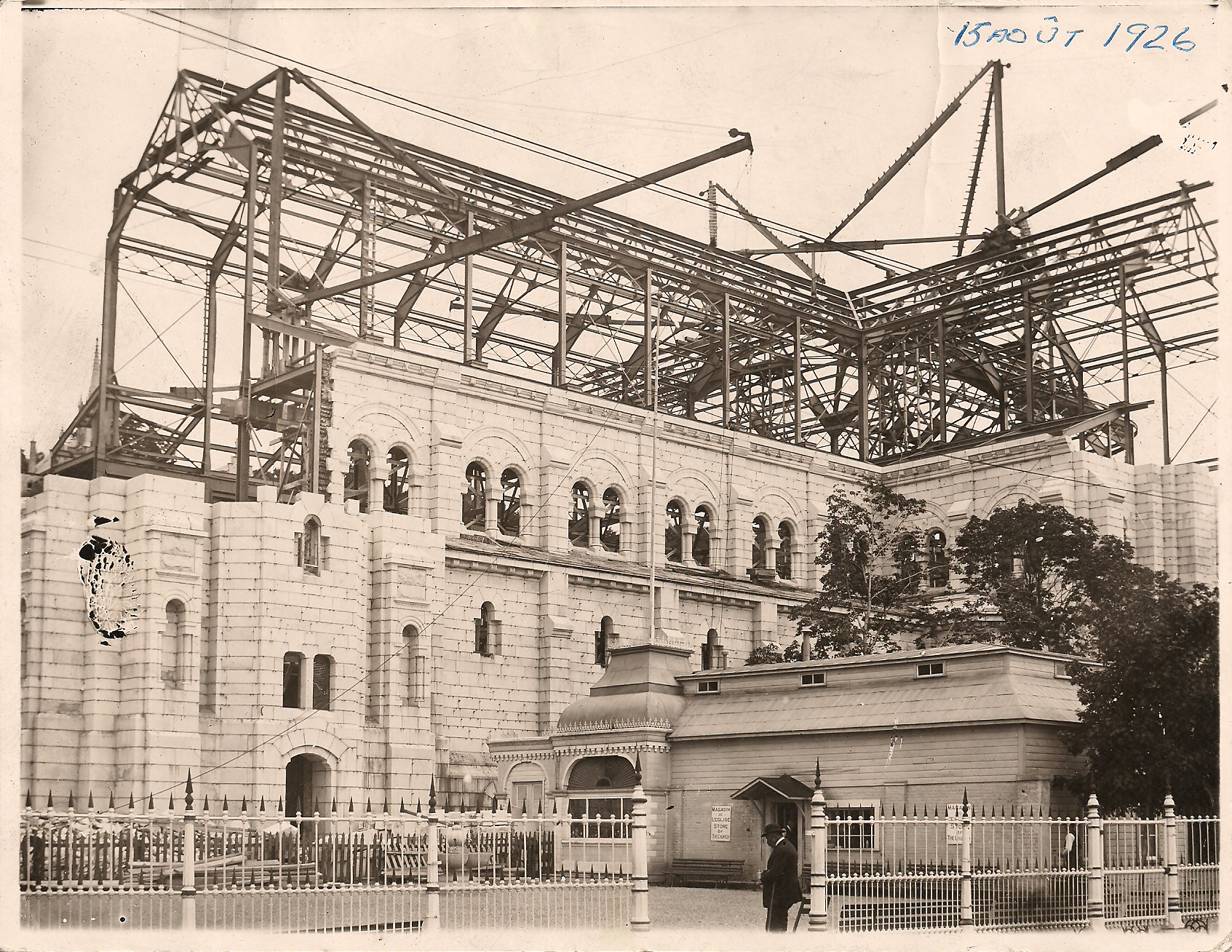
Basilica of Sainte-Anne-de-Beaupre
Two pillars stand near the entrance of the Basilica of Sainte-Anne-de-Beaupre, and they are covered -- floor to ceiling -- with crutches, canes, braces, and other signs of disability. Each one was left behind by a pilgrim who walked in needing help and, by their own account, walked out healed. This has been happening since 1658, when a laborer named Louis Guimont was hired to help build the original chapel despite his crippling rheumatism. After placing three stones on the foundation, Guimont reportedly stood up free of pain. The basilica that grew from that moment now draws roughly half a million pilgrims a year to a quiet stretch of the St. Lawrence River east of Quebec City.
Three Stones on a Foundation
The story begins with a land donation. On March 8, 1658, settler Etienne de Lessard gave two frontal acres from the west end of his property to the Catholic Church so that a chapel could be built for the new colonists along the St. Lawrence. The chapel was dedicated to Saint Anne, the patron saint of sailors -- a fitting choice for a community whose survival depended on the river. The shrine's fame grew rapidly after Louis Guimont's reported cure during construction. Pilgrims began arriving in numbers that the small wooden chapel could not handle, and the building was enlarged several times over the following decades. By the late nineteenth century, the shrine had outgrown every addition. In 1876, a full basilica opened for worship on the site, grand enough to match the devotion it attracted.
From Ashes to Romanesque
The 1876 basilica stood for less than fifty years. On March 29, 1922, fire destroyed it entirely. Construction of the present basilica began almost immediately, and the building that rose from the ashes is a monument of Romanesque Revival architecture. The structure stretches to an impressive length, with a transept and twin steeples that dominate the riverfront landscape of the small town of Sainte-Anne-de-Beaupre. Inside, sculptor Joseph-Emile Brunet left his mark everywhere: twenty-four capitals depicting 52 religious subjects from the life of Jesus, fourteen life-sized Stations of the Cross lining the nave walls, and stone statues of Saint Anne and other saints flanking the entrance. Brunet also carved the 7-foot-6-inch figures visible in niches upon entering -- Marie de l'Incarnation, Saint Joseph, the Virgin with Jesus, Francois de Laval, and Saint Joachim -- along with a 6-foot-4-inch bronze sculpture of Saint Kateri Tekakwitha.
A Hillside of Devotion
The basilica itself is only the centerpiece of a larger sacred landscape. The wooded hillside rising behind the church holds a memorial chapel and a Way of the Cross featuring life-sized Stations carved in stone. Higher up the slope sits the Convent of the Redemptoristines, built in 1906 and declared a historic site in 2001, though it no longer operates as a convent and has been largely abandoned in the early twenty-first century. The peak pilgrimage season arrives around July 26, the feast day of Saint Anne, when the faithful converge from across Canada and the United States. Since 1933, the annual visitors have included members of the Anna Fusco Pilgrimage from Connecticut, a tradition that has continued for over ninety years. One of six national shrines of Canada, the basilica stands as both a religious destination and a monument to nearly four centuries of devotion along the St. Lawrence.
Faith Carved in Stone
What makes Sainte-Anne-de-Beaupre remarkable is not just its architecture or its reported miracles but its persistence. The original chapel of 1658, the enlarged shrine, the 1876 basilica, the 1922 fire, the Romanesque Revival replacement -- each chapter could have been the end of the story, but the pilgrims kept coming. The crutches on those entrance pillars are not relics of a distant past; new ones appear regularly, left by visitors who believe they experienced something on this stretch of riverbank that medicine could not explain. Whether one arrives as a pilgrim or simply as a traveler curious about a building that has drawn millions over three and a half centuries, the basilica commands attention. Its twin steeples are visible from well down the St. Lawrence, a landmark that has guided travelers by river and by road for generations.
From the Air
Located at 47.02N, 70.93W along the north shore of the St. Lawrence River, approximately 30 km east-northeast of Quebec City. From the air, look for the twin Romanesque steeples of the basilica rising above the small town of Sainte-Anne-de-Beaupre -- they are the tallest structures in the area and are visible from considerable distance. The wooded hillside with the Way of the Cross rises directly behind the church. Ile d'Orleans is clearly visible in the river to the south. Nearest airports: CYQB (Quebec City Jean Lesage International, 30 km southwest). Best viewed at 2,000-3,000 ft AGL to appreciate the basilica's scale against the riverside town.