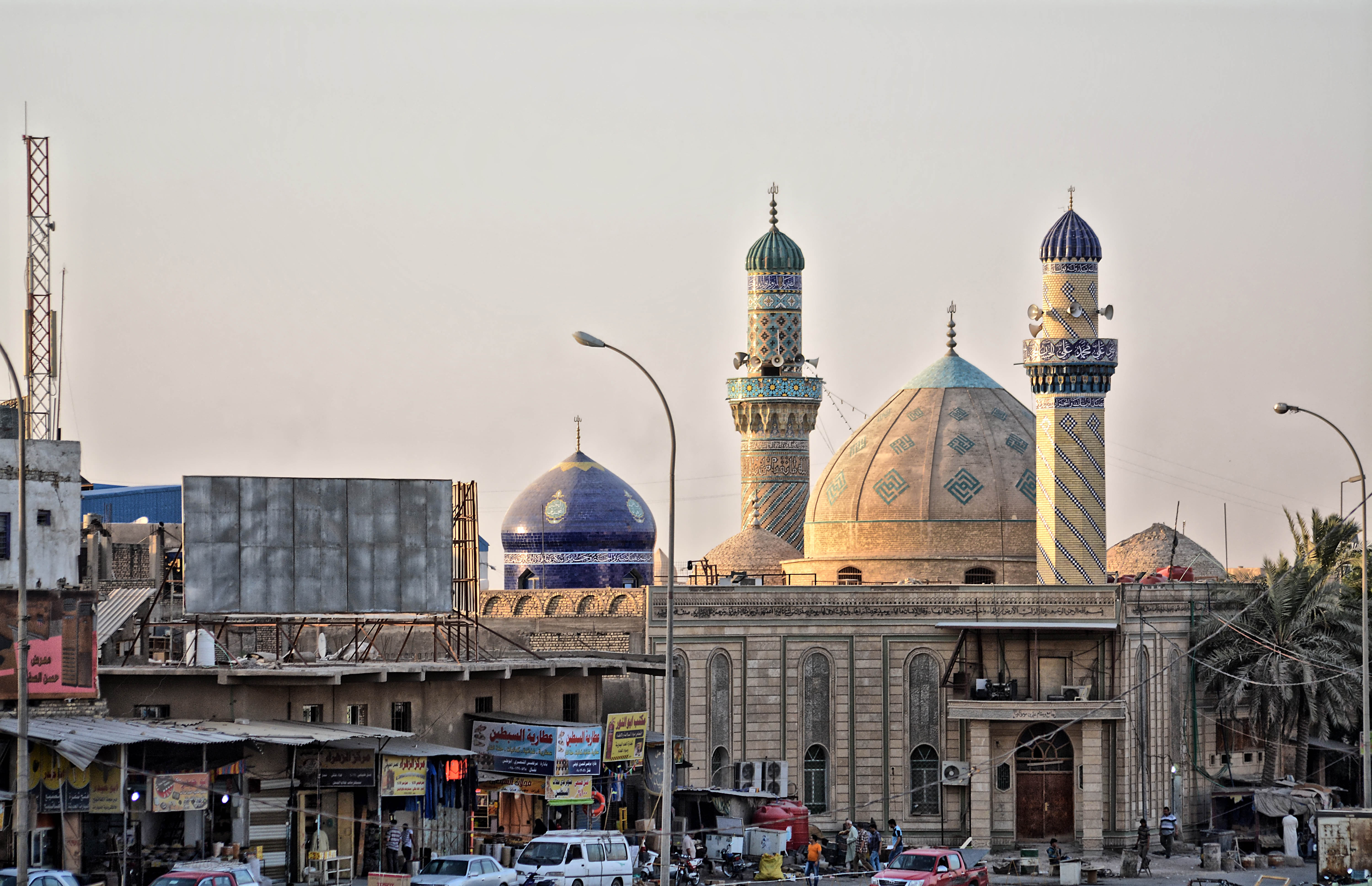
Basra
They called it the Venice of the East. Not because Basra resembled Venice in any obvious way -- no gondolas, no marble facades, no carnival masks -- but because of the canals. Dozens of waterways threaded through a city of date palms and Ottoman-era mansions, their ornate wooden shanasheel balconies projecting over the water to catch whatever breeze the Shatt al-Arab could offer. Founded in 636, just four years after the death of the Prophet Muhammad, Basra sits where the Tigris and the Euphrates merge into a single river and flow toward the Persian Gulf. It is one of the oldest Islamic cities on earth. Today, only a few blocks of the old city survive, and summer temperatures routinely exceed 50 degrees Celsius. The Venice comparison feels less apt now. But traces of former grandeur still hide in the ruins.
Where Two Rivers Become One
The Shatt al-Arab is not just a river. It is the culmination of the Tigris and Euphrates, two of the most storied waterways in human civilization, joining together about 100 kilometers north of the Persian Gulf. The fields lining its banks are among the most fertile in Iraq, and the region once supported the largest date palm forest in the world. Basra grew up along this confluence, drawing sustenance and commerce from the waterway for nearly fourteen centuries. The river also brought diversity. Alongside the city's Shia Arab majority live small communities of Christians, Assyrians, and Mandaeans -- followers of a pre-Islamic faith that reveres John the Baptist. There are also the Zanj, Afro-Iraqi people descended from East Africans brought as enslaved laborers from the coast of modern-day Kenya during the medieval period. Their presence is a reminder of trade routes that once stretched from Mesopotamia to the Indian Ocean.
Conquerors and Travelers
Basra's history reads like a ledger of empires passing through. The city flourished as a commercial and cultural center from the early Islamic period. The great Moroccan traveler Ibn Battuta visited in 1326 and had mixed impressions -- he admired the city's landscape and hospitable people, but lamented the decline in scholarship, noting that not a man remained who knew anything of grammar in a city once famous for it. The Portuguese arrived in 1523, establishing a protective presence that lasted until the Ottomans captured the city in 1668. Ottoman rule endured until the end of World War I, when British forces took control of what was then a vital gateway to Mesopotamian oil. Each occupier left architectural traces: the mansions along the canals blended Ottoman craftsmanship with local building traditions, their shanasheel balconies designed not as decoration but as practical heat management, shading interior rooms from a sun that shows no mercy.
Scars That Don't Fade
The Iran-Iraq War of the 1980s brought artillery fire to Basra's doorstep. As the closest major Iraqi city to the front lines, entire neighborhoods absorbed bombardment. A few years later, when residents rose up against Saddam Hussein's dictatorship, the regime crushed the rebellion with brutal efficiency. The physical damage has largely been repaired, but the cultural losses run deeper. Manuscripts, historic buildings, and the social fabric of old neighborhoods -- these are harder to rebuild. Today, Basra faces a different kind of siege. Desertification is advancing across the surrounding landscape. The rivers carry increasing loads of salt, making irrigation difficult and drinking water scarce. Summer temperatures have pushed toward levels that challenge human endurance. Most foreigners in Basra now are connected to the oil and natural gas industry rather than tourism, though a UNESCO-funded restoration project launched in 2018 has begun the painstaking work of preserving what remains of the old quarters.
The Corniche at Dusk
Despite everything, life along the Shatt al-Arab still has its rhythms. Restaurants line the corniche, their terraces overlooking the wide brown river, and families gather in the cooler evening hours to eat and watch the water traffic. Train service connects Basra to Baghdad via two daily overnight runs -- a slower twelve-hour journey and an express of six to seven hours -- and ferries cross to Khorramshahr in Iran in forty-five minutes. For the intrepid traveler who makes it here, old Basra's surviving blocks offer a glimpse of what was lost: carved wooden balconies in various states of decay, the Imam Ali Mosque built in 635, and the quiet lanes where the canals once ran. The city endures, as it has for nearly fourteen hundred years, stubborn and heat-scorched and still standing where the two great rivers of Mesopotamia finally become one.
From the Air
Located at 30.52N, 47.81E along the Shatt al-Arab river, where the Tigris and Euphrates merge. From altitude, Basra is identifiable by the wide river corridor running southeast toward the Persian Gulf, with the city spreading along both banks. The date palm groves flanking the river are visible as dense green strips against the desert. Nearest airport: ORMM (Basra International Airport), located approximately 15 km west of the city center. Kuwait International Airport (OKBK) is roughly 130 km to the south. The Iran-Iraq border along the Shatt al-Arab is clearly visible from cruising altitude.