Batang Kali Massacre
Chong Hong was in his twenties when he fainted, and that saved his life. On the morning of 12 December 1948, soldiers of the 2nd Scots Guards separated the men of a rubber plantation settlement at Sungai Rimoh, near Batang Kali in Selangor, from the women and children. Then they opened fire with automatic weapons, killing 24 unarmed civilians. Chong Hong collapsed before the bullets found him, and was left for dead. The women and children -- among them seventeen-year-old Tham Yong and seven-year-old Loh Ah Choy -- heard everything. British author Christopher Hale would later call it "Britain's My Lai," and the comparison is apt: a massacre of defenseless villagers by professional soldiers, followed by decades of official denial.
Rubber, Guerrillas, and an Emergency
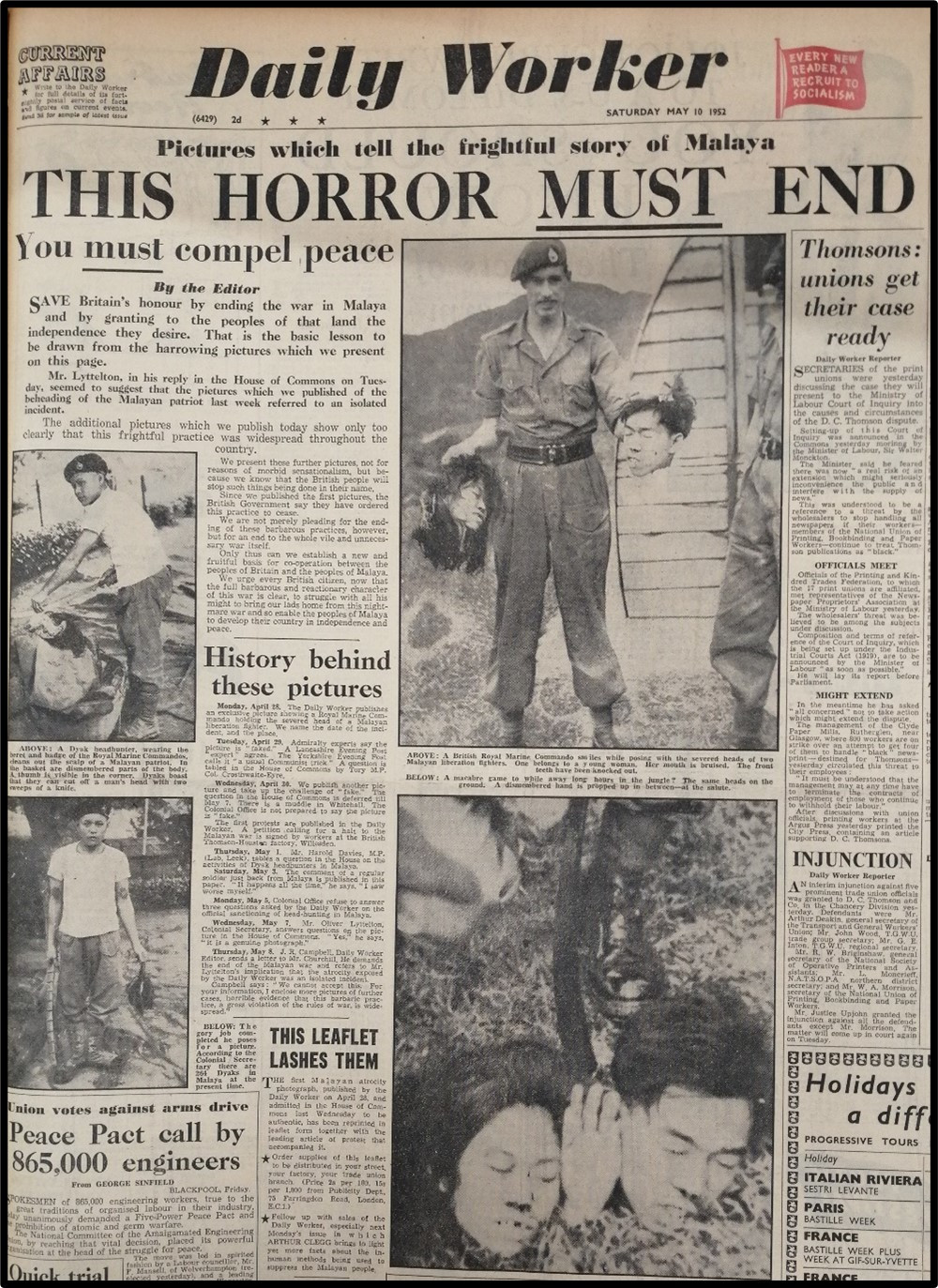
The roots of the massacre reach back to World War II. When the British returned to Malaya after Japan's surrender in August 1945, they found a colony fundamentally changed. The guerrillas they had armed and trained to fight the Japanese had not all disbanded. Many became the core of an independence movement, and some turned to communism, targeting British commercial interests by attacking the rubber plantations and tin mines that were the colony's economic lifeline. By June 1948, after the assassination of several prominent British landowners, colonial authorities declared a state of Emergency -- a designation chosen carefully to avoid the word "war" and the legal obligations that would follow. The Emergency gave the Royal Malaysia Police and the military sweeping powers to detain, search, and shoot. British troops poured into the jungle. But despite their experience in Burma during the war, they had no formal jungle warfare doctrine, and the line between insurgent and civilian blurred dangerously in the kampongs and plantations of rural Malaya.
Twelve Minutes at Sungai Rimoh
The 7th Platoon, G Company, arrived at the rubber estate near Batang Kali looking for communist guerrillas. What they found were plantation workers and their families -- the kind of rural Chinese community that the insurgents sometimes recruited from, sometimes intimidated, and sometimes simply lived among. The soldiers rounded up the residents and separated the men for interrogation. What happened next was not a firefight. There was no ambush, no shots fired at the Guards, no weapons recovered. Twenty-four men were lined up and shot dead. The official report would claim the villagers were killed while trying to escape -- a fiction that required believing two dozen unarmed men simultaneously bolted from armed soldiers in broad daylight. The women and children who witnessed the killing told a different story, one they would repeat for the next seven decades to anyone who would listen.
The Long Burial
What followed the massacre was not justice but paperwork. British diplomats drafted Regulation 27A, which retroactively authorized the use of lethal force "to prevent escape from arrest" -- a legal fig leaf designed to cover the killings after the fact. Secret documents related to the massacre were hidden from public view at Hanslope Park, the Foreign Office's classified archive. For twenty-two years, the story stayed buried. Then in 1970, the British newspaper The People published testimonies from members of the platoon themselves, soldiers who admitted a massacre had occurred. The government referred the matter to the Director of Public Prosecutions, who terminated the investigation after a few months, citing the difficulty of verifying events from two decades earlier. The pattern would repeat: survivors and families would demand accountability, and the British government would find a procedural reason to decline.
Seventy Years of Seeking Justice
The families never stopped trying. In 1993, with help from the Malaysian Chinese Association, survivors petitioned Queen Elizabeth II directly. A police report was lodged. The Foreign Office responded that no new evidence warranted an inquiry. In 1997, the Royal Malaysian Police closed their own investigation for insufficient evidence. In 2009, after The Independent reported the government had agreed to reinvestigate, hope briefly flickered. In 2012, the High Court in London upheld the decision not to hold a public hearing -- but in its written judgment acknowledged a stark truth: "There is evidence that supports a deliberate execution of the 24 civilians at Batang Kali." Britain was responsible, the court said, even as it declined to act. The families pressed on to the Court of Appeal, and finally to the Supreme Court. In November 2015, the UK's highest court ruled the government was not obliged to hold an inquiry, even though the killings may have constituted a war crime. The reason: too much time had passed. The very delay the government had engineered became its legal shield.
What the Landscape Remembers
Batang Kali today is a small town in the hills of Selangor, about an hour's drive north of Kuala Lumpur. The rubber estates that once covered these slopes have largely given way to oil palm. The area is green, quiet, unremarkable to a passing traveler. There is no grand memorial at the massacre site, no museum interpreting what happened here. But the community remembers. The descendants of the twenty-four men carry a grief compounded by the knowledge that the country responsible for their ancestors' deaths formally acknowledged the killing yet refused to investigate it. Batang Kali stands as a reminder that the end of empire left wounds that formal acknowledgment alone cannot heal. In April 2025, the UK government finally expressed "deep regret" in a letter from a junior Foreign Office minister -- more than seven decades after the killing, a statement of sorrow without inquiry, without accountability, and without the full apology the families had sought.
From the Air
Located at approximately 3.47°N, 101.63°E in the hilly interior of Selangor, Malaysia, about 60 km north of Kuala Lumpur. The terrain is a mix of palm oil plantations and secondary jungle in the foothills of the Titiwangsa Range. Nearest major airport is Kuala Lumpur International (WMKK). Sultan Abdul Aziz Shah Airport (WMSA) in Subang is closer at roughly 45 km south. The town sits along the road connecting Kuala Kubu Bharu to Fraser's Hill. Viewing altitude of 3,000-5,000 feet offers good perspective on the plantation landscape.