Battle at Port-la-Joye
They were making hay when the attack came. On July 11, 1746, soldiers of the 29th Regiment of Foot stood unarmed in a field on the banks of the Northeast River -- now the Hillsborough River -- near the French settlement of Port-la-Joye on present-day Prince Edward Island. Their muskets sat in a tent. A combined force of French troops, Acadian fighters, and Mi'kmaq warriors under the command of Joseph-Michel Legardeur de Croisille et de Montesson emerged from the surrounding forest and struck. The regiment never had a chance to reach its weapons.
An Empire's Appetite
The events that put unarmed soldiers in a field on Ile Saint-Jean began a year earlier and hundreds of kilometres away. In 1745, a British expeditionary force composed largely of New England irregulars captured Fortress Louisbourg on Ile Royal during King George's War, and with it gained de facto control of Ile Saint-Jean. New England commander William Pepperrell sent troops to the island that summer. One force went to Three Rivers -- present-day Georgetown -- where the Acadians fled into the woods with only a single six-pound cannon to their name. The other force landed at Port-la-Joye, where the French garrison of 20 soldiers under Joseph de Pont Duvivier abandoned the settlement. The New Englanders burned the community to the ground. Duvivier and his men retreated upriver, received reinforcements from Acadian settlers and Mi'kmaq fighters, and eventually drove the British back to their ships.
Ramezay's Gambit
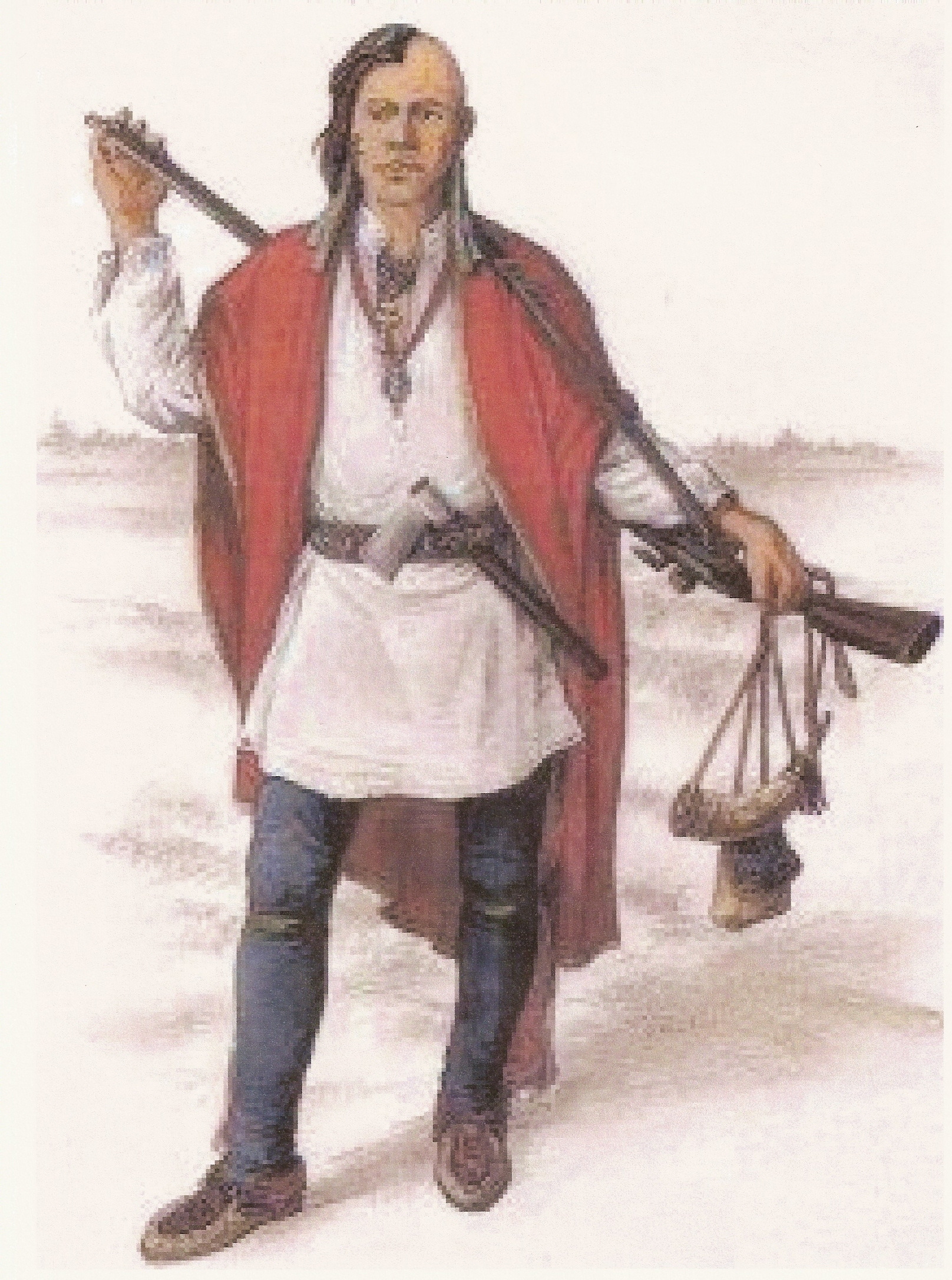
France responded with force the following year. Jean-Baptiste Nicolas Roch de Ramezay led an expedition from Quebec to retake Acadia, arriving in Nova Scotia in July 1746 with 700 soldiers and 21 officers. At Chignecto, 300 Abenaki warriors from the St. John River and 300 Mi'kmaq from Nova Scotia joined him, swelling his force to nearly 1,300 men. While waiting for the long-overdue Duc d'Anville Expedition to arrive by sea, Ramezay turned his attention to the British occupation of Port-la-Joye. He first sent Charles Deschamps de Boishebert to Ile Saint-Jean on reconnaissance. After Boishebert reported back on the size and disposition of the British force, Ramezay dispatched Montesson with a mixed force of French soldiers, Acadians, and Mi'kmaq warriors to reclaim the island.
Caught in the Open
Captain John Rous commanded the 24-gun snow Shirley Galley anchored offshore, with 40 soldiers of the 29th Regiment aboard. The British governor of Ile Royal, Commodore Sir Charles Knowles, had sent Rous to collect provisions from the Acadians to feed the troops at Louisbourg. While the regiment waited for the Acadians to deliver half their cattle, the soldiers went ashore to make hay in the fields along the river near Port-la-Joye. Their arms stayed in camp. Montesson's force caught them in the open on July 11. The attacking party killed 27 soldiers and 7 sailors while suffering only two Mi'kmaq killed and two wounded. Captain Rous and Captain Hugh Scott, watching from the Shirley Galley, ordered their guns to fire on the attackers, but the shore bombardment had little effect. Scott later took 40 Acadian prisoners and ransomed them to the commander of the Duc d'Anville expedition.
The Ever Sworded
Montesson returned to Ramezay at Chignecto on July 23, bringing British prisoners of war and a commendation for having distinguished himself in his first independent command. The broader French campaign fared less well -- Ramezay's subsequent attack on Annapolis Royal failed because the Duc d'Anville expedition never reached the capital, though he later won a victory at the Battle of Grand Pre. But the ambush at Port-la-Joye left a permanent mark on the 29th Regiment. The humiliation of being caught unarmed prompted a standing order: all officers of the regiment must carry their swords at all times, even when off duty. The tradition earned the 29th its first nickname -- the Ever Sworded -- a name it carries to this day, with the orderly officer still required to be armed even in the officers' mess. A moment of vulnerability on a Prince Edward Island riverbank became a military tradition that has outlived the empire it served.
From the Air
The battle took place near 46.184N, 62.534W along the banks of the Hillsborough River (formerly the Northeast River) near the site of Port-la-Joye, on the south shore of Prince Edward Island. The river is visible as a broad waterway flowing into Charlottetown Harbour. The nearby Skmaqn--Port-la-Joye--Fort Amherst National Historic Site at Rocky Point marks the French and British fortification. Nearest airport is Charlottetown Airport (CYYG), approximately 15 km northwest. Best viewed at 2,000-3,000 ft AGL following the Hillsborough River valley.