Battle Creek Massacre
Among the seventeen survivors that cold March morning in 1849 was a child who would grow up to lead his people in war. One of the young Timpanogos who escaped the militia's bullets at Battle Creek Canyon became Antonga Black Hawk, the warrior chief who fought the Utah settlers for seven years during the Black Hawk War of 1865-1872. The massacre that forged him took just minutes, but its consequences stretched across decades.
A Winter of Suspicion
The trouble began with missing cattle. In February 1849, Dimick B. Huntington spoke with Timpanogos leader Little Chief about livestock that had vanished from the Mormon herds. Little Chief pointed to two men, Roman Nose and Blue Shirt, calling them great thieves who had decided to live off settler cattle all winter. Whether this was accurate intelligence or a desperate attempt to deflect blame from his own people, Little Chief suggested the Mormons should kill these renegades. On March 1, Captain John Scott led fifty militiamen into Utah Valley. The orders came from Brigham Young, then territorial governor and president of the LDS Church, though the stated justification kept shifting. When the company learned that supposedly stolen horses had already returned to Young's herd, they pressed on anyway to address the cattle issue.
Before Dawn
On March 5, 1849, thirty-five armed men crept toward a Timpanogos encampment in Battle Creek Canyon, near what is now Pleasant Grove, Utah. The group they targeted numbered just seventeen, including children and women. Kone Roman Nose led this small band, and they had no warning of what was coming. The militia surrounded the camp in darkness and attacked at dawn. The Timpanogos were outnumbered, outgunned, and trapped. Four people died in the assault. The survivors included the child who would become Antonga Black Hawk, carrying the memory of that morning into a lifetime of resistance.
Witnesses Remember
Two Timpanogos leaders, Old Elk and Stick-in-the-Head, watched the settlers, in their own recorded words, relentlessly shoot down the Utes. They were not participants but witnesses, and what they saw shaped their future dealings with the Mormon settlements. This was the first violent clash between the peoples who had arrived two years earlier and those who had lived in Utah Valley for generations. The formation of Utah Valley's Mormon settlements followed quickly after Battle Creek, as if the violence had cleared the way. The mistrust Old Elk and Stick-in-the-Head carried from that day contributed to the escalating tensions that exploded at Fort Utah the following year.
Patterns of Violence
Battle Creek was neither the beginning nor the end. It was part of a brutal pattern that defined Utah's territorial period. The Provo River massacre, the Circleville Massacre, the Nephi massacre, the Aiken Massacre, and ultimately the Mountain Meadows Massacre all followed in subsequent years. The Utah Territory enacted the Act for the Relief of Indian Slaves and Prisoners, a law that allowed settlers to legally acquire Native American children as indentured servants, further entangling the two communities in cycles of violence and dependency. Each incident fed into the next, creating the conditions for the Black Hawk War that would consume the region from 1865 to 1872.
A Canyon's Memory
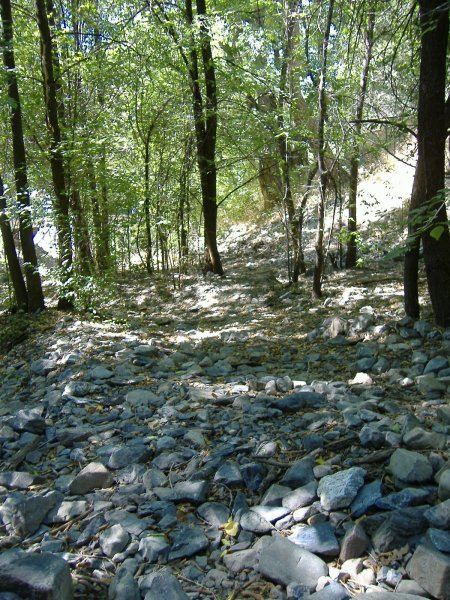
Today, Battle Creek Canyon lies within Pleasant Grove, its waters flowing down to Utah Lake as they did in 1849. A monument in the city park marks what happened there, though the full story remains contested. Primary sources survive in university archives and church records: the diary of Oliver B. Huntington, the statement of Dimick Baker Huntington, the History of Utah compiled by Orson F. Whitney. These documents preserve the words of the settlers who participated, but the Timpanogos perspective comes to us filtered through their adversaries' accounts. What remains undisputed is that a child survived that March morning and remembered. Antonga Black Hawk's war began in Battle Creek Canyon, even if the fighting came sixteen years later.
From the Air
Battle Creek Canyon is located at approximately 40.36N, 111.70W, on the eastern edge of Pleasant Grove, Utah. The canyon drains westward from the Wasatch Range toward Utah Lake. From the air, Pleasant Grove sits between the cities of Orem to the south and American Fork to the north along the Interstate 15 corridor. Recommended viewing altitude 2,500-3,500 feet AGL for canyon detail. Provo Municipal Airport (KPVU) lies 8nm south, Salt Lake City International (KSLC) 32nm north. The Wasatch Front provides dramatic terrain contrast between the alpine peaks to the east and Utah Lake to the west.