Battle of Akatsuka
They called him the Fool of Owari. The teenager who ate melons while riding backwards on his horse. The lord who danced in women's clothing at taverns, wore a sleeveless bathrobe cinched with hemp rope, and spent his days wrestling, swimming, and shooting the newly imported arquebus with his friends. When Oda Nobuhide, the powerful daimyo of southern Owari Province, died of illness on April 8, 1551, few of his retainers expected much from the eighteen-year-old heir who inherited Nagoya Castle and its surrounding domain. Some openly discussed replacing Nobunaga with his younger brother Nobuyuki. Others simply defected. On May 10, 1552, at a muddy field near Narumi Castle, the Fool of Owari rode out to prove them all wrong. He failed.
The Fool's Inheritance
Oda Nobunaga inherited a domain in crisis. His father Nobuhide had wielded significant influence across southern Owari, but that influence was personal, not institutional. When the old lord died, the bonds holding his coalition together began to fray immediately. Nobunaga's reputation did him no favors. Between the ages of thirteen and eighteen, he had devoted himself to archery, horseback riding, and firearms practice, the last of which was genuinely unusual since the arquebus had only arrived in Japan in 1543. He practiced sumo. He visited brothels. He showed open contempt for the formal dress and mannered behavior expected of a provincial lord. His retainers saw a reckless boy playing at war. What they missed was that the boy was also practicing for it.
A Retainer's Betrayal
The first serious test came early in 1552, barely months after Nobunaga assumed power. Yamaguchi Noritsugu, one of his father's senior retainers and the castellan of Narumi Castle in eastern Owari, defected to the Imagawa clan of Suruga Province. The Imagawa were a regional superpower, controlling the neighboring provinces of Mikawa and Totomi to the east. Noritsugu and his son Yamaguchi Kurojiro invited Imagawa troops onto Oda territory, where they constructed fortifications on land that had belonged to the Oda. The message was clear: the Fool of Owari could not protect his own holdings. If Nobunaga failed to respond, more defections would follow.
Two Hours in the Mud
On May 17 by the lunar calendar, Nobunaga gathered approximately 800 men at Nagoya Castle and marched east toward Narumi. He never reached the castle. About a mile north of it, his column was intercepted by roughly 1,500 men under the command of the young Yamaguchi Kurojiro. The engagement began during the Hour of the Serpent, around ten in the morning, and ground on until the Hour of the Horse, roughly noon. For two hours, the two forces fought on foot at close quarters with swords and spears. Nobunaga's outnumbered force lost approximately thirty samurai before he ordered a withdrawal back to Nagoya. The contested lands in eastern Owari remained firmly under Imagawa control. As a first outing for a battlefield commander, it impressed nobody.
The Making of a Unifier
The defeat at Akatsuka looked like confirmation of everything Nobunaga's enemies believed about him. Further rebellions and incursions followed quickly, as neighbors and relatives tried to exploit his youth and apparent weakness. Yet what his opponents interpreted as proof of incompetence was actually Nobunaga's first lesson in the realities of sixteenth-century Japanese warfare. He learned that rash advances against superior numbers ended in retreat. He learned that loyalty had to be earned and enforced, not merely inherited. Within two years, Nobunaga would apply those lessons with devastating effect at the Battle of Muraki Castle and beyond. Within eight years, he would stun Japan with his annihilation of the Imagawa army at Okehazama. The Fool of Owari would become the first of the three great unifiers of Japan, the warlord who shattered the old feudal order and set the country on the path to consolidation under a single rule.
From the Air
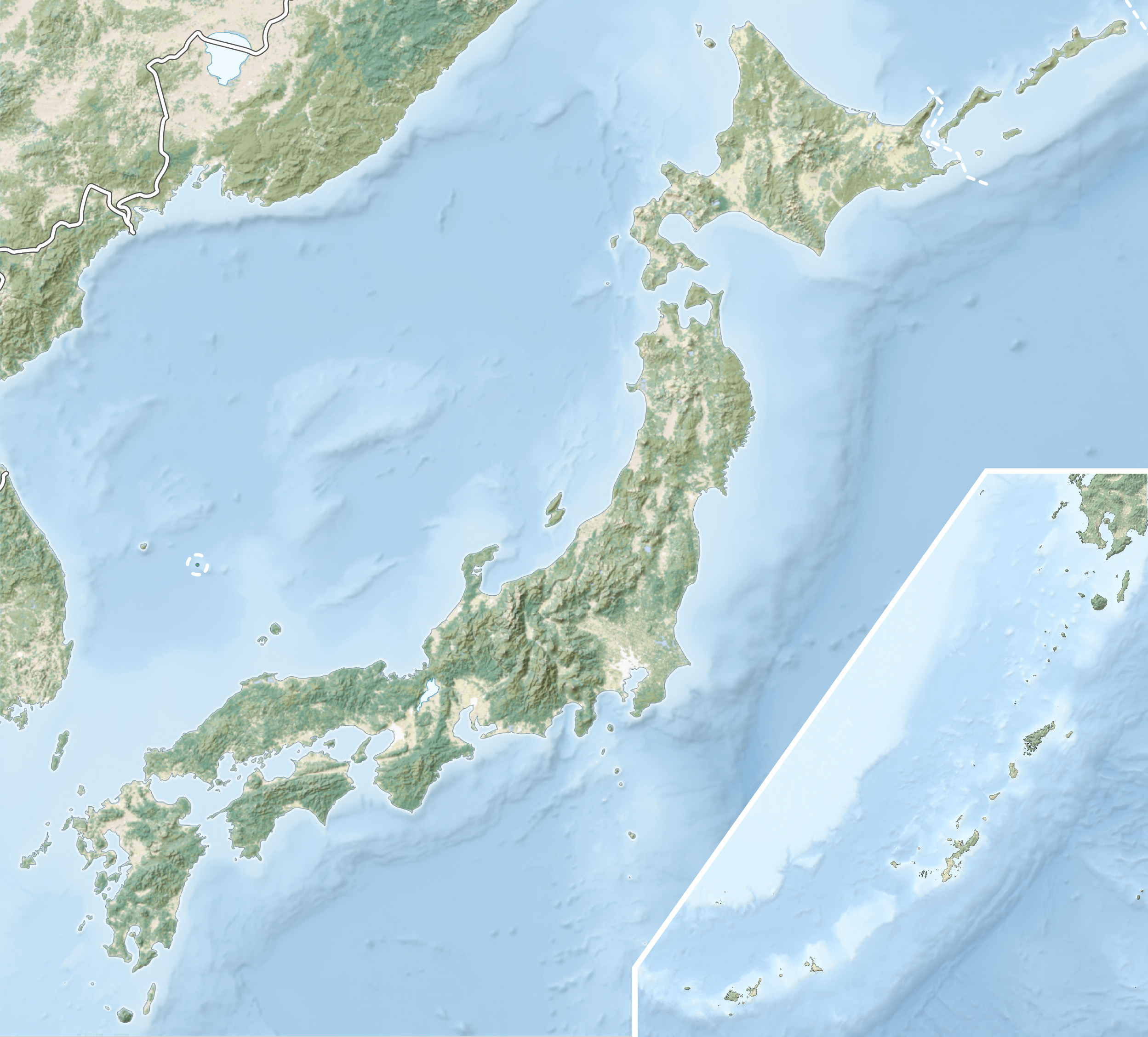
The Battle of Akatsuka took place at approximately 35.0786N, 136.9508E, near what is now the Midori-ku ward of Nagoya, in the Owari plain south of Nagoya Castle. From the air, the battlefield area lies in the urban sprawl east of central Nagoya, roughly a mile north of the former Narumi Castle site. The flat terrain of the Owari plain is clearly visible from altitude, stretching between Ise Bay to the south and the hills of Mikawa to the east. Nearest airport is Chubu Centrair International (RJGG/NGO), about 25 km south across Ise Bay. Nagoya Airfield (RJNA/NKM) is approximately 12 km to the northwest. Recommended viewing altitude: 5,000-8,000 feet to appreciate the strategic geography of the Owari plain.