Battle of Alasay
By tradition, France's chasseurs alpins never say the word "yellow." When the 2nd Company of the 27th Chasseurs Alpins Battalion needed a callsign for Operation Dinner Out in March 2009, they chose Jonquille -- the daffodil, a flower whose color they would not name. It was a small quirk of regimental culture, carried into a valley in eastern Afghanistan that had been under guerrilla control for three years. The mission was blunt: take the Alasay Valley in Kapisa Province, build two outposts for the Afghan National Army, and hold them. What followed was ten days of fighting that tested whether mountain soldiers trained in the Alps could win a valley war in the Hindu Kush.
Three Years of Insurgent Rule
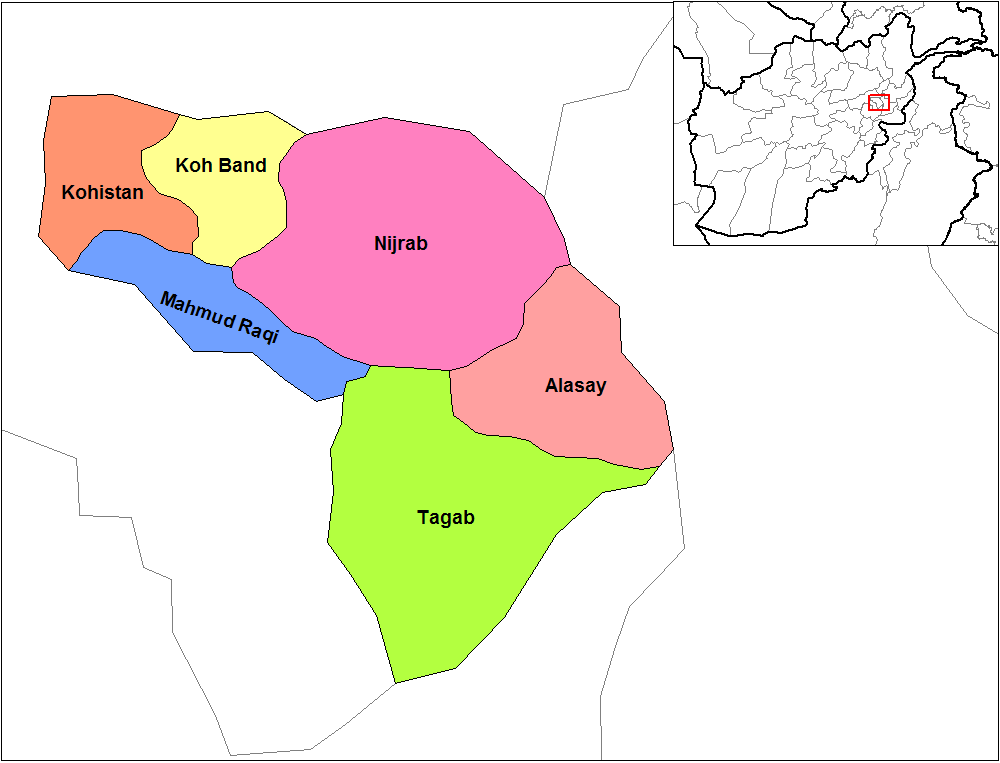
The Alasay Valley in Kapisa Province had slipped out of ISAF control in 2006. Insurgent groups operated freely in the steep terrain, and the coalition presence in the region was limited to two bases near the village of Nijrab and in Tagab. The French Groupement Tactique Interarmes de Kapisa -- a combined-arms battle group drawn from the 27th Chasseurs Alpins, the 93rd Mountain Artillery Regiment, the 2nd Foreign Engineering Regiment, the 4th Chasseurs Regiment, and the Mountain Commando Group -- was tasked with reclaiming the valley. The plan called for French alpine troops and Afghan soldiers to seize key terrain, establish two permanent outposts, and restore government authority in an area where it had been absent for years.
Before Dawn in the Valley
At 4:30 on the morning of March 14, 2009, the 4th Company lifted off from Nijrab in four CH-47 Chinook helicopters under callsign Vert -- Green. Their objective: the high ground commanding the southern approaches to the Alasay Valley. Vert 10 positioned directly above the planned outpost sites. Vert 20 and Vert 30 spread into covering positions, while Vert 70 blocked the southern access route. Simultaneously, Afghan Army units with armored vehicles and two battle tanks advanced overland, supported by the 2nd Company and the Mountain Commando Group. Two mortar sections from the 93rd Mountain Artillery set up south of the valley, extending fire support beyond the range of Tagab base. The valley was being squeezed from the air and the ground at once.
A Day of Close Fights
The response came quickly. At 7:17, Afghan Army elements drew fire, and Jonquille 40 answered with Milan anti-tank missiles. Within minutes, Dragunov sniper rounds were cracking past Jonquille 20. When Vert 30 came under sustained fire, U.S. Air Force aircraft struck by 8:00. Three AMX-10 RC armored vehicles pushed toward the village of Shekut, but the advance stalled when an Afghan company refused to move forward -- its captain was relieved on the spot, his soldiers redistributed, and a replacement company pushed through under fire. Guerrilla fighters stormed the positions of Vert 20 and Vert 30 while U.S. helicopters struck cave positions. At 12:51, a Milan operator from Vert 30 became the French force's first casualty when a Dragunov round hit his launcher, sending shrapnel into his body. He was evacuated to Bagram by helicopter.
The Evening Assault
As afternoon gave way to evening, the fighting intensified. Between 3:00 and 3:30, insurgents attempted to infiltrate between Vert 20 and Vert 30 but were driven back by small-arms fire and air support. A brief calm settled -- broken by the sight of women evacuating the sector, a signal the soldiers had learned to read. At 6:00 PM, guerrilla units emerged across the valley and stormed the village of Alasay while simultaneously attacking the French mountain positions. The firefight raged for an hour before the attackers broke contact under a barrage of RPGs. One rocket struck a VAB-C20 armored vehicle, killing its driver, Corporal Nicolas Belda. He was the only French soldier killed during the operation. Through the night, insurgent fighters withdrew eastward while ISAF forces consolidated, and the dead and five wounded Afghan soldiers were evacuated.
Outposts and Olive Branches
By March 15, construction of the first outpost had begun. Afghan Army reinforcements arrived on BMP infantry fighting vehicles, and the alpine troops who had held the high ground for over thirty hours began their withdrawal on foot to Tagab. By March 17, the Alasay outpost was complete and work started on the second position at Shekut. The fighting was over, but the outcome was shaped as much by negotiation as by force. After the battle, local tribal elders persuaded several guerrilla groups to lay down their arms in exchange for amnesty and cash incentives. Coalition and Afghan leaders acknowledged that the long-term commitment of these former fighters remained uncertain, but the combination of the military offensive and a government-sponsored reconciliation process reportedly improved the security situation in the valley -- at least for a time.
From the Air
Located at 34.90N, 69.72E in the Alasay Valley, Kapisa Province, northeast of Kabul. The valley runs roughly north-south through mountainous terrain in the southern Hindu Kush foothills. ISAF bases at Nijrab and Tagab are nearby to the south. Bagram Air Base (OABG) lies approximately 30 km to the southwest. The terrain features steep valley walls and elevated ridgelines typical of Kapisa Province, with villages concentrated along the valley floor.