Battle of Algiers (1956-1957)
On the evening of September 30, 1956, three young women walked into European cafes in Algiers carrying beach bags. Inside were bombs. The explosions at the Milk Bar on Place Bugeaud and the Cafeteria on Rue Michelet killed three people and injured fifty. A third bomb, planted at the Air France terminus, failed to detonate because of a faulty timer. These attacks announced a new phase in the Algerian War -- one that would unfold not in the mountains but in the narrow streets and crowded markets of the capital itself.
The Casbah Becomes a Fortress
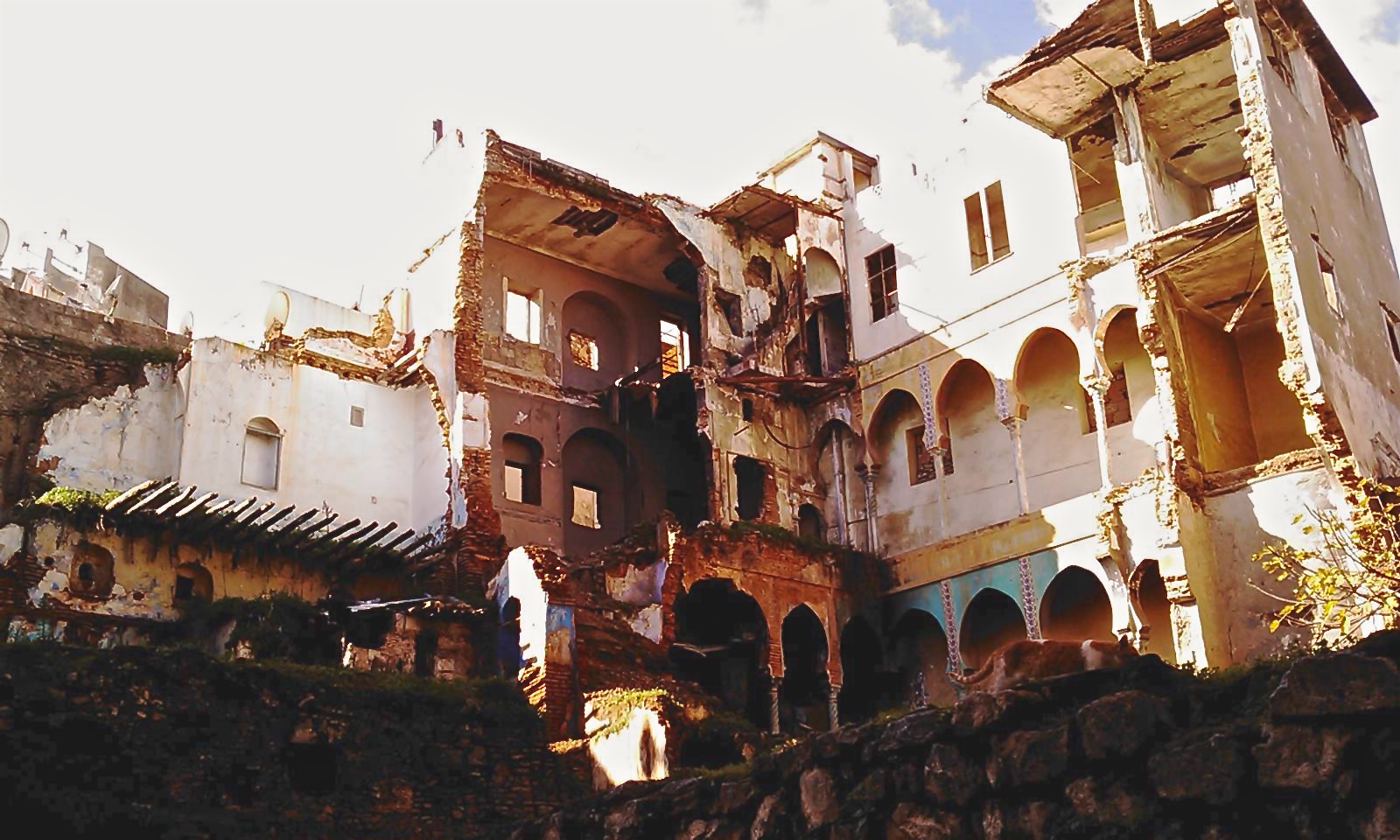
The Battle of Algiers grew from a spiral of violence that neither side could control. In June 1956, after two FLN prisoners were guillotined at Barberousse Prison, FLN commander Yacef Saadi received orders to "shoot down any European, from 18 to 54." Forty-nine civilians were killed in four days. In August, a settler paramilitary group retaliated by bombing the Casbah, killing seventy-three Algerian residents. When peace talks collapsed, FLN leader Larbi Ben M'hidi decided to bring the war into the European quarters of Algiers, believing urban terrorism would become Algeria's "Dien Bien Phu." Yacef Saadi built his network inside the Casbah, the ancient medina whose labyrinthine alleys and densely packed houses offered near-perfect concealment.
Massu's Paratroopers
In January 1957, Governor-General Robert Lacoste gave General Jacques Massu and his 10th Parachute Division full authority over Algiers. The paratroopers divided the city into a grid system called quadrillage, sealing off sections, setting up checkpoints, and conducting house-to-house searches. When the FLN called an eight-day general strike, Massu used armored cars to rip the steel shutters off shuttered shops and army trucks to round up workers and schoolchildren, forcing them back to work. The strike was broken within days. Colonel Roger Trinquier built an intelligence network that divided Algiers into sectors, sub-sectors, blocks, and individual buildings, each monitored by an appointed block-warden. Edward Behr estimated that 30 to 40 percent of the male population of the Casbah was arrested at some point during the battle.
The Methods That Stained a Victory
The French security forces institutionalized torture: beatings, electroshock -- known as the gegene -- waterboarding, sexual assault. Major Paul Aussaresses ran a special interrogation unit at the Villa des Tourelles where, by his own later admission, "torture was used as a matter of course." Those deemed too dangerous after interrogation were driven to remote locations outside Algiers and killed. FLN leader Larbi Ben M'hidi was captured in his pajamas on February 25, 1957. Ten days later, authorities announced he had hanged himself with his shirt. In reality, Aussaresses and soldiers from the 1st Parachute Chasseur Regiment had faked his suicide at a farm outside the city. Lawyer Ali Boumendjel, arrested and tortured, was thrown from a sixth-floor skybridge. Communist professor Maurice Audin disappeared after his arrest and was never seen again. Henri Alleg, the Communist editor arrested at Audin's apartment, survived his ordeal and wrote La Question, detailing the torture. The book sold 60,000 copies in France before being banned.
A Victory That Became a Defeat
By October 1957, the FLN in Algiers was destroyed. Yacef Saadi was captured at his hideout on Rue Caton on September 24. Ali la Pointe, the last major operative, was killed on October 8 when paratroopers detonated explosives at his safe house on Rue des Abderames -- an explosion that also killed seventeen Algerian civilians in neighboring houses, including children. The paratroopers had won the military battle decisively, and they were celebrated as heroes by the Pied-Noir community. But the victory was hollow. The systematic brutality -- documented by journalists, lawyers, and survivors -- turned international opinion against France and generated sympathy for Algerian independence. The methods used in the Casbah haunted France for decades. Gillo Pontecorvo's 1966 film The Battle of Algiers, banned in France until 1971, brought the story to global audiences. The battle proved that a war can be won in the streets and lost in the conscience of a nation.
From the Air
Located at 36.776N, 3.060E in central Algiers. The Casbah, the ancient medina where much of the battle took place, is visible as a dense hillside quarter rising from the waterfront. The European quarters spread along the coast below. Nearest airport: Houari Boumediene Airport (DAAG), approximately 16 km southeast. The contrast between the tight medieval streets of the Casbah and the Haussmann-style boulevards of the French city below is visible from low-altitude approaches.