Battle of An
It began with an insult. In 592 BC, Xi Ke arrived at the court of the state of Qi as an emissary of Jin. According to the Zuo Zhuan, one of the oldest narrative histories in the world, the Duke of Qi allowed women to watch from behind a screen -- and their laughter at the emissary humiliated him so deeply that he carried the slight home like a wound. Three years later, in 589 BC, that laughter would echo across the battlefield at An, near what is now Jinan, Shandong, where the armies of Qi and Jin collided in one of the defining engagements of the Spring and Autumn period.
A World of Shifting Alliances
By the early sixth century BC, the political landscape of ancient China was dominated by two great powers: Jin to the west and Chu to the south. Smaller states -- Qi, Lu, Wey, Cao -- drifted between their orbits like planets caught between twin suns. The last major clash between Jin and Chu had been the Battle of Bi in 597 BC, a Chu victory that tilted the balance southward. By 589 BC, Qi had aligned itself with Chu, while Wey and Lu leaned toward Jin. When Duke Qing of Qi invaded Lu in the spring of that year, the dominoes began to fall. Wey sent an army to support Lu but was defeated at Xinzhu. Both Wey and Lu then turned to Jin for aid, appealing directly to Xi Ke -- the same man who had been laughed at in the Qi court three years earlier.
The Wounded Commander's Chariot
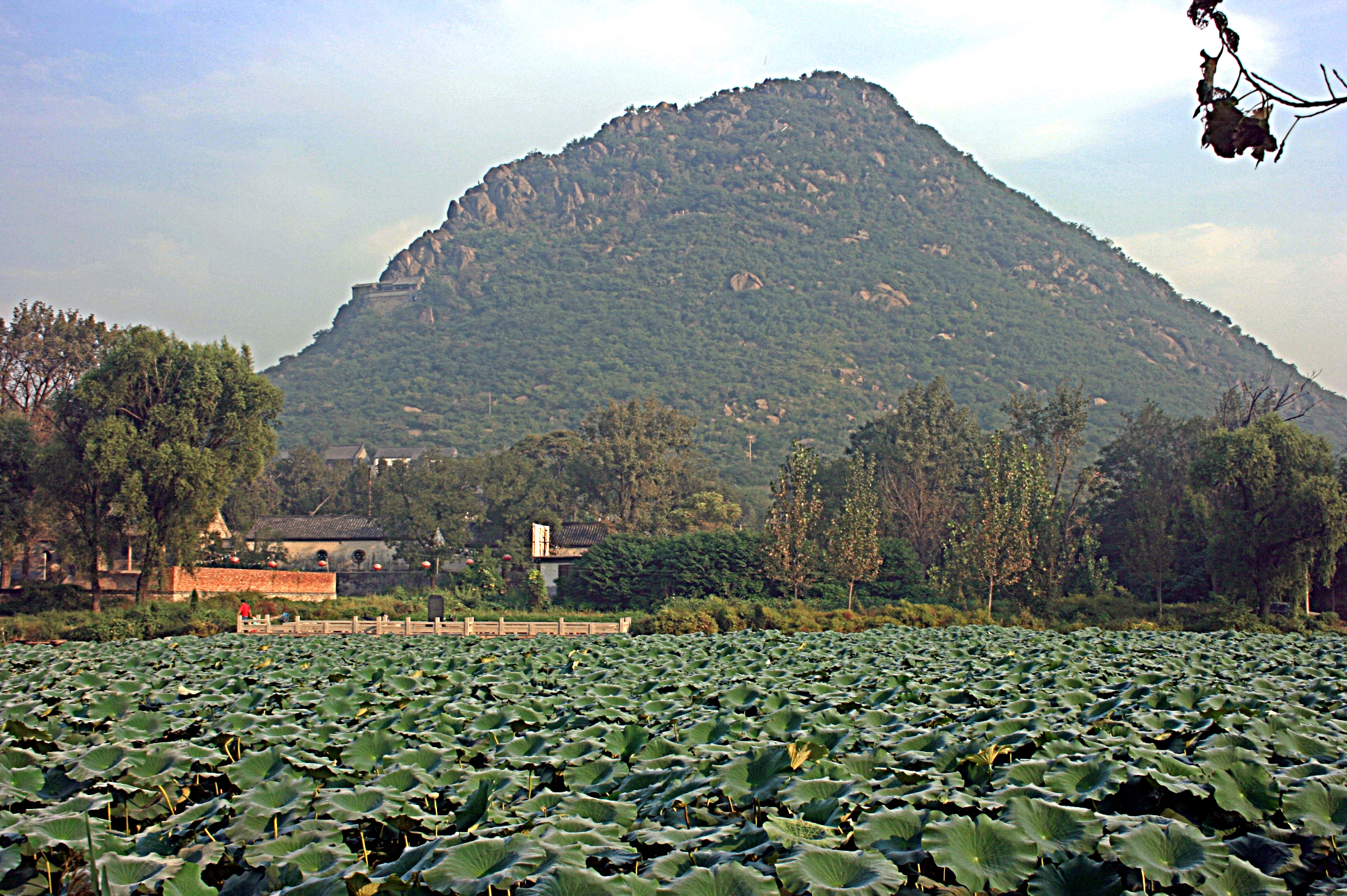
On May 28, 589 BC, the allied forces of Jin, Lu, Wey, and Cao reached Mount Miji and confronted the Qi army. When Duke Qing of Qi sent an envoy requesting formal battle, the Jin commanders replied with a statement both diplomatic and unyielding: they could only advance, never retreat. The next day, the armies clashed at An. During the fighting, an arrow struck Xi Ke. He complained of the wound and considered withdrawing, but his chariot driver Xie Zhang shamed him into continuing. Xie Zhang pointed to his own multiple arrow wounds, then seized all the chariot's reins in his left hand and beat the war drum with his right. The horses surged forward, and the allied army followed. The Qi forces broke, and Jin troops chased them around Hua Hill three times.
A Duke's Escape and a Servant's Loyalty
The pursuit produced one of the most vivid episodes in ancient Chinese military history. As the Jin officer Han Jue closed in on the Duke of Qi's chariot, the duke's spearman Feng Choufu switched places with him, disguising himself as the ruler. When the chariot became tangled in trees near the Springs of Hua and a snakebite left Feng Choufu unable to free it, Han Jue captured the man he believed to be the duke. But Feng Choufu ordered the real duke to go fetch water from the springs -- giving him a chance to escape. When Han Jue presented his captive to Xi Ke, the Jin commander recognized the deception immediately. Rather than executing the servant, Xi Ke pardoned him, declaring it inauspicious to kill a man willing to die for his lord. At the gates of the Qi capital Linzi, a woman pushed past guards to ask a stranger whether the duke and her father had survived. The stranger was the duke himself.
The Covenant at Yuanlou
Qi's defeat did not end in destruction. The duke sent the diplomat Guo Zuo to negotiate, and what followed was a masterclass in ancient diplomacy. When Jin demanded the duke's mother as a hostage, Guo Zuo invoked filial piety, asking whether Jin's own ruler would surrender his mother under the same terms. When Jin demanded that Qi reorient all its field divisions east to west -- making roads and canals run in the direction most convenient for a future Jin invasion -- Guo Zuo appealed to the legacy of the sage-kings Yao and King Wen of Zhou, arguing that such selfish demands would alienate every state in China. Representatives of Lu and Wey, who feared bearing the brunt of further fighting, urged Jin to accept the offer. On July 4, 589 BC, the parties swore a covenant at Yuanlou. Qi ceded some land north of the Wen River to Lu, and the two great states entered an era of peace that lasted a generation.
From the Air
The battle site is near modern Jinan at approximately 36.73N, 117.06E, in the plains east of Hua Hill. Jinan Yaoqiang International Airport (ZSJN) lies about 25 km to the east. The Yellow River flows north of the city. The terrain is flat agricultural land at around 30 meters elevation, with low hills to the south. Best appreciated from moderate altitude where the relationship between the ancient battle site and the modern city is visible.