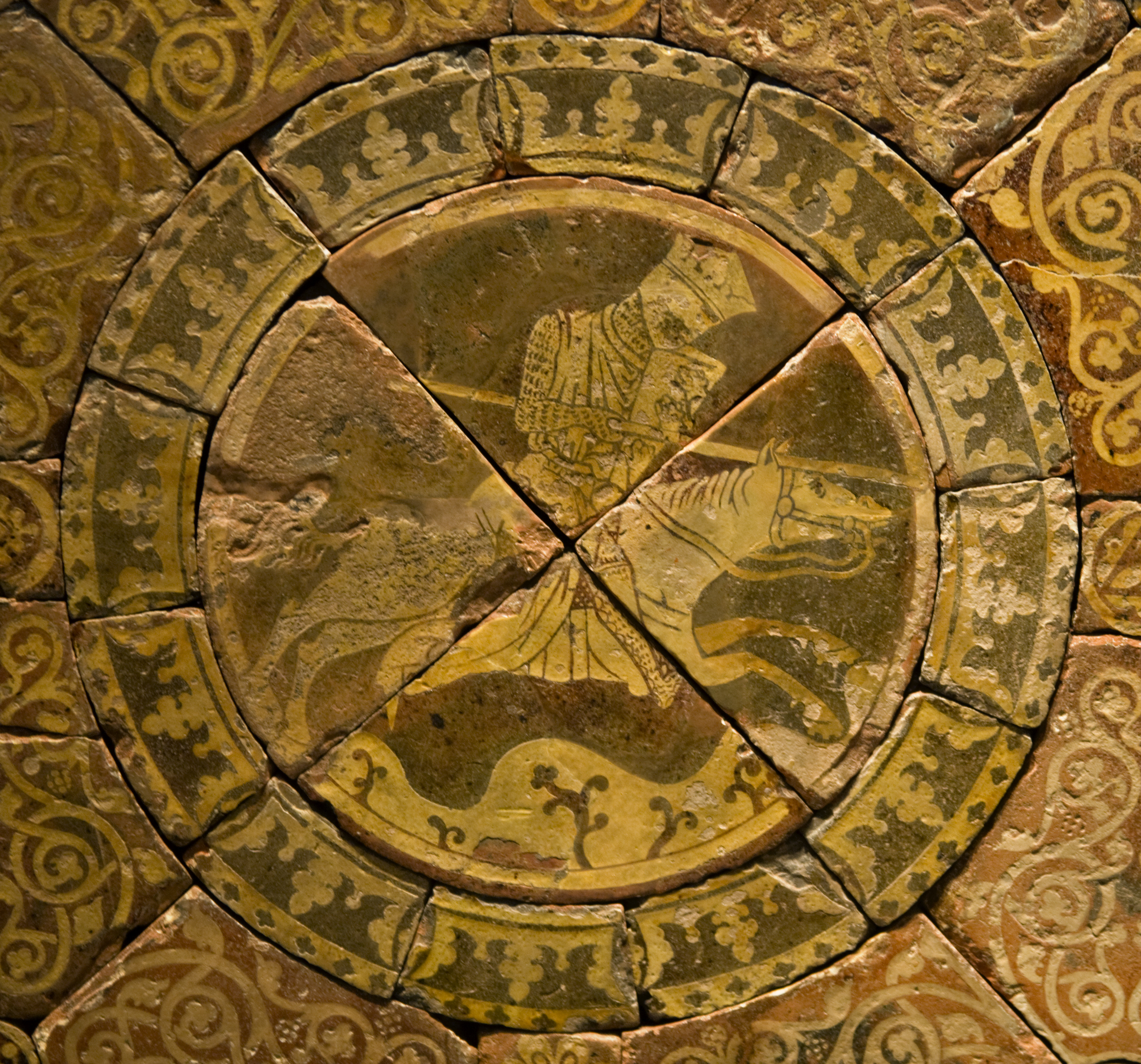
Battle of Arsuf
Baha al-Din ibn Shaddad, Saladin's own chronicler, watched the Crusader infantry march south along the Palestinian coast with arrows jutting from their armored backs -- one to ten shafts per man -- and none of them faltering. The crossbow bolts traveling the other direction, he noted, killed both horse and rider with a single strike. On September 7, 1191, this grim exchange reached its climax on a narrow plain between wooded hills and the Mediterranean Sea, just north of the ruined city of Arsuf. What happened there became the defining battle of the Third Crusade.
The Long March South
After capturing Acre in the summer of 1191, Richard I of England turned his multinational army toward Jaffa, the port he intended to use as a base for an eventual push on Jerusalem. The march was a masterpiece of logistics under fire. Richard kept the sea on his right flank, where his fleet sailed in close support -- carrying supplies, evacuating wounded, and denying Saladin the ability to attack from that side. The column moved only in the morning to avoid heat exhaustion, stopping always beside water sources. Twelve mounted regiments of a hundred knights each formed the core, with infantry on the landward flank screening the horsemen from missile fire. Crossbowmen held the outer ranks. On the seaward side, resting infantry rotated in fresh. Saladin's horsemen harassed the column every mile, probing for weakness, but Richard's discipline held. The march from Acre to Arsuf covered roughly 80 miles over three weeks -- agonizingly slow, but the army arrived intact.
The Trap at the Wood of Arsuf
By early September, Saladin recognized that skirmishing alone would not stop the Crusader advance. He needed a decisive engagement, and the terrain south of the river Nahr-el-Falaik gave him his chance. Here the forest known as the Wood of Arsuf pressed close to the coast, creating a narrow plain where the Crusaders would be hemmed between trees and sea. Saladin concealed his full army in the woodland and planned to strike the rear of Richard's column as it stretched across the open ground, hoping to split it from the vanguard and destroy it piecemeal. His forces numbered perhaps 25,000, nearly all cavalry -- horse archers, light cavalry, and heavy mamluks. Richard's army fielded perhaps 10,000 to 20,000, including roughly 1,200 heavy knights. The Knights Templar led the vanguard; the Knights Hospitaller held the most dangerous position at the rear.
Endurance Under the Black Flags
At dawn on September 7, the Ayyubid army burst from the treeline in a storm of noise -- cymbals clashing, gongs ringing, trumpets blaring, and thousands of men screaming war cries. Bedouin and Nubian foot soldiers launched arrows and javelins, then parted for waves of mounted archers who charged, fired, and wheeled away in practiced rhythm. The Crusaders absorbed it all. Richard's strategy demanded iron discipline: march forward, maintain formation, endure the punishment, and wait for the moment when the enemy horses were exhausted and the cavalry was committed at close range. Only then would the knights charge. The Hospitallers at the rear bore the worst of it. Their infantry had to walk backward to keep their shields facing the enemy. Horses were dying in such numbers that unhorsed knights joined the foot soldiers. Garnier de Nablus, the Hospitaller Grand Master, repeatedly begged Richard for permission to charge. Richard refused. The trumpets -- six clear blasts -- had not yet sounded.
The Charge That Broke an Empire
Around mid-afternoon, the Hospitallers could take no more. Whether by disobedience or by delegated authority -- historians still debate which -- two Hospitaller knights spurred their horses forward, and the rest of the rearguard followed. Richard, recognizing that an unsupported charge would be annihilated, immediately ordered the general assault. The Frankish infantry opened gaps in their ranks, and the knights thundered through in echelon from rear to van. The effect was devastating. The right wing of Saladin's army, which had pressed closest to the Crusader column, was caught in compact formation with some cavalrymen dismounted to shoot more accurately. They took the full force of the charge. Baha al-Din, caught in the center of Saladin's army as it collapsed, looked to the left wing and found it also in flight. When he searched for Saladin's personal banners, he found only seventeen bodyguards and a single drummer. Richard halted the pursuit, regrouped, and charged twice more. After the third charge, the Ayyubid army scattered into the hills and did not return.
Echoes in the Soil
Saladin's losses were severe -- Christian chroniclers claimed 7,000 dead, though the true figure may have been lower. Richard lost perhaps 700 men, among them James d'Avesnes, a French knight said to have killed 15 enemy cavalrymen before falling. The Ayyubid army was not destroyed, but it was routed, and the shame of flight demoralized Saladin's coalition of emirs. Richard marched on to Jaffa and began rebuilding its fortifications. Jerusalem, however, remained beyond his grasp. In 2013 and 2014, Israeli archaeologist Rafael Y. Lewis conducted battlefield surveys on the Sharon Plain northeast of modern Arsuf, north of Tel Aviv. His team recovered iron plate fragments likely from helmets, horse-harness fittings, horseshoe nails of a type used in 12th-century England and France, and two arrowheads -- one designed to penetrate armor, another shaped to wound horses and unseat riders. Eight centuries after the battle, the ground still holds its evidence.
From the Air
Located at 32.194N, 34.807E on the Sharon Plain, the battlefield lies on the coastal plain north of Tel Aviv near modern Herzliya and the archaeological site of Apollonia-Arsuf. The narrow strip between the hills and the Mediterranean where the battle took place is visible from altitude, though the area is now largely developed. Ben Gurion International Airport (LLBG) is approximately 15 nm to the south-southeast. Sde Dov (LLSD, closed) was nearer. Best viewed at 3,000-6,000 ft AGL to appreciate the coastal plain terrain that channeled the armies.