Battle of Ash Hollow
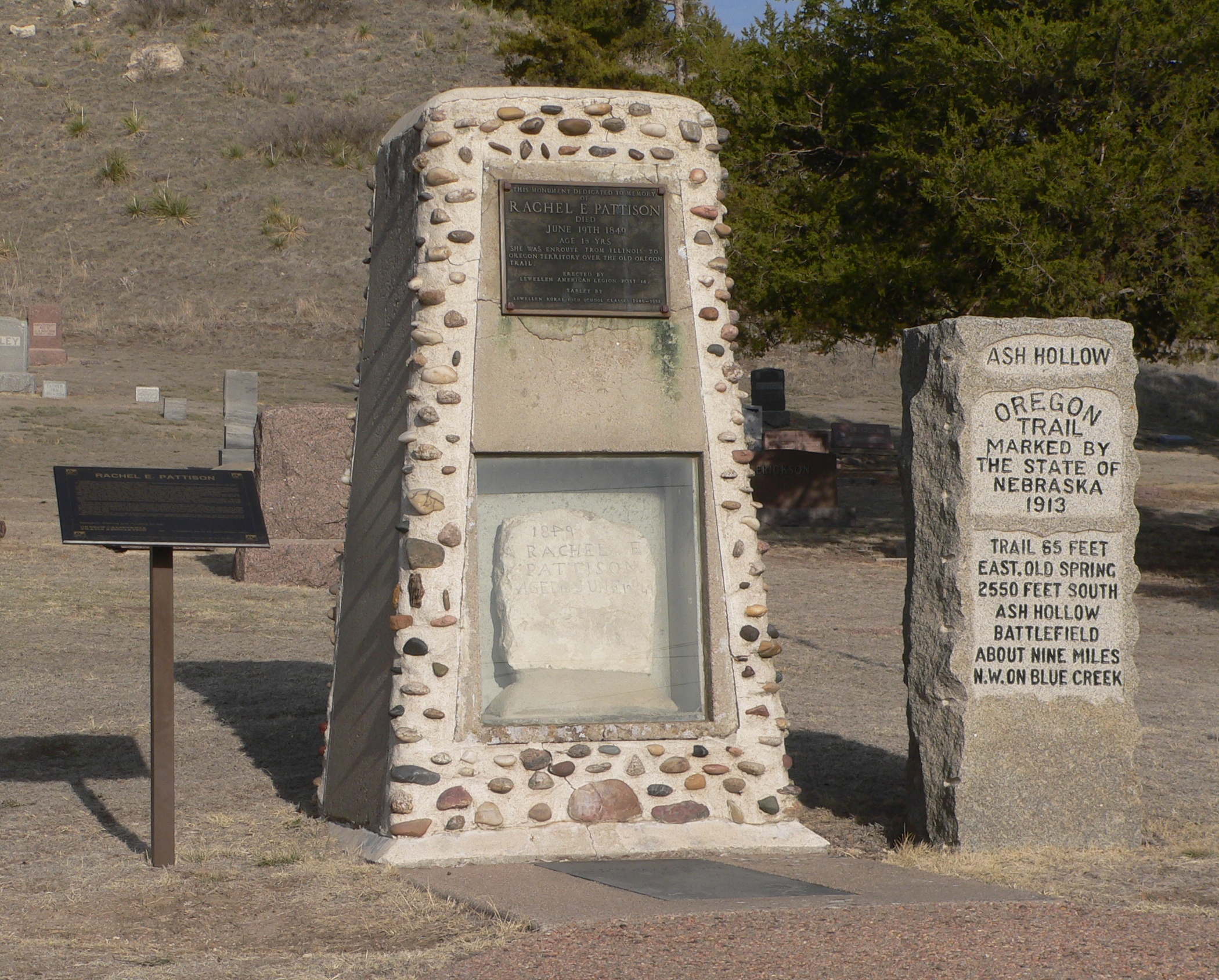
It started with a cow. A Mormon emigrant lost the animal along the Oregon Trail in August 1854; it wandered into a Sicangu Lakota camp where a Miniconjou Sioux named High Forehead killed it for food. This minor incident would cascade into the First Sioux War, culminating thirteen months later at Blue Water Creek in present-day Garden County, Nebraska. There, 600 U.S. soldiers under Brigadier General William S. Harney attacked 250 Sioux, killing 86 and taking 70 prisoners, mostly women and children. The Lakota would remember Harney by three names, none of them kind.
The Grattan Affair
The 1851 Treaty of Fort Laramie was supposed to bring peace. Disputes over livestock would be handled by Indian agents, not soldiers. But when the Mormon farmer reported his cow stolen, Fort Laramie's commander sent Lieutenant John Lawrence Grattan, a young officer said to be contemptuous of Native warriors, to arrest High Forehead. Grattan brought thirty men and artillery, vowing to take the wanted man 'at all hazards.' The treaty said wait for the Indian agent. Grattan pressed Chief Conquering Bear to surrender the Sioux man. When Conquering Bear hesitated, one of Grattan's soldiers shot him in the back, killing him. In the chaos that followed, the Sioux killed Grattan and twenty-nine of his men. One soldier survived the fighting but died later at the Fort Laramie hospital. The press called it the Grattan Massacre. President Franklin Pierce vowed revenge.
Harney's March
The War Department chose William S. Harney to deliver punishment, with orders to 'whip the Indians.' The Harney expedition set out in August 1855 with 600 soldiers. On September 1, they found a Sioux encampment along the Platte River at a place called Blue Waters. Harney devised a hammer-and-anvil trap: Lieutenant Colonel Philip St. George Cooke and Captain Henry Heth would march through the night to set up a blocking position, and at dawn Harney would drive the Sioux against them. First, Harney attempted to parley with Chief Little Thunder, demanding the men responsible for the Grattan attack. The Sioux refused. They had fired in self-defense, after Grattan's men shot first. During the negotiations, several braves discovered Cooke's hidden force. The trap was sprung, but not as Harney intended.
Caves Along the River
When the Sioux discovered the flanking force, Harney attacked the camp. Some families fled into caves along the riverbank. Harney ordered his men to fire into the caves. Women and children died in the darkness. A large group of mounted warriors tried to break through Heth's blocking position and succeeded, but the cavalry pursued them for five miles in a running fight that lasted hours. Heth rode so far ahead of his command that newspapers reported him killed, publishing obituaries he would later read with dark amusement. When the fighting ended, 86 Sioux lay dead, nearly half of them women and children. The soldiers took 70 prisoners, mostly the surviving women and children. Gouverneur K. Warren, who would become a Union general during the Civil War, recorded his horror in his diary. John Buford, future hero of Gettysburg, also fought that day.
Three Names for Harney
The Sioux gave Harney three names. For the slaughter at Blue Water Creek, they called him 'The Butcher.' For invading their territory, 'The Hornet.' For the peace treaty he forced upon them in March 1856, conducted without authorization from Washington, they called him 'The Big Chief Who Swears.' Harney demanded a centralized tribal government among the highly decentralized Lakota, intending to hold leaders accountable for the actions of individuals. It was an impossible structure imposed on an unwilling people. Following the battle, roughly ten years of uneasy peace held between the United States and the Sioux. But emigrants on the Oregon Trail continued to take game, plants, and water the Sioux needed for survival, and the pressure would build again.
A Peak and Its Name
After the battle, someone in Harney's expedition renamed Hinhan Kaga, the highest peak in the sacred Black Hills, as Harney Peak. The expedition had never come within five miles of it. For the Lakota, this was salt in an open wound: their sacred place bearing the name of the man who had killed so many of their women and children. The Great Sioux Reservation of 1868 promised to preserve the Black Hills for the Lakota, but gold discoveries led the U.S. to violate that treaty within years. In 1889, the government broke up the reservation and sold nine million acres. Not until 2016 did the United States Board on Geographic Names restore a measure of justice, renaming Harney Peak as Black Elk Peak, honoring the Oglala Lakota holy man whose vision at its summit became one of the most important spiritual texts of the twentieth century.
From the Air
Located at 41.30°N, 102.12°W in Garden County, Nebraska, along the Platte River. The battlefield site is in rolling prairie near the town of Lewellen, which developed later as a railroad stop. Best viewed at 1,500-2,500 feet AGL. The area is sparsely populated agricultural land. Nearest airports: Sidney Municipal (KSNY) approximately 30 miles south, Ogallala Municipal (KOGA) approximately 25 miles east. Ash Hollow State Historical Park preserves part of the Oregon Trail landscape nearby.