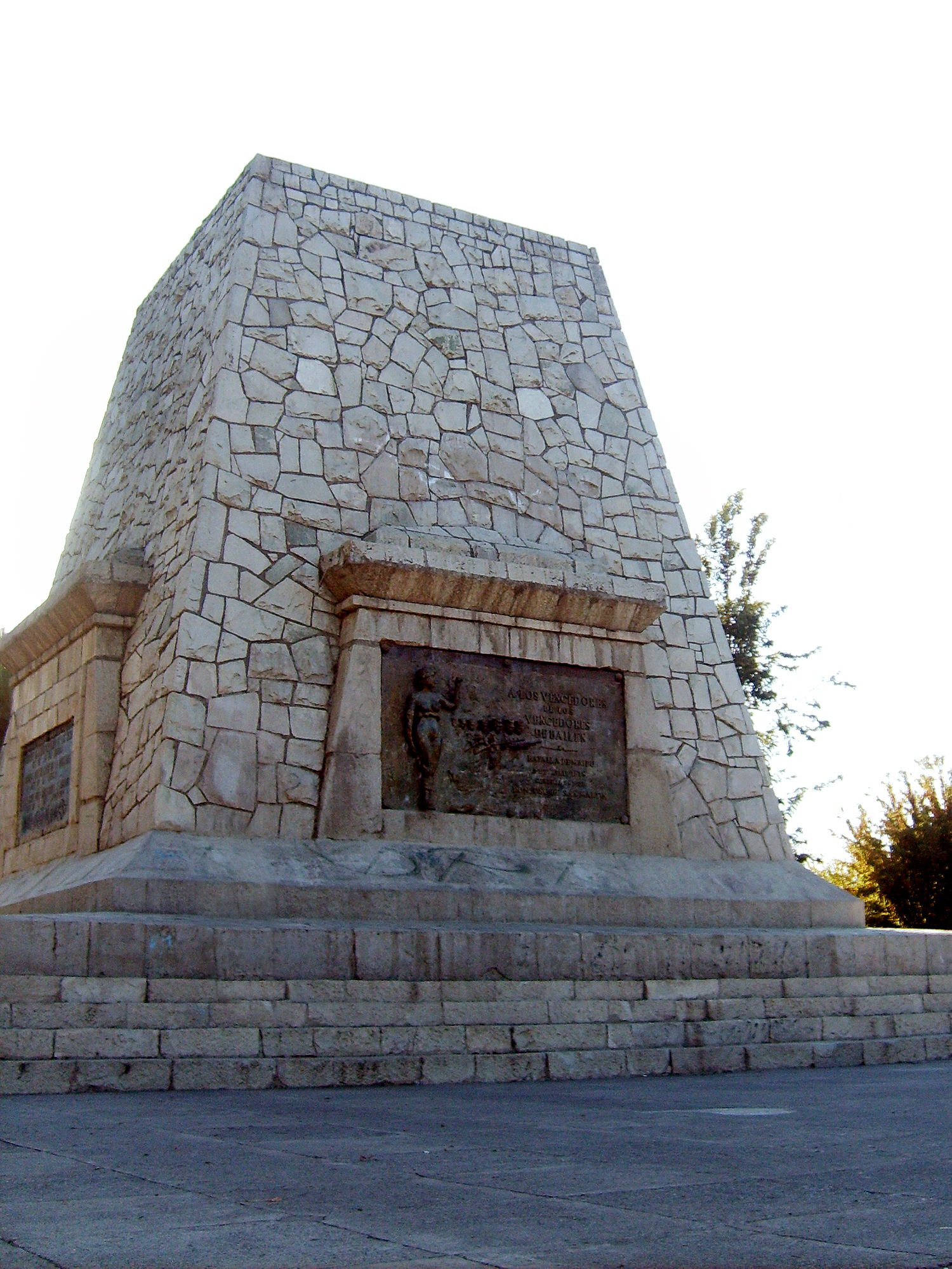
Battle of Bailén
General Pierre Dupont de l'Étang handed his sword to the Spanish commander and declared: "You may well, General, be proud of this day; it is remarkable because I have never lost a pitched battle until now -- I who have been in more than twenty." Francisco Javier Castaños, accepting the blade, offered a reply that would echo across Europe: "It is the more remarkable because I was never in one before in my life." On July 19, 1808, beside a village on the Guadalquivir river in southern Spain, the myth of Napoleonic invincibility died in the dust and heat of Andalusia.
A Promenade That Wasn't
Napoleon had designed the invasion of Andalusia as a routine pacification, dispatching Dupont south from Madrid with 13,000 men -- most of them inexperienced recruits -- to secure the port of Cadiz where a French naval squadron lay vulnerable. The Emperor expected no serious resistance. Events suggested otherwise almost immediately. Dupont's troops stormed Cordoba in early June, then ransacked the city for four days. A French surgeon later observed that "our little army carried enough baggage for 150,000 men. Mere captains required wagons drawn by four mules." Burdened with some 500 wagons of plunder and 1,200 sick, the French column retreated north through sweltering heat toward the Sierra Morena, hoping for reinforcements from Madrid. Their messengers, however, were all intercepted and killed by guerrillas who controlled the roads.
Converging on the Guadalquivir
While Dupont lingered at Andujar on the Guadalquivir, General Castaños organized the Army of Andalusia into four divisions and advanced steadily from the south. Swiss-born General Theodor von Reding prepared to force a crossing at Mengibar and swing north to Bailén, cutting the French line of retreat to the mountains. The plan required coordination across difficult terrain, but the Spanish commanders executed it with surprising precision. Between July 16 and 18, Reding fought his way across the river, crushing French battalions sent to stop him. General Gobert, rushing from Bailén to plug the gap, was shot in the head and later died. Meanwhile, General Vedel, commanding the French right wing, was drawn away by diversionary attacks and false reports, opening an enormous gap in Dupont's already stretched line. By the evening of July 18, Reding held Bailén, placing his divisions squarely between Dupont and any hope of escape.
Three Charges Into the Olive Groves
Dupont slipped away from Andujar under cover of darkness on July 18, but at dawn his vanguard collided with Reding's forces in an olive grove laced with deep ravines just west of Bailén. Badly underestimating the Spanish strength, Brigadier Chabert charged 3,000 men into Reding's two divisions and was thrown back with heavy losses. Dupont, following with the main body, committed his exhausted troops piecemeal without massing a reserve. A second assault bent back the Spanish line and the French cuirassiers trampled an infantry regiment and reached the guns, but concentrated Spanish fire forced them to abandon the captured artillery and retreat. The third and final charge was led by the 300 Sailors of the Imperial Guard -- the only veteran Old Guard troops present. They pierced the first Spanish lines, but with no reserves to exploit the breach, the attack collapsed under merciless artillery fire. Dupont himself was wounded in the hip. His Swiss regiments, originally in Spanish service, defected to their former masters.
The Capitulation That Shook an Empire
Surrounded on three sides, his men without water in the Andalusian heat, Dupont negotiated a surrender that encompassed not only his own force but Vedel's division as well -- some 17,000 men in total, the worst French defeat of the entire Peninsular War. The surrender terms promised repatriation to France, but the Spanish did not honor the agreement. The prisoners were eventually transferred to the uninhabited island of Cabrera, where most died of starvation -- a grim fate that shadowed an otherwise celebrated victory. When news reached Madrid, Joseph Bonaparte fled the capital, and French forces retreated behind the Ebro in what became a wholesale evacuation of most of Spain. From Vitoria, Joseph wrote gloomily to his brother: "I repeat that we have not a single Spanish supporter. The whole nation is exasperated and determined to fight."
The Echo Heard Across Europe
Bailén's significance extended far beyond Andalusia. It demonstrated that Napoleon's armies could be beaten in open battle, a revelation that persuaded Austria to launch the War of the Fifth Coalition. The Seville Junta struck a commemorative medal, and tales of Spanish heroism inspired resistance movements across the continent. Napoleon was outraged. Dupont and Vedel were court-martialed, stripped of rank, and imprisoned. Years later, the Emperor halted a military parade in Valladolid to publicly humiliate Dupont's chief of staff. An imperial decree of 1812 declared any unauthorized surrender a capital offense. Yet the victory proved difficult to replicate. Castaños himself was routed by Marshal Lannes at Tudela four months later, and Reding died of wounds sustained at the Battle of Valls in 1809. Napoleon personally invaded Spain with the Grande Armée, recapturing Madrid by November 1808. The struggle would continue for six more years, but the precedent set at Bailén -- that determined resistance could humble the greatest military power in Europe -- never lost its force.
From the Air
Located at 38.10°N, 3.77°W near the village of Bailén in the province of Jaén, southern Spain. The battlefield lies in the Guadalquivir river valley with the Sierra Morena mountains to the north. Nearest airport: LEJR (Jaén Airport) or LEGR (Granada). Best viewed at 5,000-8,000 ft AGL, where the river crossings and mountain passes that shaped the battle are clearly visible.