Battle of Barnet: The Fog That Decided a Dynasty
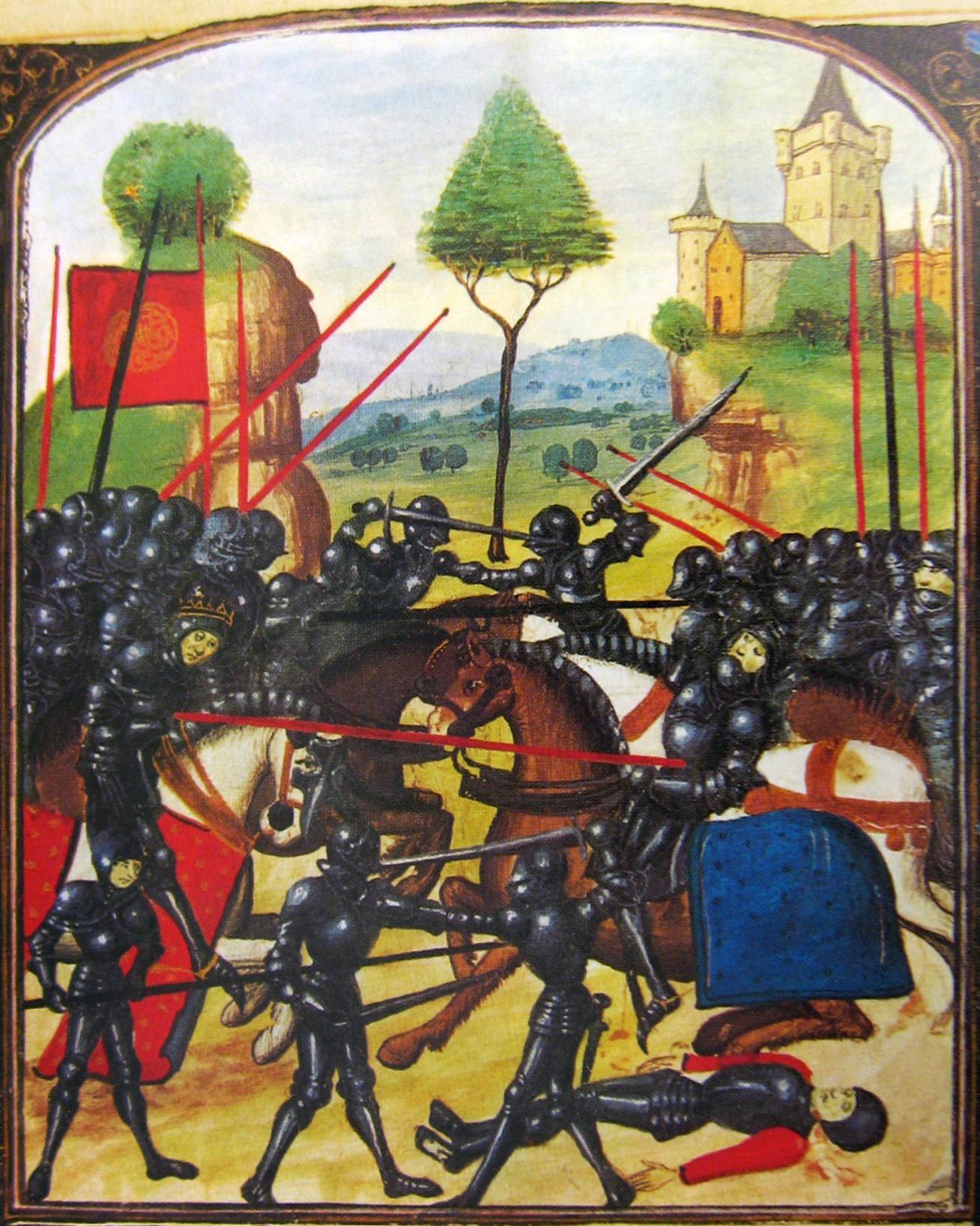
The armies assembled in darkness. On the night of Saturday 13 April 1471, Edward IV marched his Yorkist forces north from London and positioned them so close to the Lancastrian lines that neither side could see the other. He ordered his men to keep silent and forbade any gunfire that might reveal their position. When dawn broke on Easter Sunday, it brought not clarity but a thick fog that clung to the fields north of Barnet. The two armies were misaligned, each extending beyond the other's flank on opposite sides. What followed was one of the most important and chaotic battles of the Wars of the Roses, a fight decided as much by weather and confusion as by courage.
The Kingmaker Turns
Richard Neville, Earl of Warwick, had once been the most powerful man in England after the king. He had placed Edward IV on the throne and earned the title 'Kingmaker.' But the relationship fractured over Edward's secret marriage to Elizabeth Woodville, his favoritism toward her family, and disagreements over foreign policy. Warwick defected to the Lancastrian cause, the very side he had spent years fighting. In October 1470, he forced Edward to flee to Burgundy and restored the feeble Henry VI to the throne. It was a dramatic reversal, but Warwick's hold on power proved fragile. Edward secured Burgundian money and ships, landed on the Yorkshire coast in March 1471, and marched south, gathering supporters as he went. By the time he reached London, the capital opened its gates to him. Henry VI was returned to the Tower. Warwick, approaching from the north with a Lancastrian army, found himself facing not a weakened exile but a king with momentum.
Easter Morning in the Fog
The battle began at dawn on 14 April, with both armies groping toward each other through fog so dense that men could barely see the soldiers beside them. The misalignment proved catastrophic. On the Lancastrian right, the Earl of Oxford routed the Yorkist left and pursued the fleeing soldiers into Barnet itself. But when Oxford's men returned to the battlefield, the fog turned them into ghosts. The Lancastrian center, seeing troops approaching from an unexpected direction and mistaking Oxford's 'Star with Streams' banner for the Yorkist 'Sun in Splendour,' opened fire on their own allies. Cries of treason swept through the Lancastrian ranks. The confusion spread like fire through dry grass, and Oxford's men, convinced they had been betrayed, fled the field entirely.
Death of the Kingmaker
With his right wing gone and his center collapsing, Warwick's position became hopeless. Edward pressed the attack personally, his household knights driving into the disintegrating Lancastrian line. Warwick, who had fought on foot to demonstrate his commitment to his soldiers, tried to reach his horse and escape. He never made it. Yorkist soldiers caught him somewhere in the fields or woods near the battlefield and killed him. His brother John Neville, Marquess of Montagu, who had reluctantly sided with Warwick, also died in the fighting. Contemporary accounts suggest as many as 1,500 men were killed that morning, though fog, confusion, and the lack of precise records make any figure uncertain. Edward had his former ally's body displayed at St Paul's Cathedral in London to prove that the Kingmaker was truly dead.
A Kingdom Settled in Mist
Barnet did not end the Wars of the Roses, but it broke the Lancastrian cause in England for over a decade. Three weeks later, Edward destroyed the remaining Lancastrian army at the Battle of Tewkesbury, and Henry VI died in the Tower shortly afterward. Edward would rule unchallenged until his own death in 1483. The battlefield itself, once open fields north of a small Hertfordshire market town, has been gradually absorbed by the sprawl of Greater London. A monument marking the approximate site stands near Hadley Green, where suburbia now covers the ground where the Kingmaker fell. The fog that decided the battle has a poetic quality: two sides of the same English nobility, unable to see each other clearly, destroying themselves in confusion. It is a fitting metaphor for the entire dynastic conflict.
From the Air
The Battle of Barnet took place on fields north of Barnet (51.66N, 0.18W), now largely built over by suburban development on the northern edge of Greater London. The battlefield monument is near Hadley Green, visible from the air as one of several green spaces along the Great North Road. Nearest airports are London Luton (EGGW) 30km north and RAF Northolt (EGWU) 20km west. From altitude, look for the open ground around Hadley Wood and Monken Hadley Common, which preserves some of the terrain's character.