Battle of Beaugency (1429)
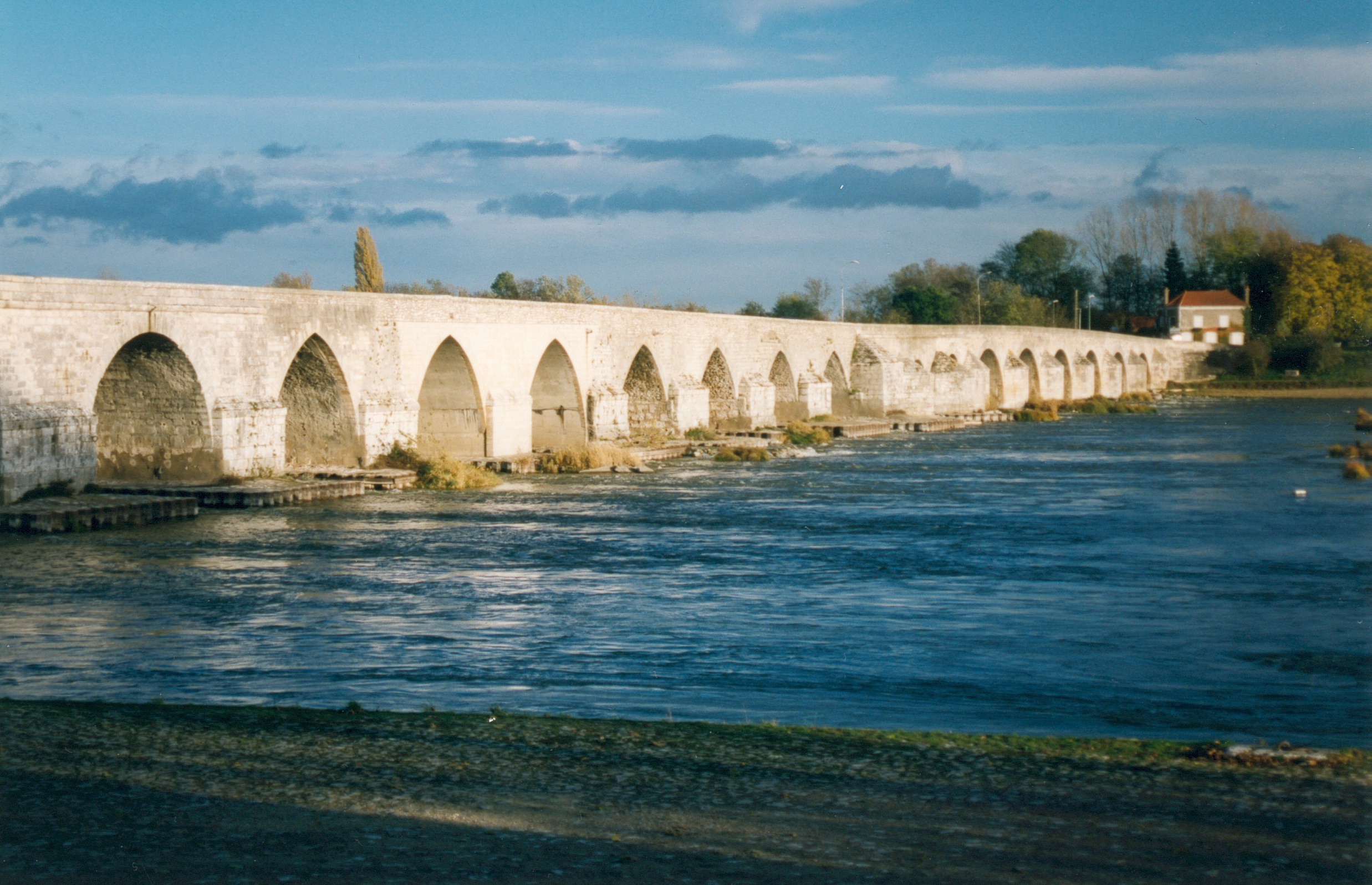
The bridge at Beaugency still stands. Nearly six centuries after Joan of Arc's army fought to recapture it, vehicles cross the Loire on the same span that once determined whether France would remain a kingdom or dissolve into English occupation. In June 1429, virtually all of France north of the Loire lay under foreign control. Every river crossing had been lost. The siege of Orléans had just been broken, but the bridge there was destroyed, and the English still held the crossings at Jargeau, Meung-sur-Loire, and Beaugency. Retaking those bridges was not a symbolic gesture. It was the precondition for everything that followed -- the march to Reims, the coronation, the survival of the French crown.
The Loire Campaign's Furious Logic
The French campaign along the Loire in the summer of 1429 consisted of five engagements executed in rapid sequence: the relief of the Siege of Orléans, then the battles of Jargeau, Meung-sur-Loire, Beaugency, and finally the decisive Battle of Patay. The speed was the point. Joan of Arc and Duke John II of Alençon understood that the English forces in the region were dispersed, their commanders rivalrous, and their longbowmen -- the most lethal infantry in Europe -- spread thin across multiple garrisons. By moving faster than the English could consolidate, the French could defeat each garrison in turn before reinforcements arrived. The strategy broke with the slow, grinding siege warfare that had characterized the previous decades of the Hundred Years' War. Bridges, not castles, were the objectives. Control the crossings, and the army could move freely between the river's banks; lose them, and southern France remained cut off from the north.
A Constable's Gamble
French recruitment swelled after the miracle at Orléans, and during the assault on Beaugency one volunteer caused a stir that threatened to unravel the command structure. Constable Arthur de Richemont had been in disgrace at the court of Charles VII for two years, but he appeared before Beaugency with a force of a thousand men and offered his services. Accepting him meant risking the king's anger; refusing him meant turning away experienced soldiers at a moment when every blade mattered. Joan of Arc accepted the aid. It was a calculated risk -- she was gambling that military necessity would outweigh royal politics, and that a victory won with a disgraced constable's troops would be forgiven more readily than a defeat suffered without them. The decision reflected a pragmatism that ran alongside her well-documented mysticism. She could hear divine voices and still count swords.
Two Days on the Loire
On June 15, 1429, French forces captured the bridge at Meung-sur-Loire. Rather than pressing an attack on that town's castle, Joan and d'Alençon pivoted to neighboring Beaugency the following day -- another break with convention, since the prevailing doctrine demanded that a captured position be fully secured before advancing. At Beaugency, the main English stronghold was inside the city walls, centered on an imposing rectangular citadel that survives to the present day. On the first day of fighting, the English abandoned the town and retreated into the castle. The French bombarded it with artillery. That evening, de Richemont's thousand men arrived, swelling the besieging force. The English commander, John Talbot, Earl of Shrewsbury -- one of the most capable soldiers on either side of the war -- knew that Sir John Fastolf was approaching from Paris with a relief column. But d'Alençon moved first, negotiating an English surrender and granting safe conduct out of Beaugency. The garrison marched away on June 17.
The Road to Patay
The surrendered garrison at Beaugency joined Fastolf's approaching relief force, but the combined English army no longer had defensible positions to retreat to. On June 18, French cavalry caught them in open terrain near Patay. The Battle of Patay destroyed the English field army in the Loire Valley, killed or captured most of its senior commanders, and decimated the ranks of the highly skilled English longbowmen who had dominated European battlefields since Crécy. Talbot himself was captured. The Loire campaign -- five actions in less than a month -- transformed the strategic balance of the Hundred Years' War. Within weeks, Charles VII marched to Reims and was crowned king of France. The bridge at Beaugency, one small stone span in a chain of river crossings, had helped make it possible.
From the Air
Located at 47.796°N, 1.649°E, on the north bank of the Loire River in central France. The medieval bridge at Beaugency is visible spanning the Loire, and the rectangular citadel from the 1429 battle survives in the town center. Nearest airports: Orléans-Bricy (LFOJ) approximately 30 km northeast, Blois-Le Breuil (LFOQ) approximately 30 km southwest. Best viewed at 1,500-3,000 ft AGL. The Loire River provides excellent visual navigation through this section of the valley.