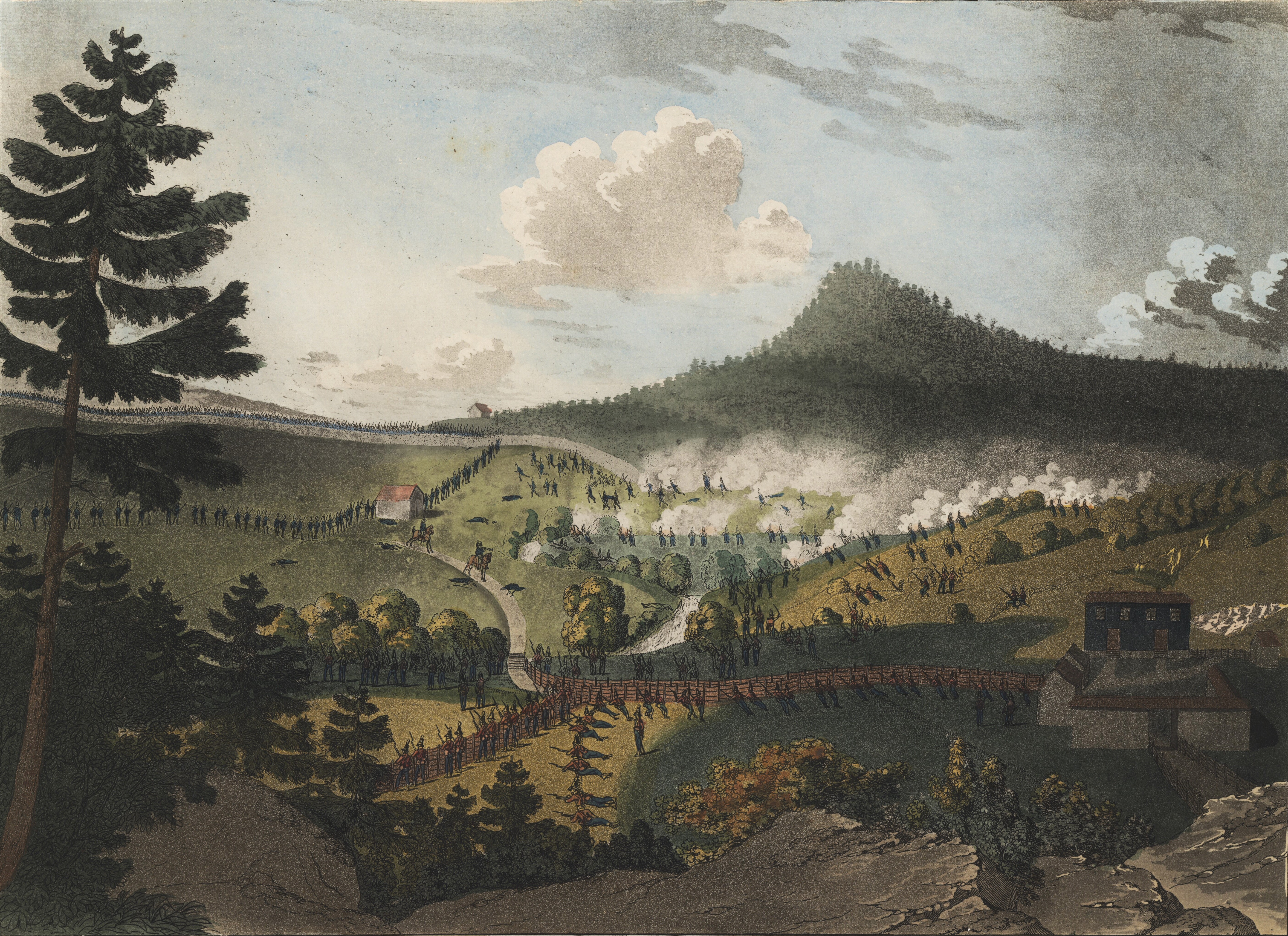
Battle of Berby
Through the thick morning fog at 07:30 on September 12, 1808, a Norwegian outpost at Tyslingmoen spotted shapes moving in the mist. The Swedish vanguard had arrived. What followed was not supposed to happen. Colonel Carl Henric Posse had planned a simple reconnaissance toward the Norwegian positions at Berby. His newly raised Landwehr militia needed experience, and Swedish defenses on the border were thinning as troops shipped east to the Finnish front. Instead, his probe would spiral into five hours of pitched battle, culminating in one of the strangest endings of the Napoleonic era: a half-hour ceasefire agreed upon mid-combat so both armies could collect their wounded before the Swedes simply walked home.
A Border Under Strain
The Dano-Swedish War of 1808-09 was an awkward sideshow to the larger Napoleonic conflicts consuming Europe. Swedish King Gustav IV Adolf had prioritized the Finnish front, where Russian forces threatened to dismember his eastern territories. Regiment after regiment marched away from the Norwegian border, leaving skeletal defenses behind. The Norwegians, under their capable commander Andreas Samuel Krebs, noticed. On September 4, Krebs had conducted a short offensive east, capturing 11 Swedish soldiers at Måsakasan. It was a small victory, but it stung Swedish pride and demanded a response. Colonel Posse decided to answer with a large-scale reconnaissance, ostensibly to gather intelligence but also to test Norwegian defenses and give his green troops a taste of combat.
Three Columns Into the Fog
Posse divided his force of 1,550 men into two brigades advancing from different directions. The 5th Brigade under Captain Ström, 500 strong, would approach from the southwest through Nösteröd. The 4th Brigade split into two columns: Major Grönhagen with 500 men and two guns, and Major Rappe with 400 men, both advancing from the south at Vassbotten. Against them, Krebs had 1,300 men scattered across the Enningdal valley, with 600 around Berby itself. The Norwegians were dug in and waiting. When Ström's vanguard of 125 men emerged from the fog, the Norwegian outpost of 130 men counterattacked immediately.
Bayonets at the Stone Wall
The initial Norwegian success did not last. Swedish bayonet charges pushed the defenders back to Ødegårdene, then to the Berget farm south of Berby bridge. Krebs arrived with 200 reinforcements and two guns from Ende, but the Swedes kept pressing. In the confusion, the Norwegians lost a cannon and six prisoners. A renewed defensive line behind a stone wall finally halted the Swedish advance. Major Fischer took temporary command while Krebs rode to prepare Berby's defenses. The Swedes attempted to ford the Enningdal River north of town but were checked by Norwegian fire. Three hours of fighting had swollen both forces as reserves rushed forward. By 10:30, Rappe's vanguard arrived and shattered the Norwegian flank with a bayonet charge, taking 17 prisoners.
The Half-Hour Truce
The Norwegians fell back across the river to Berby, establishing a new position on the heights. The Swedes pursued to the bridge and twice attempted to storm it, failing both times. The river was too deep to ford elsewhere. By noon, Colonel Posse arrived at the battlefield in person and surveyed the situation. His reconnaissance had evolved into something far larger than intended, and both sides were running dangerously low on ammunition. Posse sent word to Krebs requesting a ceasefire. The Norwegian commander hesitated, then agreed. For thirty minutes, the battlefield fell silent as soldiers from both armies walked among the fallen, collecting their wounded. When the ceasefire ended, the Swedes simply turned and marched back across the border.
Victory Claimed by Both
The aftermath produced a peculiar dispute. Posse declared the reconnaissance a success, writing that his troops had proven their "combat-superiority," though his untested Landwehr had never actually engaged. Krebs believed the Swedes had been forced to retreat and judged Norwegian performance superior. The casualty counts favored neither interpretation clearly: the Swedes suffered 3 killed and 45 wounded; the Norwegians lost 6 killed, 15 wounded, 23 captured, and one gun. The Battle of Berby was the last significant engagement on this front in 1808. The following year brought revolution to Sweden. Gustav IV Adolf was deposed, and ironically, the Norwegian supreme commander Christian August was chosen as the new Swedish crown prince. Peace came to Jönköping in December 1809.
From the Air
The Battle of Berby took place at 58.96°N, 11.49°E in the Enningdal valley along the historic Swedish-Norwegian border. The Enningdal River, which played a crucial role in the battle, is visible winding through the valley. The Berby bridge crossing and the heights where the Norwegians made their final stand can be identified from the air. The village of Prestebakke, site of an earlier battle three months prior, lies about 3km to the north. The Iddefjord, used by Norwegian forces for a flanking flotilla in June, extends to the west. Nearest airports: Moss-Rygge (ENRY) approximately 60km southwest, Oslo Gardermoen (ENGM) about 100km north. Best viewed at 2,000-3,000 feet following the river valley.