Battle of Berea
"A dog when beaten would show its teeth." With those words, King Moshoeshoe I warned Major-General Sir George Cathcart what would happen if the British tried to seize Basuto cattle by force. Cathcart did not listen. On 20 December 1852, three British columns crossed the Caledon River in what is now Lesotho, aiming to round up 10,000 head of cattle as punishment for Basuto raids. What followed was a day of ambushes, cavalry charges, and desperate fighting across the Berea plateau that left the British shaken and Moshoeshoe reaching for a pen instead of a spear.
The Kingdom Moshoeshoe Built
During the turbulent early 19th century, when the upheaval known as the Lifaqane scattered peoples across southern Africa, Moshoeshoe I did something remarkable. He gathered diverse Sotho, Nguni, and Tswana-speaking communities along the Caledon River and forged them into a nation. By 1828, the Basuto had emerged as a distinct people under his leadership. In their world, cattle were more than wealth. Through the mafisa system, a chief lent cattle to followers, retaining nominal ownership while binding the community together. Raiding rival herds was a deeply embedded practice that enhanced a chief's prestige and redistributed resources. When Khoekhoe raiders called the Koranna brought horses and guns to the region in the 1820s, the Basuto adapted quickly. By 1843, Moshoeshoe had accumulated more horses and firearms than any other chief in South Africa, though most of his guns were outdated flintlocks that European traders had dumped on the market after percussion lock muskets rendered them obsolete.
Treaties That Unraveled
Moshoeshoe's relationship with the British was a saga of agreements made in ambiguity and broken in frustration. In 1843 he signed a treaty recognizing the Basuto as British allies, receiving an annual grant of 75 pounds in exchange for countering Boer incursions during the Great Trek. Successive governors signed new treaties that chipped away at Basuto territory and autonomy. By 1848, Governor Harry Smith had pressured Moshoeshoe into accepting British authority north of the Orange River, effectively establishing the Orange River Sovereignty on land the Basuto considered their own. The British Resident, Major Henry Douglas Warden, blamed the Basuto for ongoing inter-tribal cattle raids and in 1849 began redrawing borders in ways that ignored Moshoeshoe's longstanding territorial claims. Tensions escalated. In June 1851, a Basuto-Taung army defeated Warden's mixed force at the Battle of Viervoet. Moshoeshoe wrote to the British explaining he had acted in self-defense, but the colonial government saw the matter differently. Demands for restitution of cattle and horses followed, and when Moshoeshoe's partial compliance stalled, Cathcart decided to take them by force.
Three Columns into the Mountains
Cathcart led 2,500 men from Burgersdorp, including infantry from five regiments, the Cape Mounted Rifles, the 12th Royal Lancers, artillery with howitzers and Congreve rockets, and mounted Mfengu herdsmen. He demanded 10,000 cattle and 1,000 horses within three days. Moshoeshoe convened a pitso at Thaba Bosiu and his people collected 3,500 head, but the British would not extend the deadline. On the morning of 20 December, Cathcart split his force into three columns. Lieutenant Colonel Napier's cavalry would sweep north around the Berea plateau. Lieutenant Colonel Eyre's infantry would cross the plateau itself and drive cattle south. Cathcart would circle the western side. The plan assumed the Basuto would scatter. They did not. Moshoeshoe's son Molapo had concealed 700 cavalry and several hundred infantry above the Berea Mission Station, waiting.
Lances and Battle Axes
Napier's column gathered 4,000 cattle and 55 horses from the plateau slopes and began driving them back toward camp. At midday, Molapo struck. His infantry hit the rear guard while Basuto cavalry charged the Lancers. Thirty Lancers under Major Tottenham rode along a dried riverbed that ended in a stony ridge. Trapped, they were set upon by Basuto horsemen wielding battle axes and assegais. Twenty-seven of the thirty were killed. Elsewhere, five Cape Mounted Riflemen were cut off near the mission station and shot dead. Napier rallied his men and fought off two more attacks before retreating to camp. On the plateau, Eyre's column spotted a herd of 30,000 cattle but could capture only 1,500 on foot. Then 300 of Molapo's riders struck, wearing the caps and carrying the lances of the British soldiers they had killed. Lieutenant Colonel Eyre's hat was knocked off by a knobkerrie. Captain Walter Faunce was captured and executed in retaliation for British troops having killed Basuto women earlier in the fighting. By evening, Cathcart's own column faced 6,000 Basuto cavalry led by Moshoeshoe himself and three of his sons, circling the British position and probing with musket fire.
A Midnight Letter
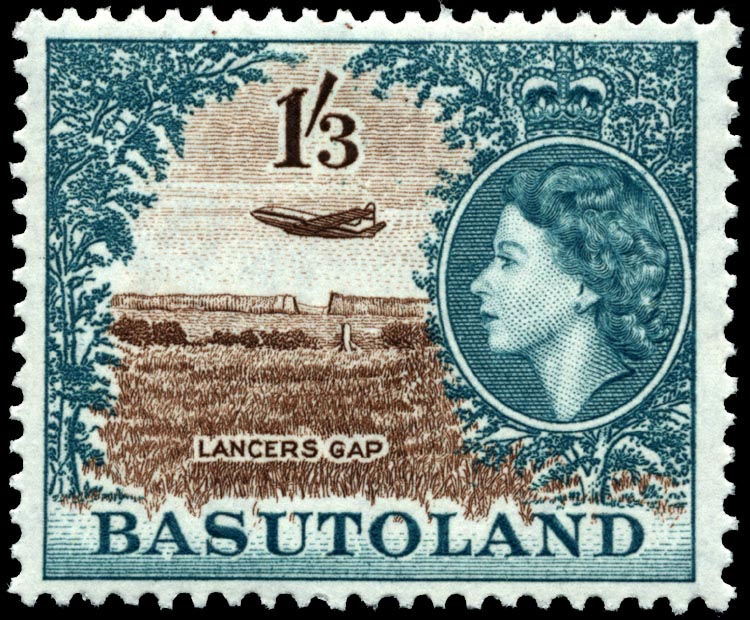
The British captured over 5,000 cattle, but at a cost of 38 killed and 14 wounded, with their ammunition running low and their plan in ruins. Cathcart had not expected this level of resistance. That night, Moshoeshoe composed a letter to the general, translated into English by French missionary Eugene Casalis. It was a masterpiece of diplomacy: a plea for peace that allowed the British to save face while preserving the Basuto nation. Cathcart accepted. The Basuto paid 3,500 cattle in restitution, well short of the original demand, and the British departed Basutoland on Christmas Eve. Basuto losses were fewer than 50 killed, a fraction of the 500 to 600 that Cathcart reported. The Basuto remember the engagement as Ntoa ea Masole, the Battle of the Soldiers, in admiration of British discipline. One edge of the Berea plateau is still called Lancers Gap, after an apocryphal story that the 12th Lancers rode to their deaths off its cliff. Moshoeshoe's real victory was strategic: the peace preserved his kingdom and laid the foundation for Basutoland to become a British protectorate, shielding the Basuto from destruction during the Free State-Basotho Wars of the 1860s. Today that protectorate is the nation of Lesotho.
From the Air
Coordinates: 29.32°S, 27.60°E, near Maseru, the capital of Lesotho. The Berea plateau rises between the Caledon River and Thaba Bosiu, Moshoeshoe's mountain fortress visible about 20 km to the east. From 6,000 feet AGL, both the plateau and the flat-topped Thaba Bosiu are distinctive landmarks. Nearest airports: Moshoeshoe I International (FXMM) at Maseru, approximately 10 nm west; Bloemfontein (FABL) about 75 nm to the northwest. The Maloti Mountains rise dramatically to the east. Weather is generally clear but thunderstorms are common in summer.