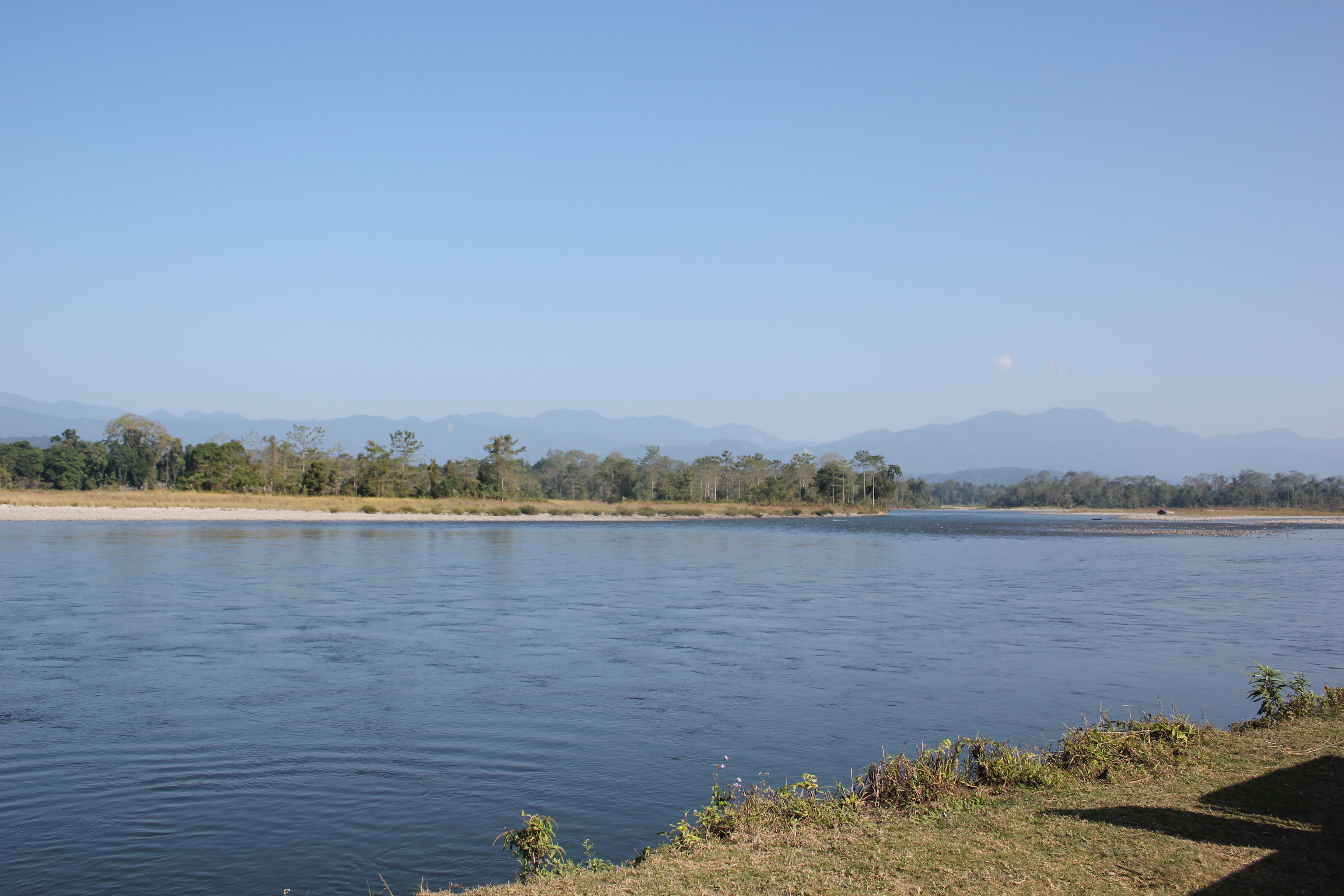
Battle of Bharali (1615)
The fog was thick on the Bharali River when the Mughal cavalry crossed. It was 1615, and the 10,000-strong imperial force under commanders Sayyid Hakim and Sayyid Abu Bakr had been pushing upriver from Bengal, navigating the Kallang River with 400 vessels and an unspecified number of foot soldiers. Their mission: subdue the Ahom kingdom of Assam, which had been sheltering fugitives and killing suspected Mughal spies. Using the morning fog as cover, the horsemen caught the Ahom defenders off guard at the river's mouth. The first clash went to the Mughals. It would be their last victory of the campaign.
An Empire Reaches East
The Mughal push into Assam was not impulsive. Since 1608, when General Islam Khan shifted Bengal's capital from Rajmahal to Dhaka, the empire had been consolidating its northeastern frontier. Islam Khan spent years combating rebellious zamindars along the way, while his officers carried out khedda operations to capture elephants for military use. After his death in September 1613, Qasim Khan took over as Subadar of Bengal, arriving in Dhaka on 6 May 1614. He inherited a volatile situation: a rebellion led by Shaikh Ibrahim, an imperial official accused of embezzling 700,000 rupees, had sent the fugitive east to seek the Ahom king's protection. The Assamese ruler sheltered Ibrahim and promised him territories if he fought the Mughals -- a provocation the empire could not ignore.
The Ahom Kingdom Expands
The Ahom kingdom was no minor border chieftaincy. Under King Pratap Singh, who reigned from 1603 to 1641, it was aggressively expanding, dispatching forces to bring the Kacharis under control and pushing into the Dhansiri Valley. Regional alliances complicated the picture: Raja Parikshit of the Eastern Koch Kingdom maintained peaceful relations with the Ahoms, reinforced by a marriage alliance. His brother Baldev, meanwhile, had besieged the Mughal fort at Pandu with 18,000 hillmen, forcing Mirza Nathan to call for reinforcements before a counteroffensive drove Baldev off. The Brahmaputra divided Ahom territory into Uttarkul and Dakhinkul, north and south, with the capital at what is now Guwahati. Every river crossing, every fort, every alliance carried strategic weight in this contest between an expanding regional power and an overstretched empire.
Night Falls on the Mughals
After their initial success in the fog, the Mughal forces made camp near the Bharali River, confident in their numbers and their cavalry advantage. The Ahoms had other plans. Under cover of darkness, they launched a sudden night attack -- a signature tactic of Ahom military strategy that exploited their knowledge of local terrain and their opponents' reliance on set-piece engagements. The assault was devastating. Commander Sayyid Abu Bakr was killed. The Ahom forces captured elephants, horses, ships, cannons, and firearms -- a haul that dramatically shifted the balance of military technology in the region. According to the historian Edward Gait, the Mughals suffered approximately 5,000 dead, 9,000 wounded, and 3,000 desertions, though these figures may include civilians. King Pratap Singh celebrated with a triumphant return to the capital, where he performed the Rikkhvan ceremony marking the culmination of Ahom victory.
Aftershocks Along the Brahmaputra
The consequences rippled far beyond Assam. Qasim Khan was dismissed from his post as Subadar of Bengal -- a rare and public humiliation for a Mughal provincial governor. Bali Narayan, the brother of Raja Parikshit who had taken refuge with the Ahoms, was installed as the tributary Raja of Darrang, assuming the title Dharma Narayan and establishing his capital on the south bank of the Brahmaputra. Emboldened, Pratap Singh pressed his advantage. In November 1617, alongside Dharma Narayan, he advanced on Hajo. The raja of Dimaura and the ruler of Jaintia District surrendered without a fight. The Ahom army seized the fort at Pandu and defeated the Mughals again at Agiathuti, forcing them to retreat to Hajo. The Battle of Bharali had not merely repelled an expedition. It had announced that the eastern limit of Mughal power ran through the rivers and forests of Assam, and that the Ahoms would defend that line.
From the Air
Located at 26.156N, 90.983E near the confluence of the Bharali River with the Brahmaputra in Assam, northeastern India. The Bharali River is visible from altitude as a tributary joining the Brahmaputra from the north. The broad Brahmaputra floodplain dominates the landscape. Nearest airport: Lokpriya Gopinath Bordoloi International Airport, Guwahati (VEGT), approximately 120 km to the west. Recommended viewing altitude: 5,000-10,000 feet AGL. The river junction area where the battle occurred can be identified where the smaller Bharali meets the Brahmaputra.