Battle of Blaauwberg
"Victory could be considered impossible, but the honour of the fatherland demanded a fight." With those words, Lieutenant-General Jan Willem Janssens marched his outnumbered Batavian garrison toward a battle he knew he could not win. It was January 1806, and a British fleet had sailed into Table Bay carrying over 5,000 troops. The engagement that followed -- ten days of landings, skirmishes, and negotiations across the scrubland north of Cape Town -- would determine who controlled the strategic cape at the bottom of Africa. The consequences would echo through two centuries of southern African history.
The Cape Changes Hands -- Again
This was not the first time European powers had fought over the Cape. In 1795, during the War of the First Coalition, Britain had seized the colony from the Dutch East India Company. But the 1802 Treaty of Amiens had forced the British to hand it back to the Batavian Republic, a French-aligned state that had replaced the old Dutch Republic. When war with Napoleon resumed, Britain moved to reclaim the Cape and its control over the sea route to India. By early 1806, Major General David Baird was en route with a fleet and two infantry brigades. Janssens, governing the colony with a garrison of roughly 2,000 European troops, 800 Khoekhoe soldiers, and a few hundred cavalry and militia, knew the numbers were against him. He placed his garrison on alert and declared martial law.
Surf, Sand, and Highland Drownings
On 6 and 7 January, Baird's brigades landed at Melkbosstrand, north of Cape Town. The operation was brutal even before the fighting began -- rough seas capsized a landing boat, and 36 men of the Highland 93rd Foot drowned in the surf. Commodore Popham ordered a small merchantman scuttled at Losperd's Bay to serve as a makeshift breakwater, but the landing remained chaotic. Swellendam Burgher dragoons skirmished with the British on the beach, buying time. Janssens had deliberately avoided the shoreline, fearing the Royal Navy's broadsides, and instead moved his forces inland to intercept. But on the morning of 8 January, while Janssens's columns were still picking their way through the veld, Baird's brigades reached the slopes of Blaauwberg Hill first. The Batavian commander halted and formed a line across the open ground. The battle was joined.
The Bitter Cup
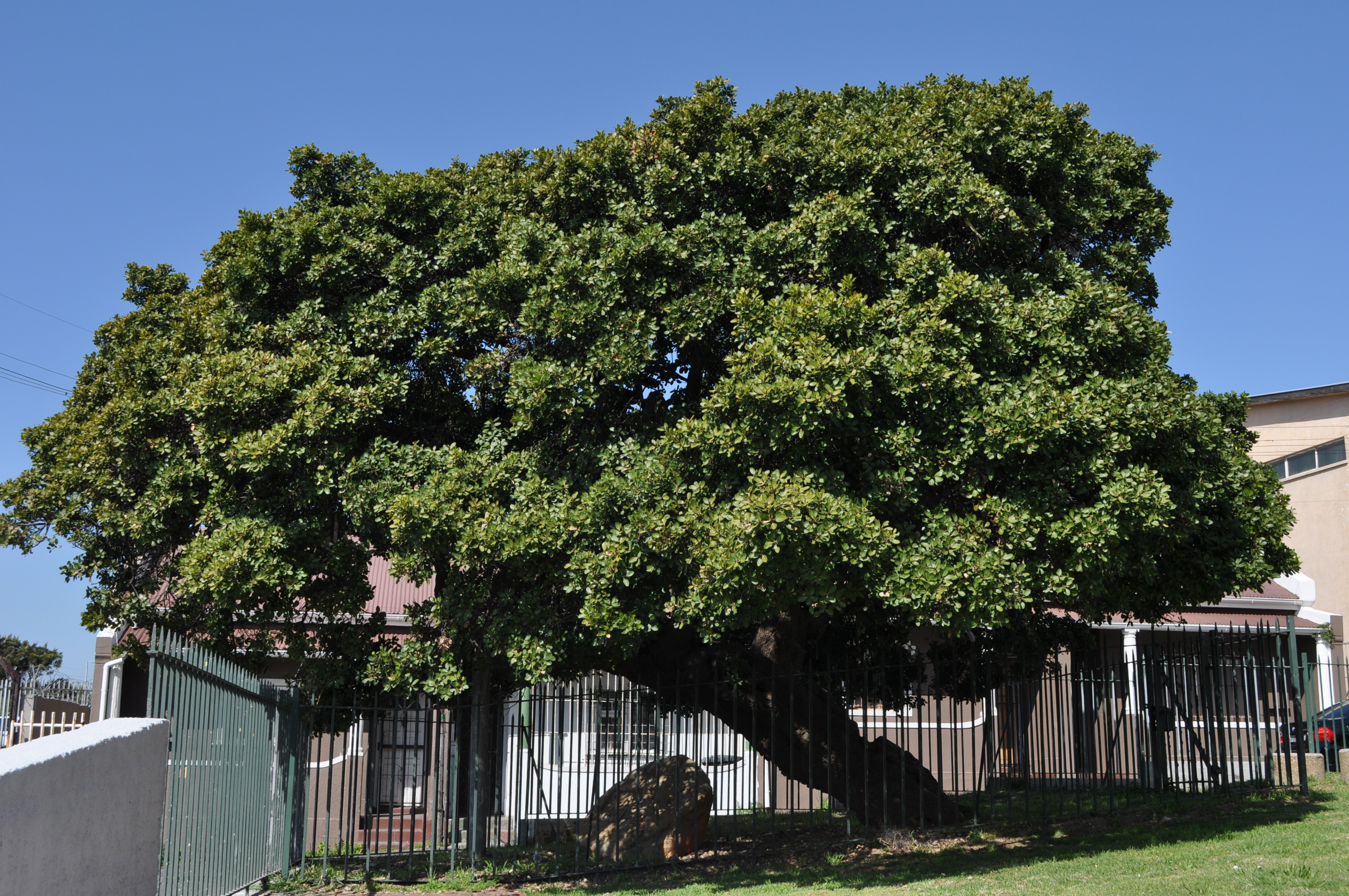
The engagement on the slopes of Blaauwberg was decisive but not overwhelming -- Baird's forces suffered 204 casualties, while Janssens lost roughly 350 before his line broke. From Blaauwberg, Janssens withdrew inland toward the Hottentots Holland Mountains, about 50 kilometers from Cape Town, hoping to hold out until French reinforcements arrived from Rochefort. They never came. Cape Town's commandant, Lieutenant-Colonel von Prophalow, sent out a white flag on 9 January to spare the city from attack. The formal Articles of Capitulation for Cape Town were signed the next day at a cottage in Papendorp -- now the suburb of Woodstock -- that became known as Treaty Cottage. The tree under which they signed still stands. Janssens held out for another week with just 1,238 men, 211 of whom deserted. When Brigadier General William Beresford came to negotiate, Janssens decided "the bitter cup must be drunk to the bottom." He capitulated on 18 January.
An Uninvited Guest in the Harbor
One last twist came months later. In April 1806, the French frigate Cannoniere sailed into Simon's Town harbor, her crew unaware that the Cape had changed hands. The captain dropped anchor and rowed ashore -- only to be fired upon as Dutch flags were hauled down and British flags run up. He and his crew narrowly escaped and fled to the French colony at Reunion. The episode was almost comic, but it underscored how far-reaching the implications of Blaauwberg were. The British would formally annex the Cape in 1814 at the Congress of Vienna. The colony remained British until it was incorporated into the Union of South Africa in 1910. For the Khoikhoi, San, and other indigenous peoples who had already lost much to Dutch colonialism, the change of European masters brought little relief -- it simply added another layer of dispossession to a landscape already scarred by it.
From the Air
Located at 33.76S, 18.47E on the coastal flats north of Cape Town. Blaauwberg Hill (now part of the Tygerberg Hills area) is visible from the air, with Table Bay and Table Mountain providing dramatic backdrop to the south. Melkbosstrand beach, where the British landed, stretches along the coast to the northwest. Cape Town International (FACT) is approximately 20 km to the southeast. Simon's Town naval base lies to the south along the False Bay coast. Best viewed at 3,000-5,000 ft AGL to see the full coastal battlefield geography.