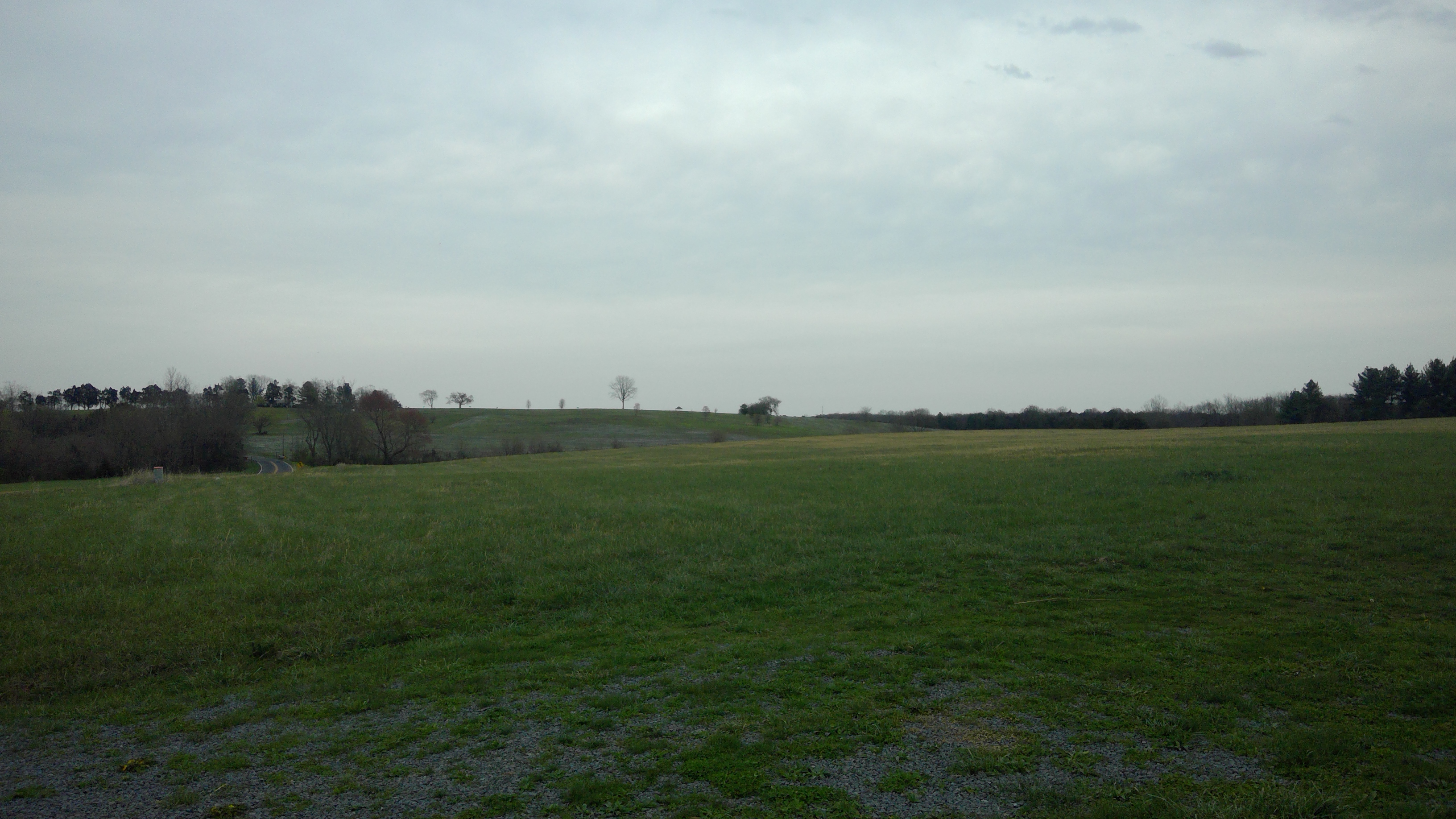
Battle of Brandy Station
Three days before the fighting, J.E.B. Stuart staged a spectacle. Nearly 9,000 Confederate cavalrymen charged in simulated battle across the fields near Brandy Station, Virginia, sabers flashing, horse artillery booming, all for the benefit of Robert E. Lee. Lee missed the first show, so Stuart ran it again on June 8, 1863. Newspaper reporters grumbled that Stuart was feeding his ego and exhausting the horses. The next morning, 11,000 Union troops crossed the Rappahannock River in a dense fog, and the largest cavalry engagement in American history erupted across the same fields where Stuart had just been parading.
The Road to Gettysburg Begins Here
By early June 1863, the Confederate Army of Northern Virginia was massing in Culpeper County after its victory at Chancellorsville. Lee's troops were hungry, poorly equipped, and preparing to carry the war north into Pennsylvania, where they could seize horses, supplies, and food while threatening Philadelphia, Baltimore, and Washington. Two infantry corps under Longstreet and Ewell camped in and around Culpeper. Six miles to the northeast, Stuart's cavalry screened the army along the Rappahannock River. Union intelligence knew the Confederates were gathering but not their precise dispositions. Major General Alfred Pleasonton organized a two-pronged attack: John Buford's wing would cross at Beverly's Ford while David McMurtrie Gregg's wing would cross at Kelly's Ford, six miles downstream, catching the Confederates in a double envelopment.
Dawn at Beverly's Ford
At 4:30 a.m. on June 9, Buford's column splashed across the Rappahannock in fog so thick the Confederate pickets barely had time to react. Jones's brigade scrambled to the fight partially dressed, some riding bareback. Colonel Benjamin F. Davis led the Union advance but was killed in the opening clash. His brigade had nearly overrun Stuart's Horse Artillery camp when cannoneers swung their guns into position and fired point-blank down the road, buying time for the rest of the battery to escape. The 6th Pennsylvania Cavalry charged the Confederate guns at St. James Church in what several Southern officers later called the most brilliant cavalry charge of the war. It failed, but in the chaos, most of the fighting remained mounted, an unusual thing in a war where cavalrymen typically dismounted to fight as infantry.
The Fight for Fleetwood Hill
Gregg's wing was supposed to cross at Kelly's Ford simultaneously, but delays cost two hours. When his lead brigade under Colonel Percy Wyndham finally reached Brandy Station around 11 a.m., the Confederates were stunned. Fleetwood Hill, which had served as Stuart's headquarters the night before, stood nearly undefended. Only a single howitzer, left behind for lack of ammunition, held the crest. Stuart's adjutant, Major Henry B. McClellan, sent the lone gun crew racing uphill to buy time while he frantically called for reinforcements. The few shells fired delayed the Union advance just long enough. As Wyndham's troopers charged up the western slope, Jones's brigade, just withdrawn from St. James Church, came galloping over the crown. Kilpatrick's brigade attacked up the eastern slope and collided with Hampton's arriving Confederates. Charges and countercharges swept back and forth across the hilltop for hours.
A Victory That Stung
By sunset, the ten-hour battle was over. Union casualties totaled 907; Confederate losses came to 523. Among the wounded was Lee's own son, Rooney, shot in the thigh and later captured while recovering at a plantation near Hanover Court House. Stuart claimed victory because he held the field, but the Southern press savaged him. The Richmond Enquirer wrote that Stuart had "suffered no little in public estimation," while the Richmond Examiner called his command "puffed up cavalry" that reaped "the consequences of negligence and bad management." For the Union horsemen, who had for two years been outclassed by their Southern counterparts, Brandy Station was the turning point. The Federal cavalry had achieved surprise, fought evenly, and left the field on their own terms. The Confederate cavalry's dominance in the Eastern Theater was finished.
Hallowed Ground Preserved
The fields where those cavalrymen clashed have faced threats of a different kind. Developers proposed turning the battlefield into an office park and later a racetrack. The Brandy Station Foundation, formed by local citizens, fought both plans and grew to over 400 members. The American Battlefield Trust acquired land in more than fifteen separate transactions from 1997 through 2021, including a pivotal 61-acre parcel at Fleetwood Hill in 2013. In 2022, Virginia agreed to accept 1,700 acres and purchase 800 more to create the Culpeper Battlefields State Park, which opened in June 2024. The review field where Stuart paraded his troopers three days before the battle still looks much as it did in 1863, except that a Virginia police station now occupies part of it.
From the Air
The Brandy Station battlefield lies at 38.508N, 77.880W in the rolling Piedmont of Culpeper County, Virginia. Fleetwood Hill, the battle's focal point, is a prominent ridge visible from altitude between the town of Brandy Station and Culpeper to the southwest. The Rappahannock River, where Union forces crossed at Beverly's Ford and Kelly's Ford, winds along the northeast edge of the battlefield. The Orange and Alexandria Railroad (now Norfolk Southern) cuts through the area. Nearest airports: Culpeper Regional (KCJR) approximately 5nm south, Warrenton-Fauquier (KHWY) approximately 15nm northeast, Manassas Regional (KHEF) approximately 30nm northeast. The Culpeper Battlefields State Park now encompasses much of the engagement area.