Battle of Callao
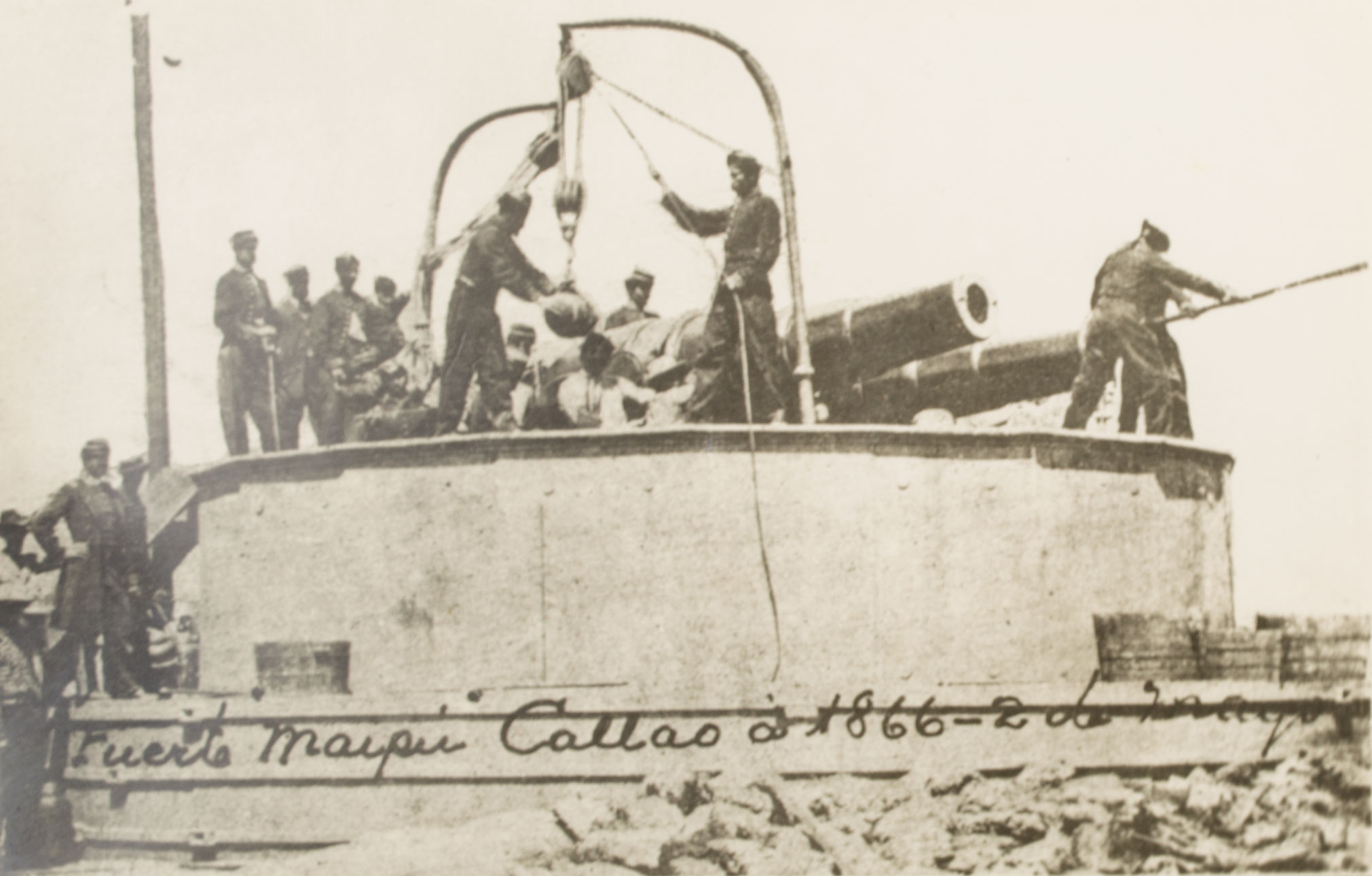
Both sides claimed victory. That is the first thing to know about the Battle of Callao, and the most revealing. On May 2, 1866, a Spanish fleet of seven warships carrying 252 guns sailed into the harbor of Callao, Peru's principal Pacific port, and opened fire on the coastal fortifications. Five hours later, the Spanish withdrew with their ships battered and their admiral wounded. Peru's forts were in ruins and its minister of war was dead. Spain celebrated with parades and promotions. Peru celebrated with a national holiday. The confusion was the point — this was a battle that belonged to an era when imperial pride mattered more than territorial gain.
A War Over Bird Droppings
The conflict's origins were absurd and deadly. In 1863, Spain seized Peru's Chincha Islands — rocky outcrops rich in guano, the bird-dropping fertilizer that was one of Peru's most valuable exports. The pretext was a demand for indemnity after two Spanish citizens were murdered in Lambayeque. President Juan Antonio Pezet, believing Peru's navy too weak to fight, began handing over guano deposits. In November 1865, Colonel Mariano Ignacio Prado seized power in a nationalist coup and organized a defense. After bombarding the undefended Chilean port of Valparaíso in April 1866, Spanish Admiral Casto Méndez Núñez turned his fleet toward Callao — this time choosing a port that would fight back.
Iron Against Iron
Callao's fortifications had repelled Sir Francis Drake and John Hawkins centuries earlier, and by 1866 they were formidable. Five British-made Blakely rifles, each weighing 22 tons, anchored the defense. Four Armstrong guns sat inside two armored turrets — Junín and La Merced — protected by iron plating 10 centimeters thick. In total, the Peruvians had 65 guns counting those mounted on three warships. Peru also fielded two locally built ironclads: the Confederate-style casemate ram Loa and the monitor Victoria. The Spanish brought one of the era's most powerful fleets, led by the ironclad Numancia, one of the largest warships afloat. At 11:50 in the morning, Numancia opened fire. The battle that followed was among the first large-scale engagements between armored warships and armored fortifications.
Five Hours of Smoke and Iron
Early Peruvian shots missed entirely, and the guns had to be recalibrated — precious time lost while the Spanish fleet took position. When the batteries found their range, the exchange turned devastating for both sides. A 450-pound Blakely projectile struck the frigate Villa de Madrid, killing 35 men and destroying her boilers; she had to be towed from the fight. The frigate Berenguela was pierced at the waterline by a 300-pound Armstrong shot and forced to retreat. At 14:30, a blast hit the Almansa, killing 13 crew and detonating her powder room. On the Peruvian side, a Spanish shell from the frigate Blanca struck the armored turret La Merced, destroying it and killing or wounding 93 men — among them José Gálvez Egúsquiza, Peru's Minister of War and Navy, and two colonels. Three thousand Peruvian infantry and cavalry, entrenched outside the forts to repel a landing that never came, suffered under sustained naval gunfire.
Two Victories, One Battle
By 17:00, only three of Santa Rosa fort's guns still answered. Admiral Núñez, badly wounded, ordered his fleet to cease fire and withdraw to the island of San Lorenzo for repairs. Spain's version: the fleet had silenced nearly all coastal batteries and the final shots were fired without ammunition, as confirmed by the captain of the French corvette Venus. The French newspaper La Presse published the engagement as a Spanish triumph. Méndez Núñez received the Grand Cross of the Order of Carlos III and a promotion. Before the Battle of Lissa two months later, Austrian Admiral Wilhelm von Tegetthoff rallied his crews by shouting, "Let's imitate the Spanish at Callao!" Peru's version: the Spanish failed to land troops, failed to damage the city, and sailed away. American eyewitness T.H. Nelson wrote the next day that "the damages caused to Callao are barely noticeable." American and British observers joined the cheers of "Viva el Perú!"
The Last Campaign
The battle proved to be the final military engagement of the Chincha Islands War, and the end of Spain's attempts to reassert authority in South America. In its aftermath, Peru briefly considered invading the Philippines to strike at Spanish naval power in the Pacific, hiring Confederate veteran Commodore John Randolph Tucker to lead the expedition. Peruvian officers including Miguel Grau Seminario and Aurelio García y García protested the appointment, arguing they had proven themselves capable commanders at Callao. The Philippines plan was abandoned, and Tucker instead spent his commission exploring and mapping the Peruvian Amazon. The Spanish expedition in the Pacific officially ended in 1868, though a peace treaty was not signed until 1879. In Madrid, the Callao Square and its Metro station bear the battle's name — a reminder that Spain, too, remembers what happened in that harbor.
From the Air
The battle took place at Callao harbor, located at 12.048°S, 77.154°W, approximately 14 km west of central Lima along the Pacific coast. San Lorenzo Island, where the Spanish fleet sheltered after the battle, is visible as the largest island off the coast. From 3,000–5,000 feet AGL, the harbor's curved breakwater and port facilities are clearly visible. Jorge Chávez International Airport (SPJC/LIM) sits between Lima and Callao. The coastline is typically clear in summer (December–April) but often shrouded in marine fog during winter months.