Battle of Camden
Horatio Gates rode into camp on July 25, 1780, as the Hero of Saratoga -- the general who had engineered the war's greatest American victory three years earlier. Three weeks later, he rode away from Camden, South Carolina, as the author of its worst defeat, having turned a two-to-one numerical advantage into a rout so complete that he never held a field command again. The Battle of Camden, fought on August 16, 1780, did not just destroy an army. It destroyed a reputation and nearly destroyed the American cause in the South.
The Southern Strategy Unfolds
By 1780, the British had abandoned hope of crushing the rebellion from the north. The defeats at Saratoga in 1777 and Monmouth in 1778 had stalled their campaigns, and France's entry into the war in June 1778 -- followed by Spain in 1779 -- had transformed a colonial revolt into a global conflict. The new plan was elegant in theory: sweep northward through the Carolinas and Virginia, rallying Loyalists to the crown as they advanced, until the rebels were squeezed from both sides. It began well. Sir Henry Clinton captured Savannah in December 1778 and took Charleston in May 1780 in one of the worst American surrenders of the war. Lord Cornwallis, tasked with consolidating British control, seized the back-country towns of Georgetown, Cheraw, Camden, Ninety Six, and Augusta. Patriot resistance shrank to scattered militia bands under guerrilla leaders like Thomas Sumter, William Davie, and Francis Marion -- the legendary Swamp Fox.
A March Through Barren Country
Washington dispatched Continental Army regiments south to shore up the collapsing theater -- the Maryland Line and Delaware Line, some of the best troops in the American army, under the temporary command of Baron de Kalb. They departed New Jersey on April 16 and reached the Deep River in North Carolina by July, already short of food after marching through thinly settled country. When Gates arrived to take command, he immediately ordered the army to take the direct road to Camden, overruling his officers. Colonel Otho Holland Williams protested that the route ran through country that was "by nature barren, abounding with sandy plains, intersected by swamps, and very thinly inhabited," populated mostly by Loyalist sympathizers. Gates pressed on regardless. His troops, already starving when they reached the Deep River, grew weaker with every mile. Cornwallis, alerted to the approach, marched north from Charleston with reinforcements and reached Camden on August 13 with 2,239 effective troops.
The Wrong Men in the Wrong Place
Gates's army numbered roughly 4,100 -- nearly double the British force. But numbers told only part of the story. His most reliable soldiers, the Continental regulars of the Maryland and Delaware Lines, he placed on the right flank, the traditional position of honor. The masses of militia who had swelled his ranks, most of them Virginians who had never seen a battle, went to the left -- directly facing the most experienced British regiments. It was a fatal miscalculation. When the British right advanced at dawn on August 16, the Virginia militia broke almost immediately, many throwing away their loaded muskets without firing a shot. The North Carolina militia in the center collapsed next. Only the Continentals on the right held, fighting with desperate courage until they were overwhelmed by the entire British force wheeling against their exposed flank. Baron de Kalb, leading the Continentals, was wounded eleven times before falling. Gates himself was too far behind the lines to observe the battle or communicate orders effectively.
The Hero Unmade
The aftermath was catastrophic. The Americans lost all eight of their field pieces, more than 200 wagons, and most of their baggage. Cornwallis reported taking roughly 1,000 prisoners; 290 wounded Americans were carried into Camden, including 206 Continentals. Of 48 Continental officers present, five were killed, four died of wounds, eleven were wounded and captured, and twenty-four were captured unwounded. Gates himself fled the battlefield and did not stop until he reached Hillsborough, North Carolina -- 180 miles away in just three days, a speed his critics never let him forget. In a letter to George Washington dated August 30, Gates wrote with wounded dignity: "But if being unfortunate is solely a Reason sufficient for removing me from Command I shall most cheerfully submit to the Orders of Congress." His political connections shielded him from a court martial, but his field career was finished.
Bones in the Carolina Clay
The battlefield four miles north of Camden was declared a National Historic Landmark in 1961 and placed on the National Register of Historic Places in 1966. The site sits along the Great Wagon Road, the colonial-era route that brought both armies to this confrontation in the South Carolina sandhills. In 2022, the remains of 13 soldiers who fell in the battle were discovered in shallow graves -- twelve Continental Army troops and one soldier from the British 71st Regiment of Foot, Fraser's Highlanders. All thirteen were reburied in 2023 with full military honors, the Royal Highland Fusiliers of the modern British army traveling from Scotland to take part in the ceremony. Two hundred and forty-three years after they fought on opposite sides of this sandy field, the dead were honored together -- a gesture that would have been unimaginable to the men who buried them hastily in the Carolina clay while the sound of Gates's retreating army faded northward.
From the Air
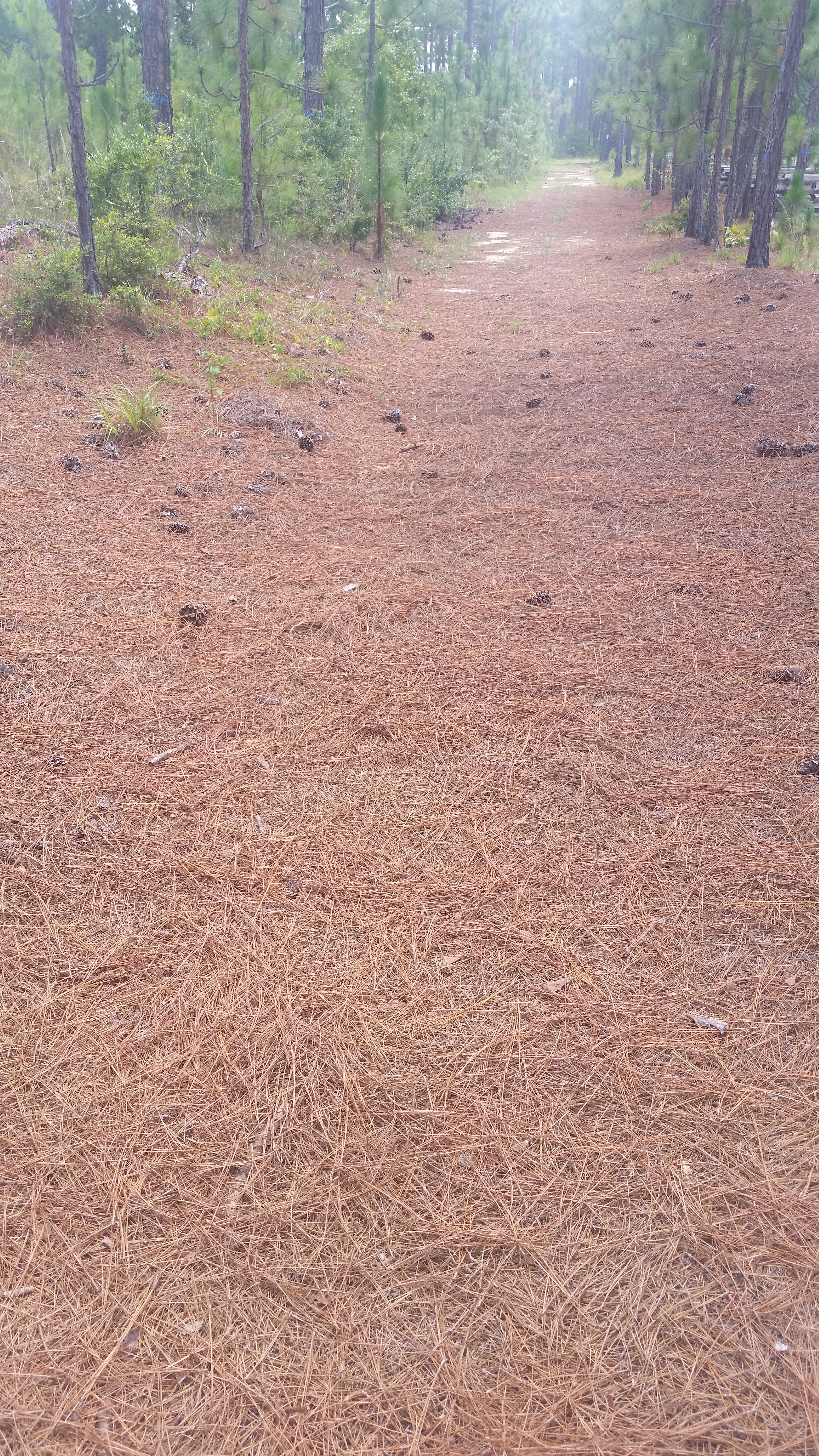
Located at 34.36°N, 80.61°W approximately four miles north of Camden, South Carolina, along the historic Great Wagon Road. The battlefield sits in the sandhills region -- relatively flat, sandy terrain with pine forest and scattered fields. From altitude, Camden is visible as a small city along the Wateree River. The battlefield area is north of town along what is now U.S. Route 521. Nearest airports: Camden Woodward Field (KCDN) approximately 4nm south; Columbia Metropolitan Airport (KCAE) approximately 30nm southwest; Shaw Air Force Base (KSSC) approximately 20nm west. Best viewed from 2,000-3,000 ft AGL. The terrain is subtle -- understanding why the militia broke requires seeing the flat, open ground they had to hold against advancing British regulars. Clear weather typical; summer heat and humidity mirror the conditions the soldiers endured.