Battle of Cartagena de Indias
The British struck commemorative medals before the battle was over. They showed Admiral Edward Vernon standing tall while the Spanish commander knelt in defeat, with the inscription "The Pride of Spain Humbled." There was just one problem: Spain won. The Battle of Cartagena de Indias in 1741 remains one of the most remarkable defensive victories in military history, a 67-day siege in which roughly 4,000 Spanish defenders, led by a commander who had already lost a leg, an eye, and a hand in previous wars, turned back the largest amphibious force Britain had ever assembled.
Half a Man, Whole Defiance
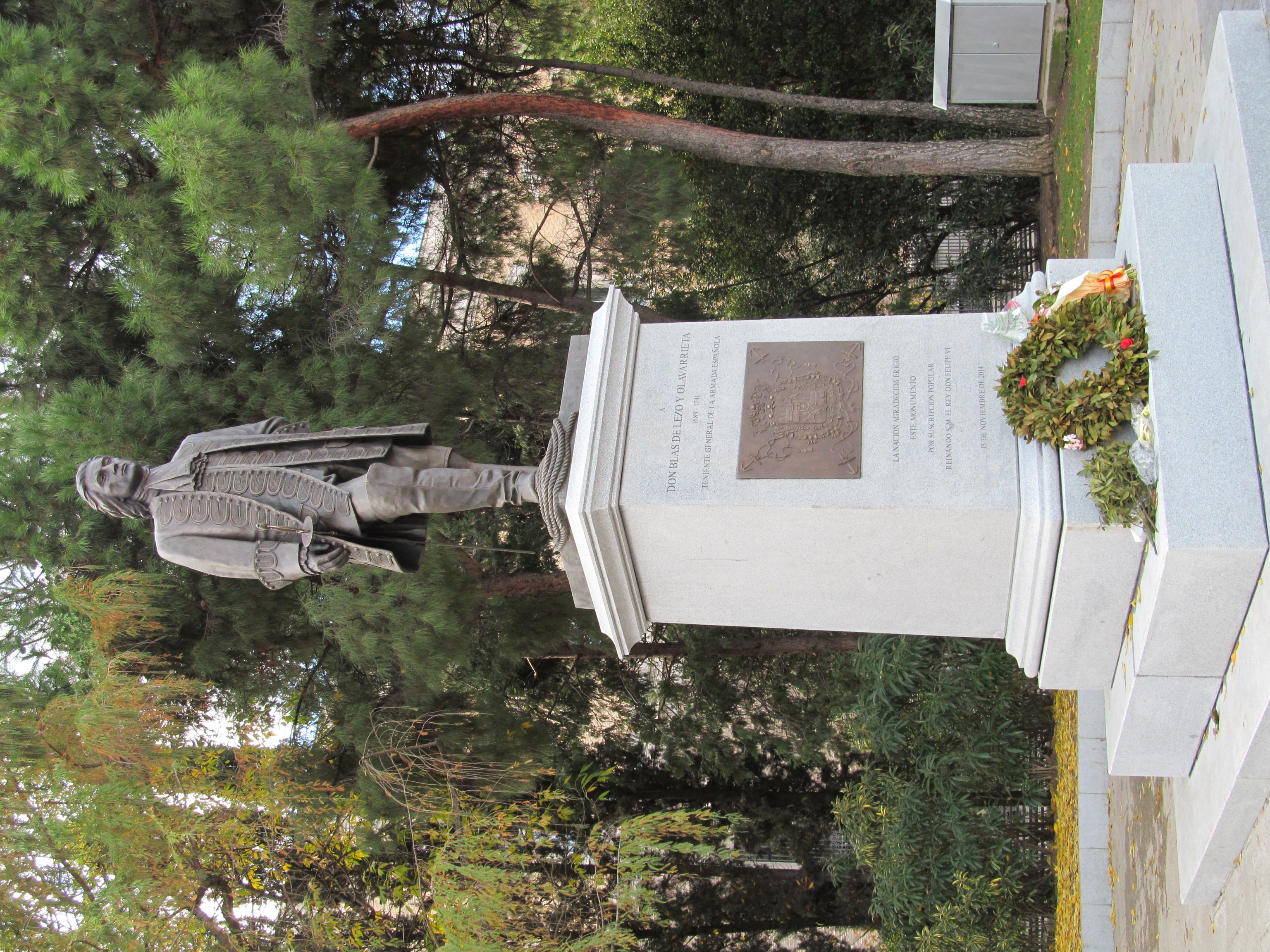
Don Blas de Lezo had been giving pieces of himself to Spain since he was a teenager. A cannonball took his left leg at the Battle of Vélez-Málaga in 1704, when he was fifteen. Shrapnel claimed his left eye two years later. A musket ball destroyed his right hand and forearm not long after that. The Spanish called him Mediohombre, "Half Man," and meant it as praise. By 1741, Lezo was the commander of Cartagena's naval forces, sharing authority with the Viceroy of New Granada, Sebastian de Eslava. The two men disagreed on nearly everything, particularly how aggressively to defend the outer fortifications, but their combined forces numbered only about 4,000 regulars, militia, sailors, and indigenous archers against the British armada approaching from the Caribbean.
An Empire Bets Everything
Britain's commitment to taking Cartagena was staggering. Vernon's fleet numbered 124 ships, including 29 ships of the line, 22 frigates, and 80 troop transports carrying at least 27,000 military personnel. Among the land forces were 3,600 American colonial troops under Colonel William Gooch, the Lieutenant Governor of Virginia, and 300 enslaved Africans pressed into service as a labor battalion from Jamaica. The expedition had already been weakened before it arrived: Lord Cathcart, the overall commander, died of dysentery en route, leaving the army under Thomas Wentworth, who had never commanded troops in battle. Vernon and Wentworth despised each other, and their inability to cooperate would prove as deadly to the British cause as any Spanish cannon.
Bocachica Falls, San Lazaro Holds
The British arrived off Cartagena on March 13, 1741. After weeks of bombardment, they breached the outer defenses at Bocachica channel and captured Fort San Luis on April 5, though the operation cost them 120 killed, 250 dead from yellow fever and malaria, and 600 hospitalized. It was at this moment, with the outer harbor in British hands, that Vernon dispatched a messenger to London announcing victory. Lezo, meanwhile, concentrated his remaining forces at Fort San Lazaro, the hilltop strongpoint commanding the city. He dug a trench around it and cleared fields of fire on every approach. On April 20, the British launched a night assault with 2,000 men, relying on Spanish deserters as guides. The guides led them to the steepest approach. Scaling ladders proved ten feet too short. As dawn broke, the guns of Cartagena opened on the exposed attackers, and a Spanish counterattack from the city gates threatened to cut them off. Wentworth ordered retreat. Six hundred British soldiers lay dead or wounded on the slope.
Medals for a Defeat
Lezo's strategy had been brutally simple: trade ground for time, and let the tropics do the killing. By late April, the rainy season was arriving, and with it came the diseases that thrived in standing water and overcrowded ships. The British expedition lasted 67 days and ended in catastrophe: 18,000 men dead or incapacitated, most from disease. Fifty ships were lost, damaged, or abandoned for lack of crews. Of the 3,600 American colonists who had volunteered, lured by promises of land and gold, only 300 returned home. One of them was Lawrence Washington, who named his Virginia plantation Mount Vernon after the admiral he served under. Back in London, the premature commemorative medals became an embarrassment. Horace Walpole later wrote that Britain had spent seven million pounds and thirty thousand lives, and all the fruit was "the glory of having Admiral Vernon's head on alehouse signs." Lezo himself did not survive to savor the victory. He fell ill from plague spread by unburied bodies and died weeks after the British withdrew.
From the Air
Located at 10.39°N, 75.54°W, Cartagena de Indias sits on Colombia's Caribbean coast. From altitude, the battle geography is clearly readable: the narrow Bocachica channel between Tierra Bomba Island and the mainland is visible to the south, while the inner harbor and the hill of San Lazaro (now Castillo San Felipe de Barajas) dominate the landscape east of the Old City. The Old City's massive walls are visible from 5,000 feet. Nearest airport: Rafael Nunez International Airport, Cartagena (SKCG/CTG), approximately 2 nm northeast of the walled city. The contrast between the open Caribbean and the enclosed harbor, connected only by the Bocachica narrows, makes the defensive logic of the battle immediately apparent from the air.