Battle of Cassinga
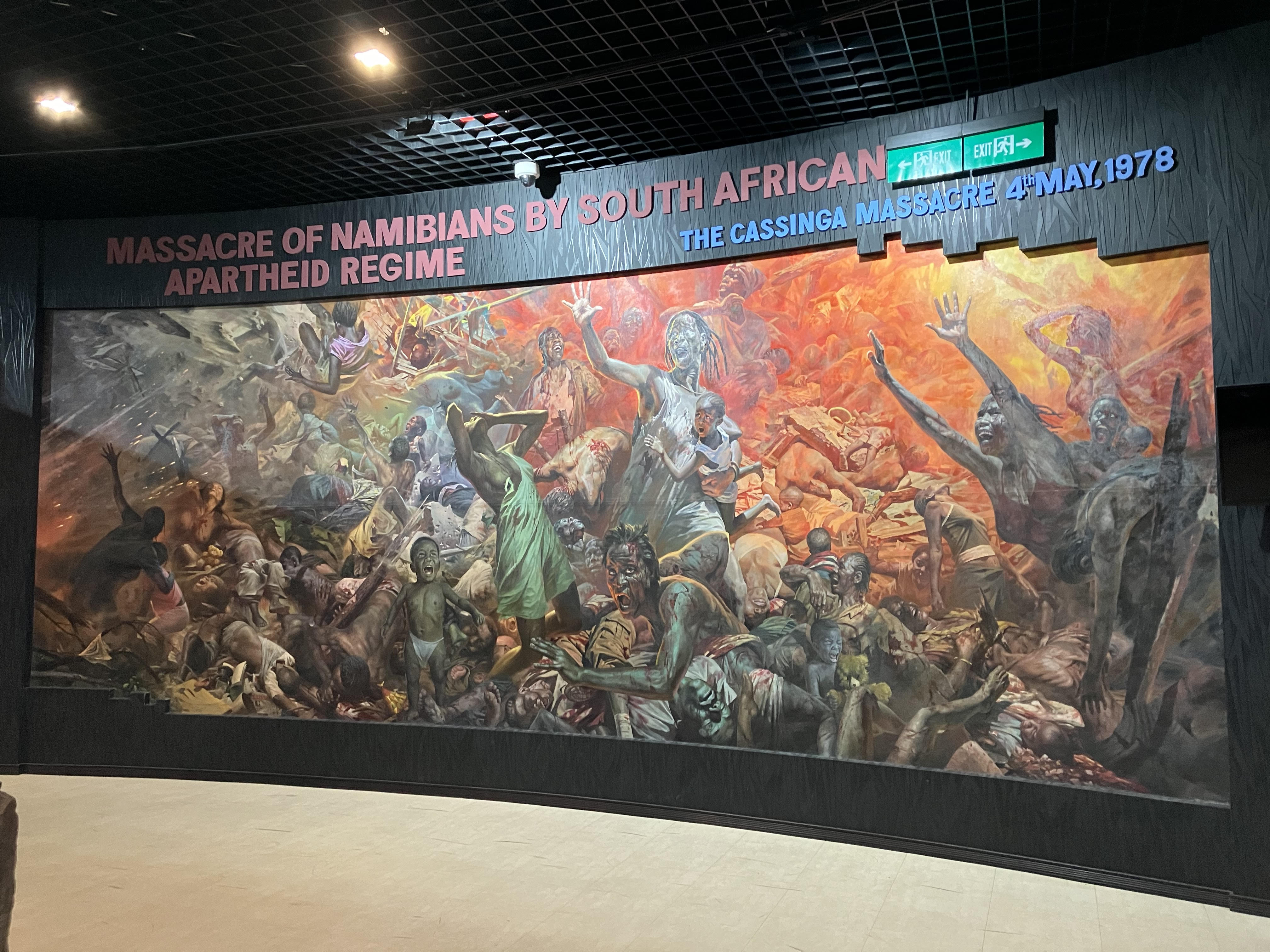
Two days before the bombs fell, a UNICEF team visited Cassinga and found a "well-run and well-organized" camp struggling to absorb a rapid influx of Namibian refugees. Two days later, on May 4, 1978, South African paratroopers dropped from the sky over this abandoned Angolan mining town and launched the South African Army's first major airborne assault. What happened at Cassinga that day is still contested nearly five decades later. South Africa called it a strike on a military command center. SWAPO called it a massacre of defenseless refugees. The truth, as the evidence suggests, is that Cassinga was both -- a place where trained combatants and displaced civilians existed side by side, and where the violence of that morning made no distinction between them.
An Abandoned Mining Town, Repurposed
Cassinga had once served an iron-ore mine, its twenty-odd buildings functioning as warehouses, offices, and worker housing. By 1976, the town lay abandoned, and SWAPO's military wing, PLAN, began using it as a stopover on the road south from Huambo to the Namibian border. A group of PLAN guerrillas led by commander Dimo Hamaambo occupied the town, and according to those who accompanied him, the first Namibian inhabitants of Cassinga were entirely trained combatants. But Cassinga quickly became something more complicated. The Angolan government allocated the abandoned village to SWAPO to accommodate thousands of Namibian exiles fleeing South African-controlled South West Africa. By May 1978, the camp held an estimated 3,000 to 4,000 people. Cuban forces based at nearby Techamutete provided logistical support. South African military intelligence identified Cassinga as a logistics, medical, and training center codenamed "Moscow." SWAPO described it as a refugee settlement. Both descriptions contained truth.
Four Minutes Past Eight
The assault was planned as part of Operation Reindeer, a larger series of cross-border strikes into Angola. Aerial reconnaissance by Canberra B12 bombers had photographed military infrastructure at Cassinga: concrete drive-in bunkers, zigzag trenches, foxholes, and what appeared to be a base for an SA-2 missile battery. The photos also showed a civilian bus. PLAN's commander Hamaambo had warned his superiors of an "imminent invasion intention" after spotting the overflights, and defenses were improved with additional trenches and anti-aircraft positions. It was not enough. On the morning of May 4, Buccaneer bombers struck first, followed by waves of paratroopers dropping from C-130 Hercules and C-160 Transall transport aircraft. The composite parachute battalion, assembled from three reserve units under Colonel Jan Breytenbach, landed around the camp and began a ground assault through the trenches and buildings. The fighting was intense and chaotic. Anti-aircraft guns were turned on the South African aircraft. The camp's defenders, a mix of trained fighters and people with nowhere to run, were caught in the open.
The Human Cost
An Angolan government white paper reported 624 dead and 611 injured at Cassinga. Among the dead were 167 women and 298 teenagers and children. A secret SWAPO report to its Central Committee counted 582 dead and 400 wounded. Because many combatants were female or teenagers, and many did not wear uniforms, the exact number of civilians among the dead could not be established -- and likely never will be. The bodies were buried in two mass graves. South African losses were far lighter: three soldiers killed, one missing and presumed dead after landing in a river, and eleven wounded. The disparity speaks to the nature of the engagement. This was an airborne assault by a professional military force with air superiority against a camp that, whatever its military functions, was also home to thousands of displaced people. The South Africans had been specifically instructed to photograph bodies only with weapons beside them and to avoid images of suffering victims. Despite these orders, photographs of unarmed dead and fallen South African paratroopers were taken.
Memory Against Memory
General Jannie Geldenhuys called the raid a "jewel of military craftsmanship." For SWAPO and Angola, it was a slaughter of refugees. The United Nations Security Council condemned South Africa in Resolution 428, passed two days after the attack. U.S. President Jimmy Carter expressed hope that it was "just a transient strike" and that it was "all over." It was not all over. The Border War continued for another twelve years, and Cassinga became a foundational event in the competing narratives of that conflict. After Namibian independence in 1990, the new government declared May 4 as Cassinga Day, a public holiday commemorating those who died. In 2007, the names of Cuban soldiers killed in the fighting were inscribed on the wall of Freedom Park in South Africa. South African parachute veterans privately observe their own Cassinga Day. The South African Truth and Reconciliation Commission acknowledged the presence of military infrastructure at the site but could not resolve the deeper question that Cassinga poses: what happens when a military target and a refugee camp occupy the same ground, and the attacking force chooses not to distinguish between them.
From the Air
Cassinga is located at 15.12S, 16.09E in south-central Angola, approximately 250 km north of the Namibian border. The site is an abandoned mining town in semi-arid terrain with scattered bush. From altitude, the landscape is flat to gently rolling savanna with limited distinguishing features beyond road networks and dry riverbeds. The nearest significant airfields are in Lubango (FNUB/SDD) to the west and the former military airstrip at Ongiva to the south. Expect dry, clear conditions during the Angolan winter (May-September). The remoteness of the location means few modern landmarks are visible from the air.