Battle of Chancellorsville
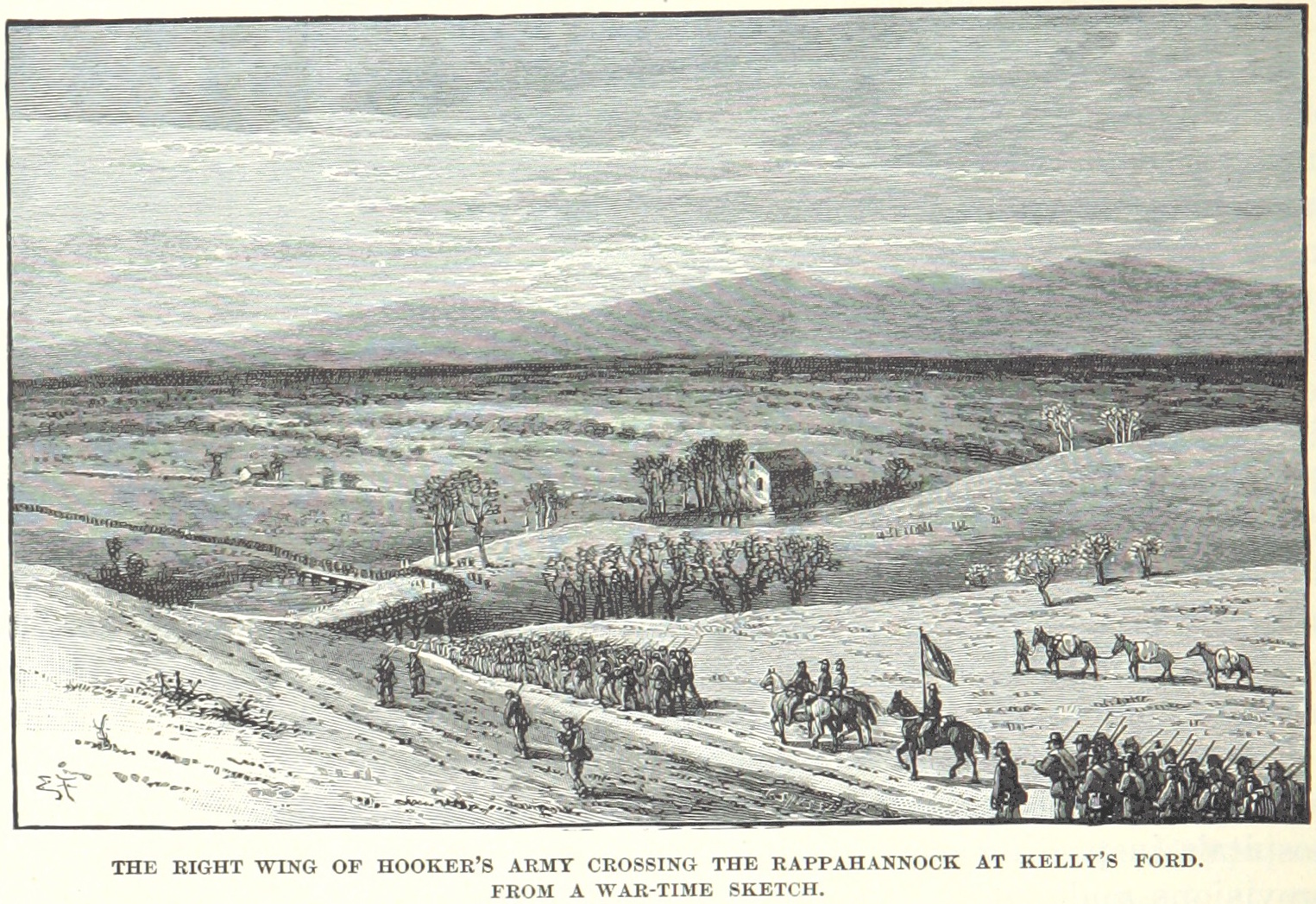
"For the first time, I lost faith in Hooker." Whether or not Union General Joseph Hooker actually spoke those words, they capture the central tragedy of Chancellorsville. In late April 1863, Hooker commanded 133,000 men of the Army of the Potomac -- the largest, best-equipped fighting force on the continent. He had outmaneuvered Robert E. Lee, crossing the Rappahannock and Rapidan Rivers to position his army on Lee's flank near a country crossroads in Spotsylvania County, Virginia. Hooker believed he had "80 chances in 100 to be successful." Within a week, those odds would evaporate in the dense thickets of the Wilderness, and more than 30,000 men from both sides would be dead, wounded, or missing.
The Gambler's Stroke
Lee's response to Hooker's flanking maneuver was breathtaking in its audacity. Facing an army more than twice the size of his own 60,000 men, Lee divided his forces not once but twice. He left a small detachment under Jubal Early at Fredericksburg to hold the heights, then sent Stonewall Jackson with the bulk of his corps on a 12-mile flanking march through the tangled woods. The march began at Catharine Furnace, guided along cart roads by a local ironworks owner's son. When Union observers spotted the column, they convinced themselves Jackson was retreating. He was not. Late on the afternoon of May 2, Jackson's 28,000 men crashed into the exposed right flank of the Union XI Corps, rolling it up like a carpet. The surprise was total. But the victory came at a terrible cost -- that same evening, Jackson was accidentally shot by his own men and would die eight days later.
A Cannonball and a Collapse
The fighting on May 3 ranks among the bloodiest in the entire war. Some 21,357 men fell that single day across the three simultaneous engagements around Chancellorsville, Fredericksburg, and Salem Church -- a toll exceeded only by the Battle of Antietam as the deadliest day of combat in American history. At 9:15 that morning, a Confederate cannonball struck a wooden pillar at Hooker's headquarters at the Chancellor house, violently slamming it into the general. The concussion knocked Hooker unconscious for over an hour. When he revived, he was clearly incapacitated but refused to relinquish command to his second-in-command, Darius Couch. With telegraph lines down and no one at headquarters able to overrule him, Hooker's impaired judgment would shadow the remaining days of battle. Meanwhile, Union Major General Hiram Berry was killed by musket fire, and Brigadier General Joseph Warren Revere -- grandson of Paul Revere -- took unauthorized command of a division and marched 500 men away from the fight.
Retreat Across the River
For two more days, Hooker sat behind his defenses while Lee maneuvered freely. John Sedgwick's VI Corps, which had stormed Marye's Heights at Fredericksburg, found itself pinned against the Rappahannock by converging Confederate forces near Salem Church. Hooker offered no assistance. On the night of May 5, under cover of darkness and a driving rainstorm, Sedgwick withdrew his battered corps across the river on pontoon bridges. Hooker followed the next morning, the rising Rappahannock threatening to sweep away the bridges beneath his retreating army. The 40,000 Union soldiers who had scarcely fired a shot during the entire battle crossed back to safety with them. Lincoln, upon receiving the news, reportedly said: "My God, my God, what will the country say?"
Victory's Bitter Price
Lee had achieved what many historians call his greatest victory, his "perfect battle." With 60,000 men he had defeated an army of 133,000, inflicting 17,197 casualties while suffering 13,303 of his own. But those numbers told a devastating story for the Confederacy. Lee lost over one-fifth of his force -- men the South could not replace. Among the dead and wounded were irreplaceable officers. Jackson's death alone altered the trajectory of the war. Two months later, at Gettysburg, Lee would desperately miss the tactical genius who had made Chancellorsville possible. The fields and forests of Spotsylvania County, now preserved within the Fredericksburg and Spotsylvania National Military Park, still bear witness to those days in May 1863 when brilliant generalship and catastrophic loss merged into a single, unforgettable chapter of the Civil War.
From the Air
The Chancellorsville battlefield lies at approximately 38.31°N, 77.65°W in the dense woodlands of Spotsylvania County, Virginia. From the air, the area remains heavily forested -- the same tangled 'Wilderness' terrain that shaped the fighting. The cleared areas around the Chancellor house site and along the Orange Turnpike are visible from lower altitudes. Nearby airports include Shannon Airport (KEZF) in Fredericksburg, about 10 miles east, and Stafford Regional Airport (KRMN) to the northeast. The Rappahannock River, which the Union army crossed and recrossed, traces a silver line to the north and east. Best viewed at 2,000-3,000 feet AGL for battlefield context.