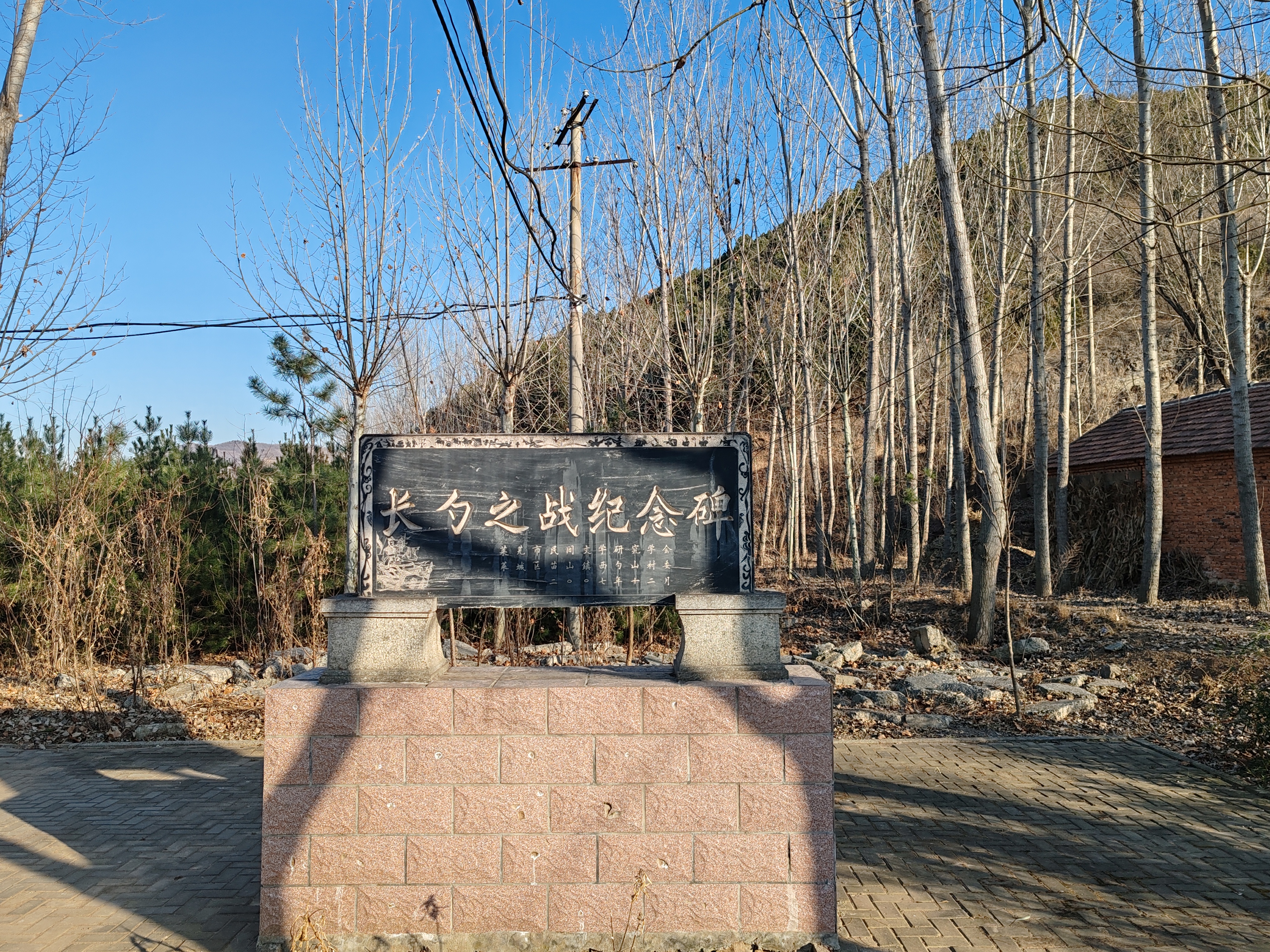
Battle of Changshao
The idiom lives longer than the battle. In 684 BC, on a field in the Shandong Peninsula, a general named Cao Gui ordered his soldiers to do nothing while the enemy charged twice. When the attacking army surged forward a third time, exhausted and confused by the silence, Cao Gui finally gave the order to counterattack. The result was a total rout. From Cao Gui's explanation of his tactics came the chengyu -- a classical four-character idiom -- that every Chinese schoolchild still learns today: "The first drum raises spirits." It means to strike when your energy is highest and your opponent's is spent. In English, the closest equivalent is "strike while the iron is hot."
A Throne Disputed
The battle grew from a succession crisis in the state of Qi, one of the most powerful principalities of the Spring and Autumn period. In 686 BC, Duke Xiang of Qi was assassinated, and his successor was murdered just a month later. The younger prince Xiaobai seized the throne as Duke Huan of Qi. His elder brother, Lord Jiu, believed the throne was rightfully his and allied with Duke Zhuang of the neighboring state of Lu to press his claim. But the combined forces of Lu were defeated at the Battle of Qianshi, and Duke Zhuang nearly lost his life. Duke Huan, furious that Lu had backed his rival, resolved to punish the smaller state. In the spring of 684 BC, he ordered his army to attack.
The Patience of Cao Gui
Cao Gui was appointed to command the defense of Lu, with Duke Zhuang himself present at the front lines. Cao Gui's strategy was deceptively simple: he ordered the army of Lu to remain inside their fortifications and not respond to the enemy's charges. The soldiers of Qi attacked with drums beating and banners flying, expecting the clash of armies. Instead they met silence. They charged again. Again, nothing. By the time they launched their third assault, the rhythm that sustained their morale had broken. Their energy was spent, their formation ragged, their confidence shaken by the unnerving stillness of the defenders. At that moment, Cao Gui gave the order. The army of Lu erupted from its fortifications in a devastating counterattack. The soldiers of Qi, caught at their weakest, collapsed and fled.
One Word, Infinite Weight
Duke Zhuang wanted to pursue the fleeing enemy immediately, but Cao Gui held him back until he had confirmed there was no ambush. Only then did the chase begin. The army of Qi was destroyed and driven beyond the border of Lu. The historian Zuo Qiuming recorded the battle in detail in the Zuozhuan, his commentary on the Spring and Autumn Annals, though the battle does not appear in Sima Qian's later Records of the Grand Historian. Cao Gui's assessment of his own strategy became the source of the enduring proverb. He explained that when the first drum sounds, soldiers' spirits rise; at the second drum, their energy begins to fade; by the third, it has dissipated entirely. By waiting for the third charge, he ensured that his men fought at peak strength against an enemy at its lowest ebb.
Where the Drums Fell Silent
The battlefield at Changshao lies in the Shandong Peninsula, in the heartland of the ancient states that would eventually merge into the Chinese empire. The Spring and Autumn period, named for the chronicle that records it, was an era of constant warfare among hundreds of small states, each jockeying for advantage under the nominal authority of the Zhou dynasty. Most of those battles are forgotten. The Battle of Changshao endures because Cao Gui's insight transcended its military context. The chengyu he inspired -- to act with full commitment at the moment of greatest advantage rather than spreading your effort across multiple uncertain attempts -- became a principle of Chinese strategic thinking that influenced philosophy, business, and statecraft for the next 2,700 years. The field where the drums fell silent is now farmland, but the words that came from it are still spoken daily.
From the Air
The Battle of Changshao took place at approximately 36.37°N, 117.72°E in the Shandong Peninsula, in the area between the ancient states of Qi and Lu. The terrain is rolling agricultural land on the plains of central Shandong Province. Nearest major airport: Jinan Yaoqiang International (ZSJN), approximately 80 km to the west. The battlefield site is now rural farmland with no prominent landmarks visible from altitude. The area is roughly between the modern cities of Jinan and Zibo.