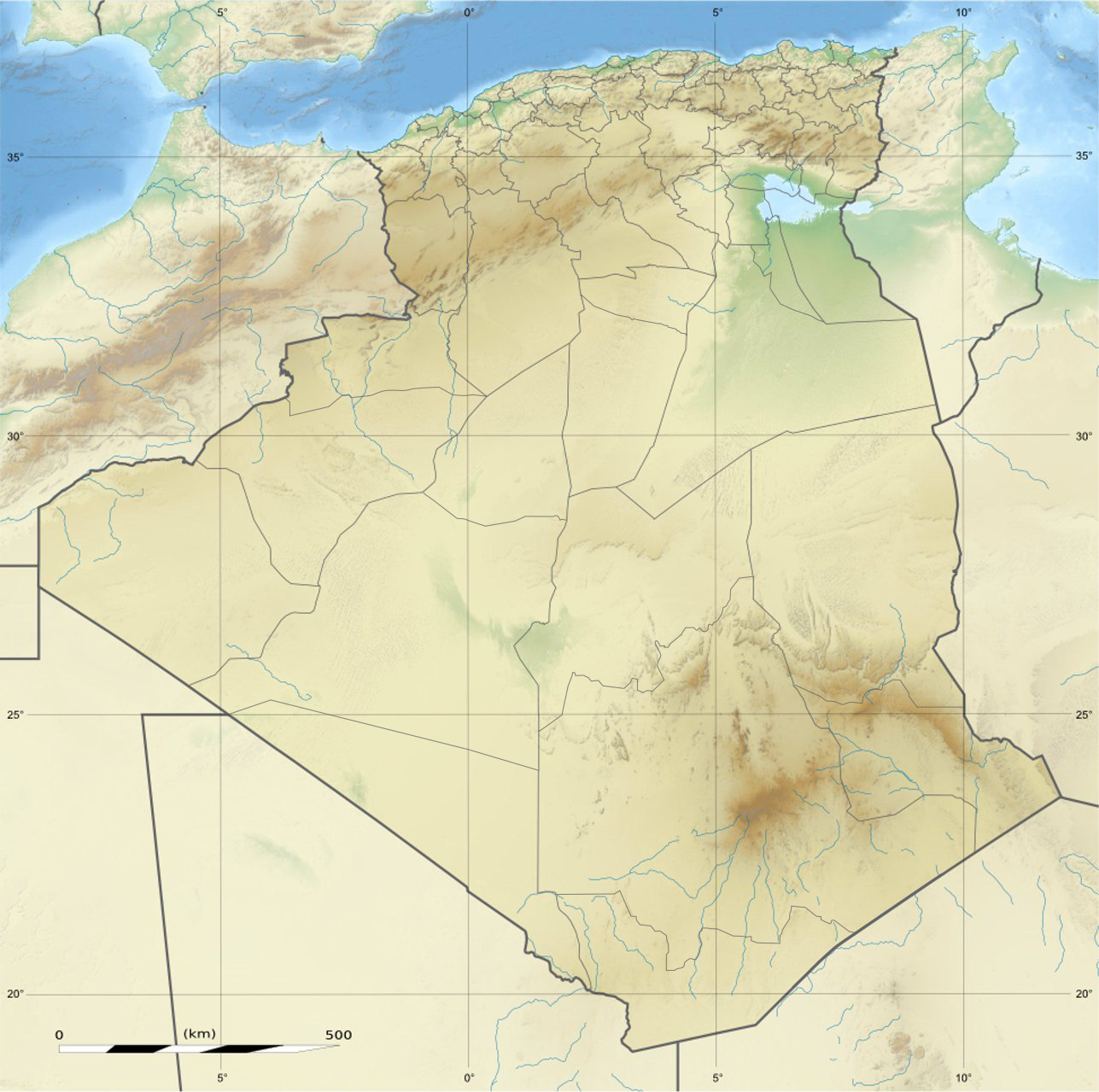
Battle of Chelif River (1015)
On the morning of October 17, 1015, the Zirid emir Badis ibn Mansur stared across the Chelif River at his uncle's army and made a decision that would reshape the political map of the central Maghreb. The river was deep and full. His enemy, the Hammadid emir Hammad ibn Buluggin, had positioned his forces against the rugged slopes of Mount Bani Watil on the far bank. A cautious commander would have waited. But Badis had already buried his son Mansur, dead from smallpox just days earlier, and he had spent weeks watching Hammad's tribal allies quietly slip away to join his own camp. The moment had arrived.
A Dynasty Divided
The battle was the culmination of a war between uncle and nephew for control of the Zirid domains in North Africa. Hammad ibn Buluggin had carved out his own emirate in the central Maghreb, founding the fortified city of Qal'at Bani Hammad as his capital. His nephew Badis, the Zirid emir of Ifriqiya, refused to accept the partition. The conflict drew in the region's Berber tribes -- Sanhaja, Zenata, and others -- each calculating which side offered the better future. According to the historian Ibn Khaldun, the Zenatian tribe of Banu Tujin, who had initially supported Hammad with 3,000 men, secretly arranged to defect to Badis during the battle itself.
The River Crossing
Hammad apparently did not expect Badis to attempt a crossing that day. He may not have adequately guarded all the fording points. Badis advanced on horseback, his cavalry following, while the infantry swam the cold current. The crossing happened swiftly, without resistance. When the two forces finally met on the same bank, the fighting was ferocious. Badis's soldiers knew what capture meant -- Hammad's cruelty to prisoners was well established. They fought with the desperation of men who had chosen either victory or death. At the critical moment, the Banu Tujin fulfilled their secret pact and turned on Hammad. Abandoned by his allies, the Hammadid emir fled with only 500 cavalry, but not before killing his own wives to prevent them from falling into enemy hands.
Spoils and Cruelty
Badis's army seized Hammad's camp, capturing ten thousand adarga shields and vast quantities of equipment. The medieval chronicler Ibn al-Athir noted that the soldiers' eagerness to loot the camp was the only thing that saved Hammad from capture. Badis rewarded the Banu Tujin handsomely, granting them all the spoils of the day and confirming their chief, Luqman bin al-Mu'tar, as leader of his tribe and all its territories. But mercy was selective. A prisoner named Bakkar, known for insulting the Zirid emir, had his beard shaved, his nose and ear cut off, and his hands amputated. The mutilation drove Bakkar to suicide -- he smashed his head against a stone pillar and died on the spot.
The Siege That Followed
Hammad retreated to his fortress of Maghila, 25 kilometers north of Tiaret, arriving the day after his defeat. Five days later he reached his capital at Qal'at Bani Hammad, where he and his brother Ibrahim regrouped. Short on food and salt, Hammad marched on the town of Dekma and killed some 300 of its inhabitants to seize supplies. Badis, meanwhile, continued east to M'sila, where he received envoys bearing apologies from both Hammad and Ibrahim. The envoys reminded Badis of Hammad's past service defending the dynasty's western borders. Badis was unmoved. He demanded unconditional surrender and proceeded to lay siege to Qal'at Bani Hammad, a siege that would last more than six months.
From the Air
The battle took place near the medieval city of Tahert (modern Tiaret), on the banks of the Chelif River in central Algeria, at approximately 35.37N, 1.32E. The terrain is semi-arid plateau with the Ouarsenis mountain range visible to the northwest. Best viewed at 5,000-8,000 feet AGL. Nearest airport: Tiaret - Abdelhafid Boussouf Airport (DAOB), approximately 30 km south.