The Last Ride of Pancho Villa
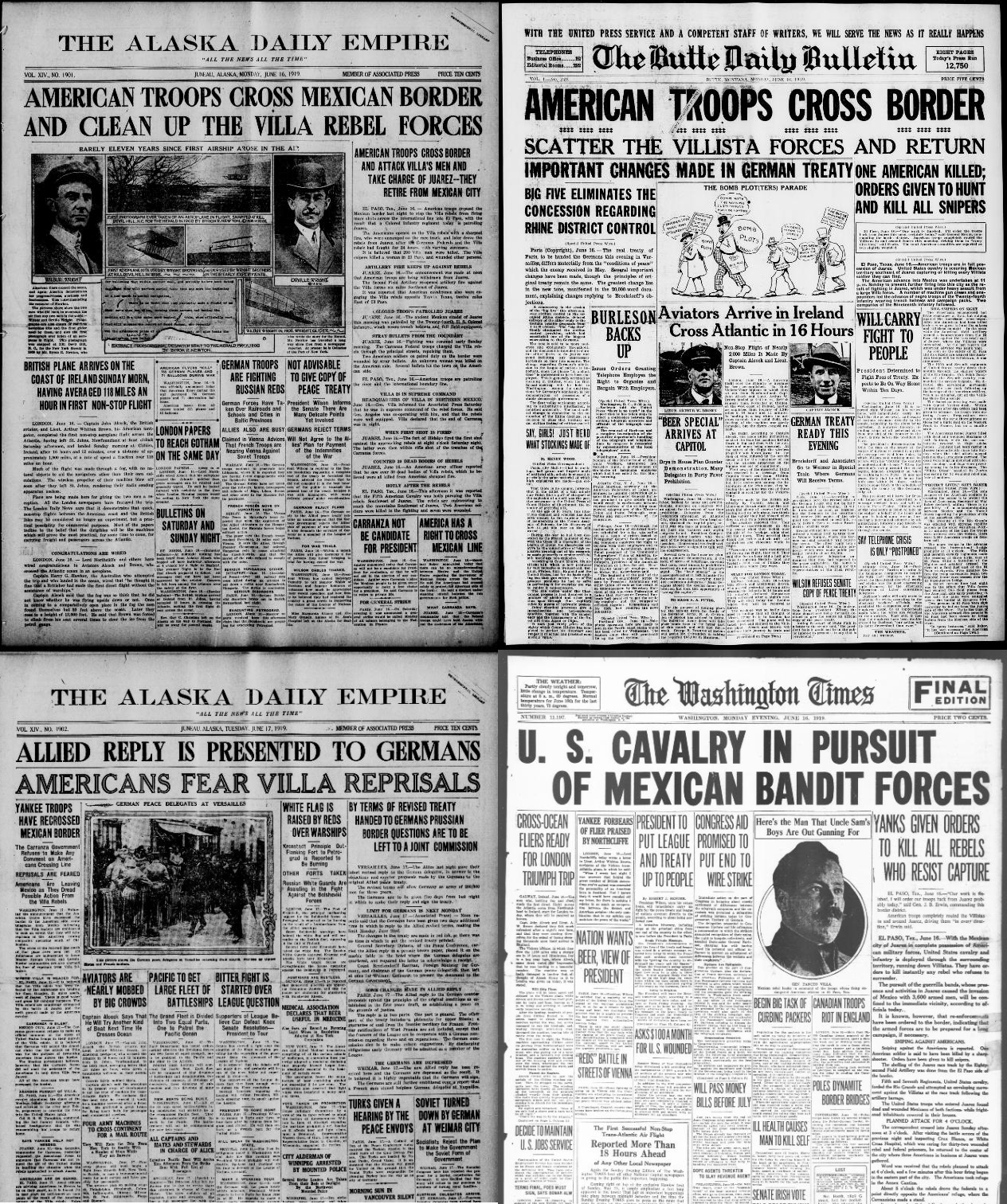
In the summer of 1919, the legendary Mexican revolutionary Pancho Villa launched what would become his final major military campaign -- an assault on the border city of Ciudad Juarez that spiraled into an international incident. When Villista bullets began crossing the Rio Grande and killing American civilians in El Paso, the U.S. Army at Fort Bliss charged across the Santa Fe Street bridge with 3,600 troops. It was the last battle of the Mexican-American Border War, and it marked the end of Pancho Villa's career as a revolutionary.
A Desperate Gamble
By 1919, Pancho Villa was a shadow of his former self. The man who had once commanded tens of thousands of fighters and controlled vast swaths of northern Mexico had been reduced to leading scattered bands through the Chihuahuan desert. His raid on Columbus, New Mexico in 1916 had triggered General John J. Pershing's punitive expedition, scattering his forces and making him a hunted fugitive. But Villa was not finished. By 1918 he had reassembled several hundred men and began attacking Carrancista government forces again. In June 1919, he turned his attention to Ciudad Juarez -- a prize that sat tantalizingly on the U.S. border, protected by a smaller garrison than the state capital at Chihuahua. Villa arrived on the night of June 14 with over 4,000 infantry and cavalry, but crucially, no artillery.
Attacking Like Rabid Dogs
The assault began at 12:10 AM on June 15 with an attack on Fort Hidalgo, the city's citadel. Villa's godson General Martin Lopez led the charge while Villa himself remained behind, sick. The Villistas were repulsed after 50 minutes, but Lopez pivoted to attack the city proper. His cavalry cut through barbed wire entanglements with cutters smuggled from the U.S. side and routed the first line of Carrancista defenders. The fighting became brutal close-quarters combat in the city streets. General Pablo Gonzalez, the Carrancista commander, watched from the Municipal Palace rooftop as his lines crumbled. When he asked Colonel Escobar why his forces could not hold, Escobar replied that the Villistas were 'attacking like rabid dogs.' By afternoon, the Villistas controlled the city and Gonzalez had retreated to the fortress, where he telephoned the Americans across the river for help.
Death on El Paso Streets
Throughout the battle, stray bullets had been crossing the Rio Grande into El Paso. American soldiers at the 82nd Field Artillery Regiment's headquarters in the Union Stockyards took fire from Villista snipers. Civilians fared worse. Floyd Hinton was shot dead while watching the battle from his rooftop near Ninth and El Paso streets. Mrs. Ed Dominguez was killed sitting on her doorstep at 309 East Eighth Street. Four more civilians were wounded. Still, the Americans held their fire -- until 10:35 PM, when Private Sam Tusco of the 82nd Field Artillery was killed and Private Burchard Casey was severely wounded. Within thirty minutes, Brigadier General James B. Erwin ordered 3,600 troops across the Santa Fe Street bridge. The last battle of the Border War had begun.
Routed at the Racetrack
Villa had established his headquarters at the Ciudad Juarez racetrack, and it was there that American artillery concentrated its fire. The 82nd Field Artillery's bombardment was devastating. Meanwhile, Colonel Selah 'Tommy' Tompkins led cavalry in pursuit of fleeing Villistas south of the city. Villa would later tell the El Paso Morning Times that he ordered his troops to disperse after realizing he faced 'an enemy superior not only in numbers but in equipment.' But the truth was grimmer: most of his men simply deserted. When Villa attempted to besiege Durango just weeks later, he had only 350 demoralized fighters left. The siege failed, and Villa retired to his home at Parral, Chihuahua, accepting a full pardon from the government in 1920. His days as a revolutionary were over.
Legacy in Black and White
The battle cost the lives of two American soldiers and wounded ten more. The Carrancista casualties remain unknown, but Americans reported killing or wounding at least 100 Villistas, including General Lopez. The true toll was likely far higher. When Colonel Tompkins rode back to the Rio Grande, he collected 50 saddles, 300 horses and mules, and over 100 rifles -- many of German manufacture, taken as souvenirs by his men. A National Guard camp was later named Camp Tusco in honor of the fallen private. The 82nd Field Artillery adopted a unit insignia featuring a black artillery shell on a white background, symbolizing the first shot they fired across the Rio Grande. It remains their emblem to this day, a small but enduring memorial to the night Pancho Villa's revolution died at the border.
From the Air
The battle took place at approximately 31.73N, 106.46W, directly on the U.S.-Mexico border where El Paso meets Ciudad Juarez. From the air, the twin cities appear as one continuous urban sprawl bisected by the thin ribbon of the Rio Grande. The Santa Fe Street bridge where American troops crossed is now the Paso del Norte International Bridge. The former racetrack area where Villa established his headquarters and where American artillery concentrated its fire lies on the Mexican side. Fort Bliss, from which the U.S. cavalry sortied, is visible as a large military installation on the northeastern edge of El Paso. El Paso International Airport (KELP) lies to the east of downtown.