Battle of Cole Camp
John Tyree knew he was gambling with his life. The respected Benton County citizen -- a slaveholder, but a Union man -- had ridden to Camp Lyon to warn the Home Guard that secessionist forces were marching from Warsaw. On his way back, Confederate horsemen intercepted him. They recognized him from earlier that day, tied him to a tree, and shot him dead. His warning, delivered at the cost of his life, would go largely unheeded. In the predawn darkness of June 19, 1861, heavy drinking and inadequate pickets left hundreds of German-American volunteers defenseless against what came next.
A County Divided Against Itself
Benton County, Missouri, in the summer of 1861 was a microcosm of a nation tearing itself apart. Most residents traced their roots to the Upper South and held pro-Confederate, pro-slavery sympathies. But a sizable community of German immigrants and their descendants stood firmly for the Union and against slavery. These German settlers formed the backbone of the Benton County Home Guard, mustered by Captain Abel H. W. Cook in early June. By June 11, volunteers had begun assembling northeast of Cole Camp at a position dubbed Camp Lyon, spread across two adjoining farms belonging to Henry Harms and John Heisterberg, roughly 600 yards apart. Up to 900 men initially gathered, though as many as half were furloughed for lack of weapons -- Cook had only about 400 infantry muskets to go around.
The Night the Pickets Failed
Meanwhile, secessionists were organizing at Warsaw, 30 miles to the south. Captain Walter Scott O'Kane rallied the Warsaw 'Grays' while Captain Thomas W. Murray assembled the 'Blues,' forming a combined force of about 350 men, with 100 mounted. They were aided by the county sheriff himself, Bartholomew W. Keown, who had attempted to 'arrest' Union officers at Camp Lyon -- a thin pretense for scouting the defenses. On June 18, O'Kane's column marched north toward the sleeping camp. Despite Tyree's sacrifice and his intelligence report, the Home Guard's preparations were woefully inadequate. The men slumbered in the small hours of June 19, many reportedly drunk, with pickets easily overrun. O'Kane's infantry double-quicked from the east and delivered a devastating volley into the Heisterberg barn, where part of the Home Guard lay.
Chaos in the Darkness
Captain Elsinger's company, positioned just north of the barn, returned flanking fire into the attackers, but ran short of ammunition and had to withdraw. O'Kane's mounted troops then slammed into another group of Home Guard attempting to form a defensive line, scattering them. At the Harms barn, Captains Grother and Mueller rallied their men to join the fight -- but confusion proved as lethal as any bullet. The secessionists had seized a Union flag, and the men at Harms held their fire, believing they faced their own comrades. By the time enemy volleys revealed the truth, it was too late. They withdrew without engaging, and the fight was over. Captain Cook himself had fled at the outbreak of combat, claiming he left to consult with Captain Totten of Lyon's forces. His men told a different story. Cook was later shot dead in Henry County in November 1861, and his widow was denied a pension because he was deemed not in U.S. service at the time of his death.
The Toll and Its Consequences
The Union losses were staggering for such a small engagement: at least 34 killed or mortally wounded, 60 wounded, and 25 taken prisoner. Confederate casualties were lighter -- roughly 7 killed and 25 wounded. But the real prize was strategic. O'Kane's men captured 362 muskets with bayonets, weapons that would arm Confederate volunteers at the upcoming battles of Carthage and Wilson's Creek. The victory cleared the path for Missouri's fleeing pro-secessionist Governor Claiborne Fox Jackson and his Missouri State Guard to escape Nathaniel Lyon's pursuit. When O'Kane's fighters rejoined the gathering State Guard, their tale of victory lifted the spirits of the beleaguered force. As for Sheriff Keown, whose espionage had helped set the trap, he was captured in December 1861 at the Skirmish at Blackwater Creek along with 683 other Missouri State Guard recruits. Charged with spying and robbing loyal citizens, he died in prison on April 16, 1862, before ever standing trial.
A Scar on the Prairie
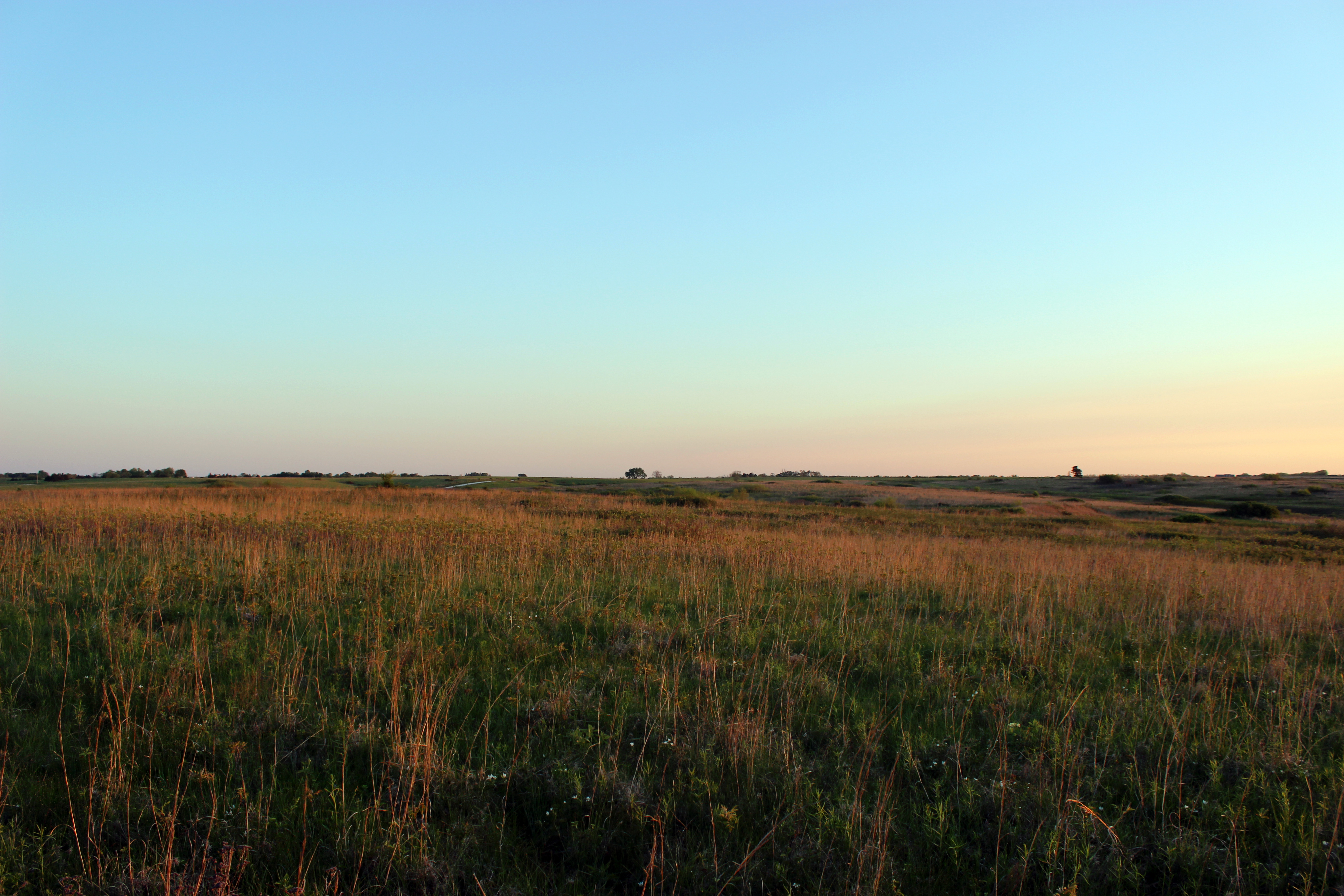
Today the rolling farmland of Benton County betrays little of the violence that unfolded here in those frantic first weeks of the Civil War. The battle at Cole Camp was not a clash of great armies or a turning point studied in military academies. It was something rawer -- neighbors turning on neighbors, a sheriff serving as a spy, a warning silenced by a firing squad, and sleeping men cut down in the dark. The German-American community of Cole Camp, whose volunteers paid the heaviest price that June morning, carried the memory for generations. The town's heritage is still reflected in its name and its culture, a reminder that Missouri's Civil War was fought not just between North and South, but within its own counties, its own communities, and sometimes its own families.
From the Air
Located at 38.43N, 93.23W in the rolling farmland of Benton County, central Missouri. The battlefield site is near the town of Cole Camp, visible from altitude as a small rural community surrounded by agricultural land. Nearest airports include Sedalia Memorial Airport (KDMO, roughly 30nm east) and Whiteman Air Force Base (KSZL, roughly 35nm northeast). Recommended viewing altitude: 3,000-5,000 ft AGL for landscape context. The Missouri River lies to the north, and the terrain is gently rolling prairie.