Battle of Coleto
Colonel James Fannin had every reason to move fast and none of the instinct for it. On the morning of March 19, 1836, his retreating column of Texian soldiers departed Goliad under heavy fog, dragging nine heavy artillery pieces and a thousand muskets behind hungry, exhausted oxen. They had no water. They had little food. And they had a two-hour head start on General José de Urrea's Mexican cavalry that Fannin methodically squandered -- stopping to fix a broken cart at the San Antonio River, pausing to let the oxen graze, dismissing warnings from his own officers that they should press on to the timber at Coleto Creek. By early afternoon, the Mexican cavalry had closed the gap, and Fannin's men stood trapped on open prairie with the tree line tantalizingly in sight.
A Square on the Prairie
With no cover and no choice, the Texians formed a hollow square three ranks deep. The San Antonio Greys and the Red Rovers held the front line. Burr H. Duval's Mustangs and Hugh McDonald Frazer's Refugio militia formed the rear. Ira Westover's regulars covered the left flank while the Mobile Greys protected the right. Nine cannons anchored the corners. Each soldier received three to four muskets. The tall prairie grass cut visibility in every direction. The Mexicans attacked from all sides at once: rifle companies under Morales struck the left, grenadiers and the San Luis Battalion hit the right under Urrea's personal command, the Jiménez Battalion under Colonel Mariano Salas charged the front, and Colonel Gabriel Núñez's cavalry rode against the rear. Three times the Mexican formations surged toward the square. Three times the Texians drove them back with bayonets, massed musket fire, and canister from the nine guns. Even Urrea admitted he was impressed.
The Long Night
By sunset on March 19, Dr. Joseph H. Barnard recorded seven Texians dead and sixty wounded, including Fannin himself. Forty of the sixty had been hit multiple times. The Mexicans had also suffered heavy casualties. After dark, Urrea positioned sharpshooters in the tall grass around the square, and their muzzle flashes flickered through the night until Texian marksmen learned to fire back at the light. The morale problem was not the shooting but the silence from elsewhere. Albert C. Horton had ridden out with 30 cavalrymen before the battle to scout the Coleto Creek timber and could not break back through Mexican lines to bring reinforcements. A separate Texian force retreating from the Battle of Refugio passed close enough to hear the gunfire but was too exhausted and hungry to intervene. Mexican buglers sounded false calls through the night to keep the Texians awake. Without water, the wounded could not be treated and the cannons could not be cooled for the next day's fighting.
Surrender at Dawn
During the night, the Texians dug trenches and piled up barricades of overturned carts and dead animals. Some officers proposed escaping under cover of darkness, but the idea was rejected because it meant abandoning friends and relatives too badly wounded to move. Urrea, meanwhile, received reinforcements from Goliad: fresh troops, ammunition, and two or three artillery pieces, which he positioned on the slopes overlooking the square. At 6:15 on the morning of March 20, one or two rounds of Mexican artillery fire settled the question. Fannin and his officers concluded they could not survive another day. They drafted surrender terms requesting that the wounded be treated, that all prisoners receive the protections due prisoners of war, and that they be paroled to the United States. Urrea could not guarantee Santa Anna would honor any of it. He could only promise to advocate on their behalf. Benjamin C. Wallace, Joseph M. Chadwick, and Fannin signed the document. The Battle of Coleto was over.
Palm Sunday
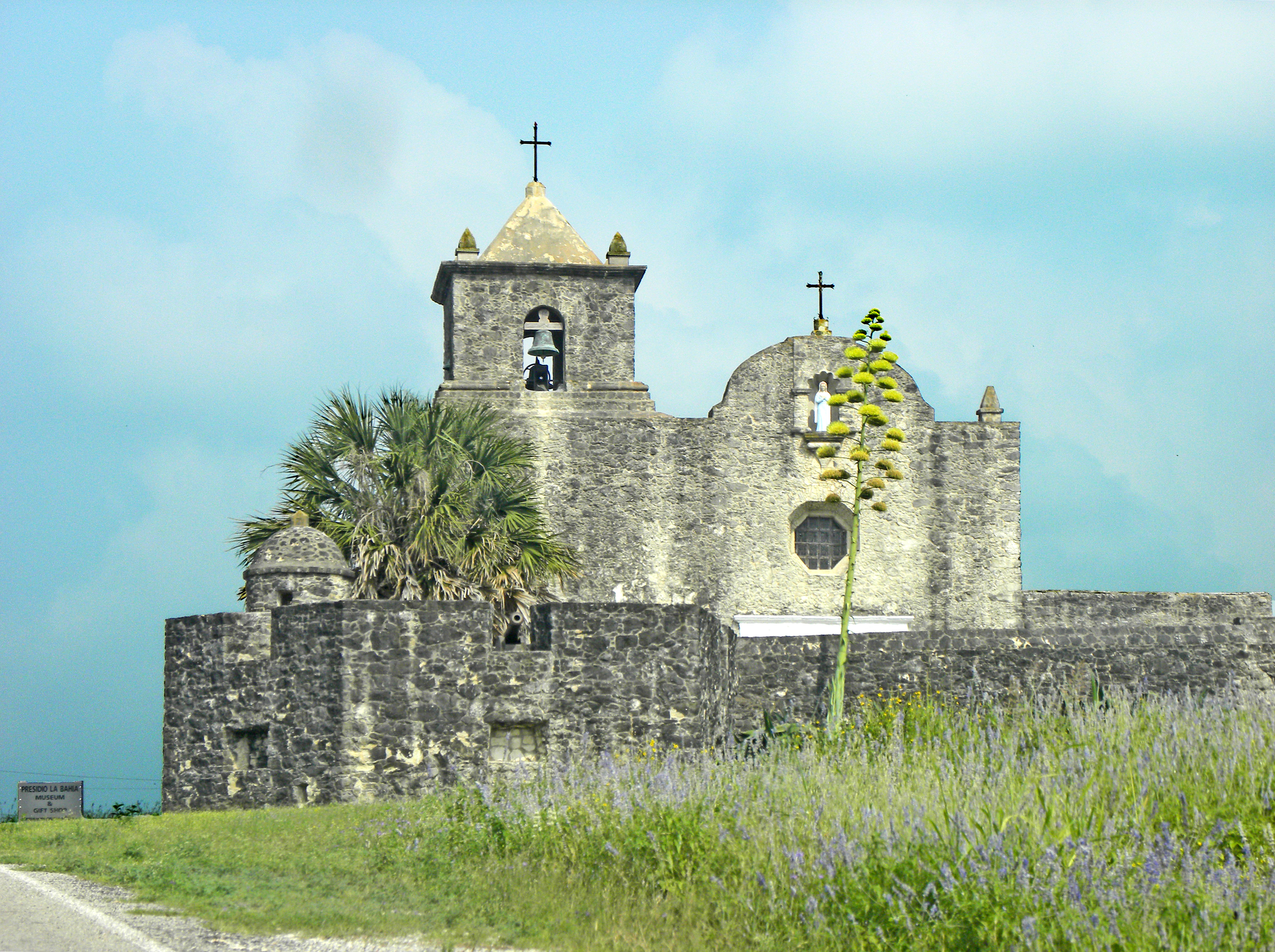
The walking wounded were marched back to Goliad under Mexican escort. Those too injured to walk took until March 23 to be transported. Urrea moved on toward Victoria, writing to Santa Anna to recommend clemency for the prisoners. Santa Anna had already received authorization from the Mexican Congress to treat captured Texians as pirates rather than prisoners of war, and he ordered their execution. The Mexican commander at Goliad, Lieutenant Colonel José Nicolás de la Portilla, reluctantly carried out the order. On Palm Sunday, March 27, 1836, Fannin and approximately 425 to 445 other Texian prisoners were marched outside the walls of Presidio La Bahía and shot by Mexican soldiers. The Goliad massacre killed more Texian combatants than the Battle of the Alamo and became one of the defining atrocities of the Texas Revolution. 'Remember Goliad!' joined 'Remember the Alamo!' as a battle cry at San Jacinto the following month.
The Ground That Remembers
The Battle of Coleto revealed something unexpected about the Texian army. Despite being largely untrained volunteers -- merchants, farmers, adventurers from Alabama and Kentucky -- they held a hollow square on open ground against a professional military force through three full cavalry and infantry charges. The battle was lost not because the square broke but because Fannin made a series of decisions that doomed his men before the fighting started: the leisurely departure, the oxen grazing stop, the refusal to press on to the timber. Today the Fannin Battleground State Historic Site marks the prairie where the square stood. An obelisk rises from the flat grassland. The site sits between Goliad and the Coleto Creek crossing, on ground that looks much as it did in March 1836 -- open, exposed, and a long way from the tree line.
From the Air
Located at 28.686°N, 97.233°W on the open prairie between Goliad and Coleto Creek in southeast Texas. The Fannin Battleground State Historic Site is marked by an obelisk visible from lower altitudes. The terrain is flat grassland, giving a clear sense of the exposed position where the Texian square formed. Best viewed at 1,000-2,500 ft AGL. Nearest airports: KGAD (Goliad County Airport, approximately 5 nm W), KVCT (Victoria Regional Airport, 20 nm SE). Presidio La Bahía in Goliad is visible approximately 5 nm to the west along the San Antonio River.