Battle of Columbus (1865)
On the night of April 16, 1865, Union and Confederate soldiers ran side by side through a covered bridge over the Chattahoochee River, neither side able to see the other in the darkness. Confederate General Robert Toombs had two cannon loaded with canister aimed straight into the bridge's mouth, but he held his fire -- his own retreating men were mixed in with the attackers. That bizarre scene, equal parts chaos and restraint, captures the spirit of the Battle of Columbus, Georgia: a fight that shouldn't have happened at all. Robert E. Lee had surrendered a week earlier at Appomattox. Abraham Lincoln had been shot two days before. But word traveled slowly in 1865, and Major General James H. Wilson's 13,000 cavalrymen were still following orders to destroy the South's last great industrial city.
The South's Last Arsenal
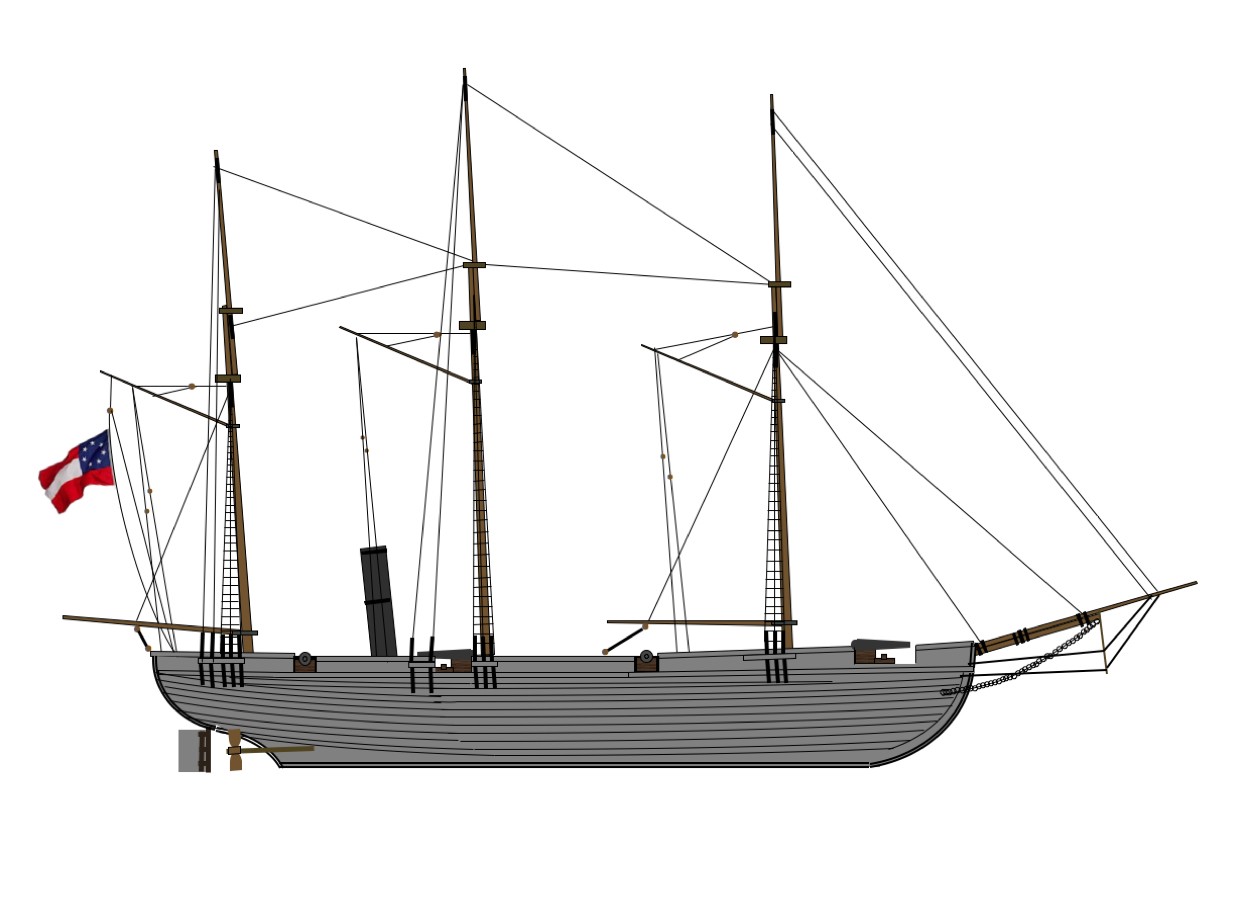
Columbus, Georgia mattered because it built things. By April 1865, with Richmond fallen and Selma already destroyed by Wilson's raiders, Columbus was the largest surviving Confederate manufacturing center in the South. Foundries along the Chattahoochee River produced cannon, swords, and pistols. The Confederate Naval Iron Works constructed warships, including the ironclad CSS Muscogee, still docked and unfinished at its berth. Cotton mills churned out uniforms and tent canvas. Columbus was second only to Richmond in its industrial contribution to the Confederate war effort, and Richmond was gone. Wilson had been ordered by Major General George H. Thomas, after the Union victory at Nashville in December 1864, to march into the Deep South and eliminate these supply centers. He had already taken Selma on April 2 and Montgomery on April 12. Columbus was the final target.
A Bridge Too Narrow
Confederate Major General Howell Cobb scraped together 3,500 defenders -- mostly Georgia and Alabama home guard units and civilian volunteers -- and set up his defenses on the Alabama side of the Chattahoochee, in the town of Girard (now Phenix City). His strategy centered on two covered bridges, the only crossings into Columbus. He ordered the bridge bases wrapped in cotton soaked with turpentine, ready to burn as a last resort. Those bridges had been designed by Horace King, a man born into slavery in 1807 who earned his freedom and became one of the South's most respected builders, known as the Prince of Bridge Builders. He later served as an Alabama state legislator. When Wilson's raiders arrived between 1:30 and 2:00 p.m. on Easter Sunday, General Emory Upton's division attacked the lower bridge first. Upton declared Columbus was theirs without a fight -- until the Confederates removed the bridge planking and set it ablaze, forcing a retreat.
Chaos After Dark
Wilson turned to the upper bridge and did something unexpected: he attacked at night. At 8:00 p.m., he sent General Edward Winslow's brigade of Iowa cavalry charging toward the upper bridge, led by Colonel Frederick Benteen -- the same officer who would later serve under Custer at Little Bighorn. A savage clash erupted at the bridge entrance. Confederate John Stith Pemberton was slashed by a sabre during the fighting; his chronic pain from this wound would later drive him to experiment with painkillers and coca-based tonics, eventually leading him to formulate the recipe for Coca-Cola. By 10:00 p.m., the Confederate line in Girard collapsed. Retreating Confederates and advancing Union cavalrymen poured onto the bridge simultaneously, running side by side in darkness so complete that neither could tell friend from enemy. Toombs, watching from the Georgia side with his loaded cannon, refused to fire into the crowd of mixed soldiers.
The Morning After the War
Wilson crossed the bridge at 11:00 p.m. -- his horse was shot and later died beneath him -- and established headquarters in the Mott House, the nearest building on the Columbus side. On the morning of April 17, he ordered the systematic destruction of everything that could support the Confederate war effort. The ironclad CSS Muscogee was burned and sunk. The Confederate naval facility, Port Columbus, was entirely destroyed. Confederates scuttled the CSS Chattahoochee to keep it from Union hands. Actual casualties exceeded initial reports: 60 Union soldiers were killed or wounded (not the 25 originally claimed), while Confederate losses numbered 151 dead and wounded, with another 1,600 taken prisoner. For days afterward, the flames consuming warehouses and factories in the Chattahoochee Valley marked what many considered the war's final chapter.
The Last Battle Argument
Whether Columbus was the last battle of the Civil War depends on how you define 'battle' and 'war.' The officers who fought there had no doubt. General Upton called it the 'closing conflict of the war.' Wilson himself wrote in 1913 that there were 'no grounds left for doubting that Columbus was the last battle of the war.' President Andrew Johnson declared the war over on May 10, 1865, the day Jefferson Davis was captured. By that measure, Columbus -- fought on April 16 -- was the last major engagement. The Battle of Palmito Ranch in Texas on May 13 is the competing claimant, but it was a far smaller affair with colonels commanding a few hundred men. In 1935, the Georgia state legislature passed a resolution formally declaring Columbus the last battle of the Civil War. The battlefield itself, straddling the Chattahoochee between Columbus and Phenix City, has never received national park status despite efforts dating to the 1890s.
From the Air
Located at 32.47N, 85.00W on the Chattahoochee River at the Alabama-Georgia border. The river and two cities (Columbus, GA on the east bank and Phenix City, AL on the west) are clearly visible from altitude. The battle centered on the covered bridges spanning the Chattahoochee -- modern bridges now occupy similar crossings. Columbus Metropolitan Airport (KCSG) is located approximately 5nm northeast of downtown. Lawson Army Airfield (KLSF) at Fort Moore (formerly Fort Benning) lies about 11nm south. The Chattahoochee River corridor is the primary visual landmark, flowing generally north-south through the twin cities.