Battle of Coronea (394 BC)
Agesilaus II had been told a lie about the sun. A few days before the battle, an eclipse left the sun crescent-shaped in a clear Boeotian sky, and many of his soldiers took it as an omen of disaster. Agesilaus assembled his men and reminded them of the Spartan victory at Nemea earlier that summer. Then he told them their navy had just won a great battle off Cnidus and the Persian fleet had been broken. He had received the dispatch that morning. He knew the truth: the Spartan navy had been crushed, the Spartan admiral Peisander killed. Morale survived the news because Agesilaus simply did not deliver it.
Coming Home from Asia
Agesilaus had been campaigning in Persian Asia Minor for two years - the closest thing the Greek world had managed to a war of expansion against the Achaemenid Empire since Marathon - when he was recalled in 394 BC to deal with a coalition of Athens, Thebes, Argos, and Corinth that had taken Persian gold to make war on Sparta. He marched his army of Spartiates, freed helots, Peloponnesian and Ionian allies, and a large body of mercenaries overland through Thrace and central Greece, arriving in Boeotia in late summer. A coalition army was waiting for him on the plain near Mount Helicon, at the foot of the slopes above the small town of Coronea: about 20,000 hoplites of Boeotians, Athenians, Argives, Corinthians, Euboeans, and Locrians. Agesilaus had perhaps 15,000. His advantage was numerical only in cavalry and lightly armed peltasts. The hoplite shock troops were against him.
Shield Against Shield
Both armies advanced in silence. At about 200 meters the Thebans broke into a war cry and ran at the Greek wing facing them - the Orchomenians, Boeotian dissidents fighting for Sparta. At 100 meters the veterans of Xenophon's old Ten Thousand mercenaries and the Asian Greeks hurled themselves into the Argives, who panicked and fled to Mount Helicon before the Spartan line under Agesilaus could even close. The mercenaries near the king turned to him with a victory garland. Then word arrived that the Thebans had broken through the Orchomenians on the other flank and reached the Spartan baggage train, where they were ransacking the loot Agesilaus had brought back from Asia. He wheeled the entire phalanx around and faced east. The Thebans, realizing their allies had fled, turned to fight their way out. They saw the Spartan line in their path and they came directly at it.
The Wound
Xenophon, who fought at Coronea on the Spartan side, wrote what he saw with a soldier's matter-of-factness: 'So shield pressed upon shield they struggled, killed and were killed in turn.' Agesilaus made a deliberate choice that day. He could have let the Thebans pass and taken them in the rear, where they would have been broken with minimal cost. Instead he stood directly in their path - a decision Xenophon attributes to longstanding hatred of Thebes - and the resulting press of bronze and oak and human flesh became one of the worst slaughters in the history of hoplite warfare. A few Thebans broke through and reached the mountain. Many more, in Xenophon's words, were killed on their way there. Agesilaus himself was wounded and had to be carried back to the Spartan line. About 80 enemy soldiers took refuge in a nearby temple, and he ordered them spared and given safe passage. The dead - around 600 on the allied side, 350 Spartans by Diodorus' count - were collected the next morning under truce.
The Stele of Dexileos
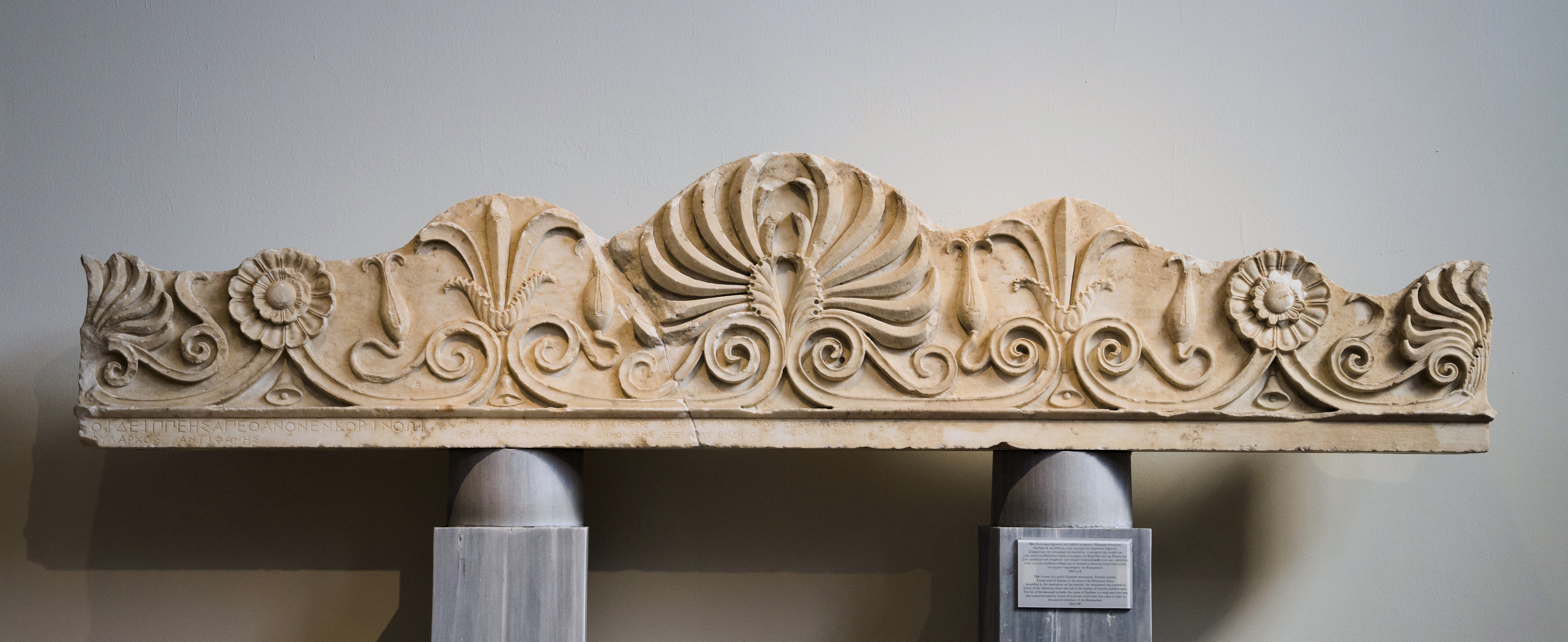
Among the Athenian dead at Coronea was a young cavalryman named Dexileos, 20 years old. His parents commissioned a marble stele - now in the Athens National Archaeological Museum - showing him on horseback, spear raised, riding down a falling enemy. The carving is exquisite, the human grief beneath it not. Coronea did not end the Corinthian War; the conflict ground on for another seven years until Persia, having played both sides, dictated peace through the King's Peace of 387 BC. Today the village of Koroneia sits at the foot of Mount Helicon in central Boeotia, surrounded by olive groves and farmland. The plain where Spartan and Theban hoplites died together looks ordinary - flat green fields, white limestone hills, a road to Livadeia. The Aegean is not visible from the battle site, but the mountains the Argives ran for in their panic still rise above the village exactly as they did then.
From the Air
Ancient Coronea lay near modern Koroneia village in central Boeotia, Greece, at approximately 38.35N, 22.97E, at the foot of Mount Helicon. The battlefield was on the plain north of the town. Recommended viewing altitude 3,500-5,000 ft AGL. Nearest airports are Athens International (LGAV) 65 nm southeast and Tanagra (LGTG) 30 nm east. From altitude Mount Helicon dominates the southern horizon at 5,738 ft, with the Copais Basin (drained 19th century) stretching north and Lake Yliki visible to the east. The Cephissus river runs through the valley toward Lake Yliki.