Battle of Corregidor
Americans called it the Rock. The Japanese knew they had to take it. Corregidor Island, four miles long and shaped like a tadpole, sat squarely at the mouth of Manila Bay, and as long as it remained in American hands, the Japanese could not use one of the finest harbors in the western Pacific. By May 1942, the garrison had endured months of aerial bombardment, artillery fire from Bataan and Cavite, dwindling water supplies, and the certain knowledge that no relief was coming. What happened on the nights of May 5 and 6 would mark the fall of the last significant American outpost in the Pacific -- and create a wound that would take three years and a thousand paratroopers to close.
The Gibraltar of the East
Before the war, Corregidor was the crown jewel of Manila Bay's defenses. Officially designated Fort Mills, the island bristled with fifty-six coastal defense guns and mortars, twenty-eight antiaircraft guns, and the three-story Mile-Long Barracks that housed its garrison. The Americans had fortified it before World War I, comparing its strategic position to Gibraltar's command of the Mediterranean. Beneath Malinta Hill ran the island's most remarkable feature: a tunnel complex with a main passage 1,400 feet long and 30 feet wide, branching into 25 lateral passages of 400 feet each. A separate system housed an underground hospital with 12 laterals of its own. General MacArthur ran his headquarters from Lateral 3. President Manuel Quezon occupied quarters near the east entrance. Reinforced concrete, electric trolleys, and mechanical blowers made the tunnels a self-contained fortress within a fortress. The submarine Trout even visited in February 1942, delivering ammunition and departing with 20 tons of Philippine gold and silver for safekeeping.
Five Months Under Fire
The bombardment was methodical and overwhelming. Japanese aircraft flew 614 missions against Corregidor, dropping 1,701 bombs totaling 365 tons of explosives. On the ground, nine 240mm howitzers, thirty-four 149mm howitzers, and 32 additional artillery pieces pounded the island day and night. One by one, the batteries that had made Corregidor formidable were knocked out. By April 14, every gun on the north shore was silenced. On April 29, two Navy PBY flying boats evacuated 50 nurses and headquarters staff -- among the last to leave. On May 2, a barrage of 3,600 shells from 240mm howitzers struck Batteries Cheney and Geary. Battery Geary's magazine detonated, destroying all eight of its 12-inch mortars in a single catastrophic explosion. The bombardment intensified over the next three days as the Japanese prepared their final assault. The garrison's ability to resist was crumbling with its fortifications.
The Night of May 5
Shortly before midnight on May 5, Japanese forces under Major General Kureo Taniguchi launched their assault. The first wave of 790 soldiers boarded landing craft and barges, heading for the beaches between North Point and Cavalry Point. What followed was a bloodbath -- but not the one the Japanese had planned. American and Filipino defenders poured 37mm artillery fire into the invasion fleet with devastating effect. Observers at Cabcaben described the scene as a spectacle that confounded the imagination, surpassing in grim horror anything they had ever seen. Strong currents pushed the landing barges eastward, away from their intended objective of Malinta Hill, and the disorganized Japanese suffered staggering losses. One Japanese officer called it a dreadful massacre. At least 22 landing craft were left half-sunk, filled with Japanese dead. But enough soldiers made it ashore to consolidate a beachhead, and by 1:30 in the morning the Denver battery and the forward slope of Water Tank Hill had been captured. Against this kind of determination, the exhausted and outgunned garrison could not hold.
Surrender and Captivity
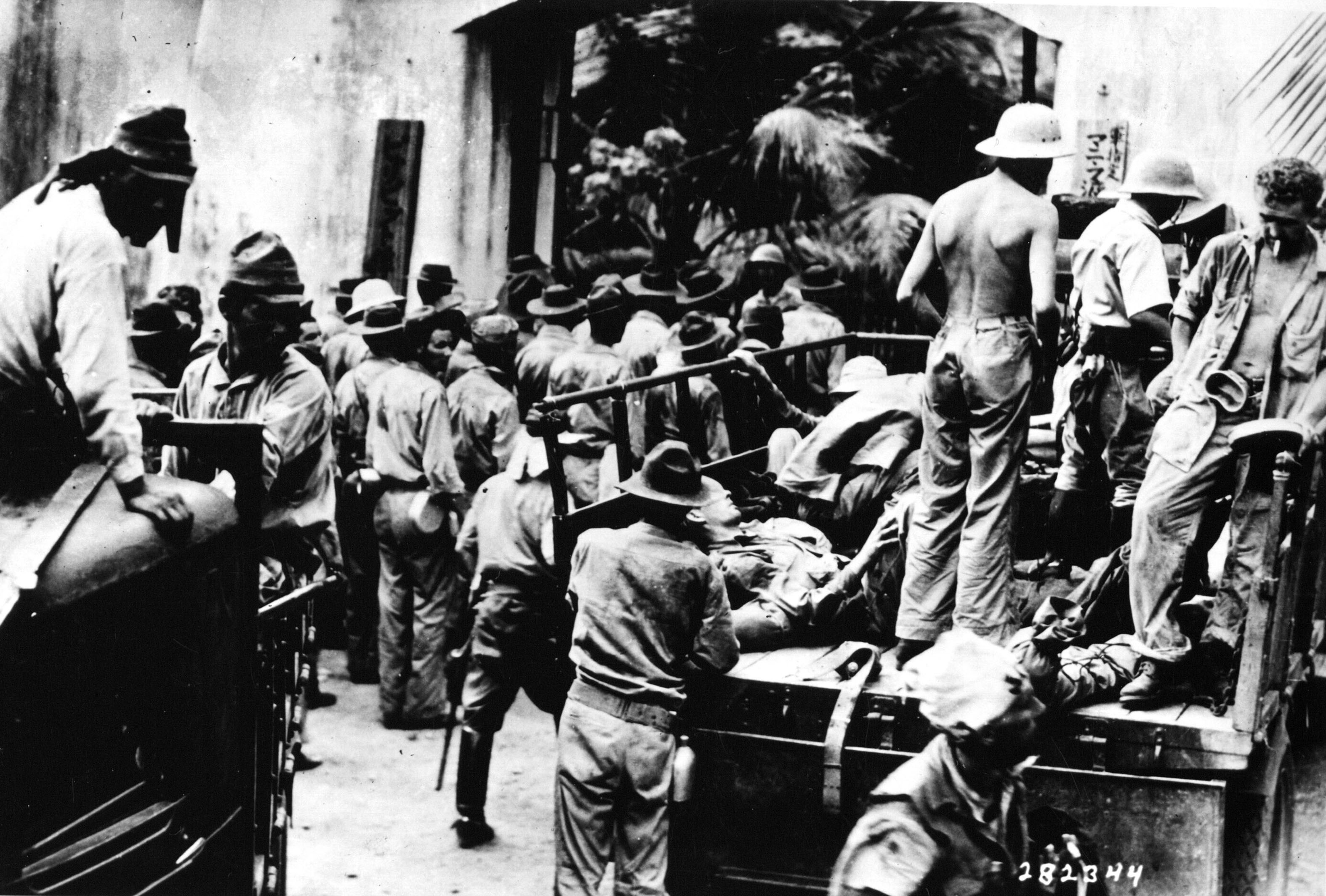
The fighting ended on May 6, 1942. What followed was grimmer still. On May 23, the captured soldiers on Corregidor were marched to South Mine Wharf and loaded onto ships bound for Manila. Filipino prisoners were offloaded at the docks. American prisoners were paraded down Dewey Boulevard to Old Bilibid Prison, then transferred to Cabanatuan Camp No. 3. The Angels of Bataan -- military nurses who had served through the siege -- were sent to the Santo Tomas Internment Camp at the end of July. For the 11,000 American and Filipino defenders, years of captivity, disease, and forced labor lay ahead. Many would not survive. Among the garrison were 25 graduates of Texas A&M University, who had planned to gather for their traditional Muster on April 21. Although they never managed to assemble physically, stories of their intended gathering in an island tunnel inspired the nation. Only 12 of the 25 survived the battle and the prisoner of war camps that followed.
Why Corregidor Mattered
The fall of Corregidor was the last chapter in the Japanese conquest of the Philippines and one of the most painful defeats in American military history. The garrison had held out for five months after the rest of Luzon fell, buying time and tying down Japanese forces that could have been deployed elsewhere. But its significance transcended strategy. Corregidor became a symbol -- of resistance pushed past the breaking point, of a promise owed. When MacArthur left by PT boat in March 1942, he famously vowed to return. For three years, the Rock waited. When the 503rd Parachute Regimental Combat Team dropped onto Topside in February 1945, they were not simply recapturing a military position. They were settling an account that had haunted the Pacific campaign since its first dark months. Today the island sits quietly at the mouth of Manila Bay, a national shrine where the ruins of batteries, barracks, and tunnels speak to what was asked of the men and women who defended it.
From the Air
Corregidor Island is at 14.38N, 120.57E at the entrance to Manila Bay, about 48 km west of Manila. The tadpole-shaped island stretches roughly 6 km and is clearly visible from the air, with Topside (the elevated western plateau) and the lower tail section distinguishable. Malinta Hill sits at the narrowest point. Nearby airports: Ninoy Aquino International (RPLL) approximately 50 km east. Best viewed at 3,000-5,000 ft AGL from the south, where its position guarding Manila Bay is most dramatic. The Bataan Peninsula lies 5.5 km to the north.